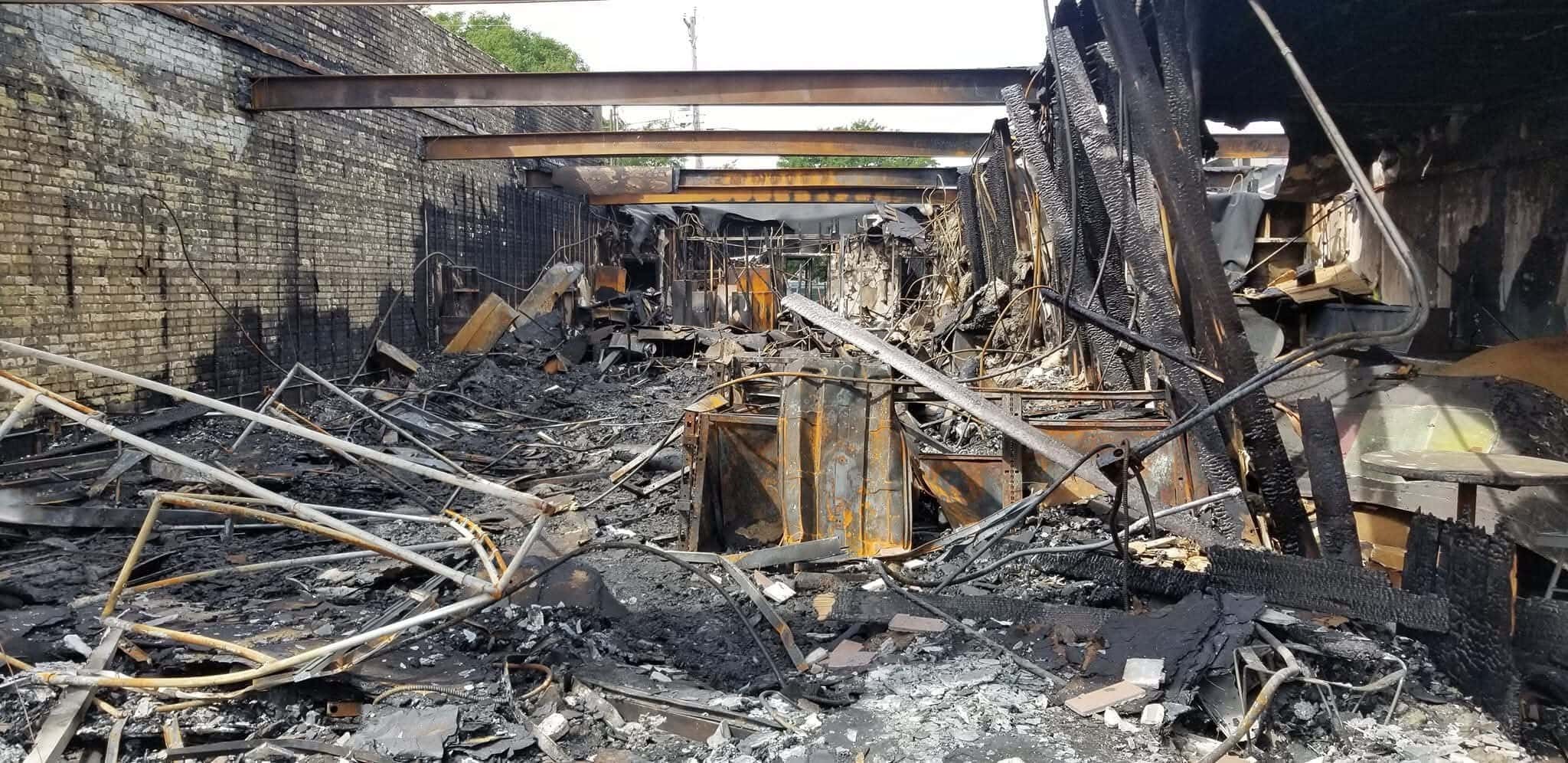


Last night at the Italian American Club in Kenosha, Congressman Bryan Steil stood beside gubernatorial candidate Tom Tiffany in a room full of southeast Wisconsin residents. Steil, whose district includes Kenosha, was there to support and introduce Tiffany. The majority of attendees lived through the riots of August 2020 — nearly six years have passed since Kenosha became the center of the nation’s attention. Steil walked the room through the sequence of decisions that still define those nights, and told the unvarnished truth about the riots before turning the stage over to Tiffany. The timing carried extra weight as Madison faces renewed pressure from far-left activists pushing for an “autonomous zone” after a MPD officer shot and killed Corey Ruiz . Tiffany made clear where he stands — under his leadership there will be zero autonomous zones or lawless encampments. He is a law-and-order candidate who will not allow radical ideologies to undermine public safety in Wisconsin.
“We’re watching what’s going on in Madison right now,” Steil said. “In a way, you start immediately reflecting on what occurred when Democratic politicians refused to step up in the summer of 2020.”
He recounted the nights that continue to impact this city. The first night of unrest after the Jacob Blake shooting was already bad. Steil and local leaders expected Governor Tony Evers to send the resources needed to restore order. He did not. Steil was furious. He issued a public statement warning the situation would go from bad to worse. Outsiders were already pouring in, from Chicago, Minneapolis, Milwaukee, and as far as Seattle, including a group calling itself “Riot Kitchen.”
The next day, Steil was driving when his phone rang. On the line were Kenosha’s mayor, the county executive, and the sheriff. They had read his statement. “Bryan, you said you can provide resources at the federal level,” they told him. “We’ll take whatever you got.”
Steil, then only a year and a half into Congress, did something almost unheard of. He called the White House switchboard, identified himself, and asked to speak with the president. Eventually he reached Donald Trump.
“President Trump, the community of Kenosha needs help,” Steil said.
Trump asked what the governor was doing. Steil replied that Evers was not stepping up. Trump agreed to call the governor and offer federal assistance. The governor’s office did not pick up for POTUS. A voicemail was left. When Evers finally answered, his response was astonishing — Wisconsin “did not need federal law enforcement help, but they did need more COVID resources.”
The third night brought death, escalating chaos, and widespread destruction. Only after lives were lost did Gov. Evers relent and accept federal officers. Those officers partnered with Kenosha Police and Sheriff’s deputies — often one local officer paired with three federal agents (as force multipliers). Arrests followed. Some of the outsiders from a Seattle group called Riot Kitchen, Steil noted, were caught filling canisters with gasoline to fuel more destruction.
“What you see,” Steil told the room, “is a contrast between conservatives and Republicans that understand the importance of public safety and Democrats who don’t.”
Six years later, the scars remain. More than 100 buildings damaged. At least 40 businesses completely destroyed. $50 million in losses that fell hardest on the working families and small business owners of this community. The approaching anniversary of those nights is living memory.
And the political lesson has not changed. Democratic Socialist state Rep. Francesca Hong — currently leading the Democratic primary for governor — has repeatedly called for defunding and abolishing the police. “She’s just the one willing to say out loud what too many Democrats still think,” Steil said.
Last week in Madison, officers confronted Corey Ruiz who fled, resisted, pulled a large fixed-blade knife, and injured an officer. Hong immediately labeled the shooting an “execution.” The same rush to judgment, the same refusal to wait for facts, the same instinct to treat law enforcement as the enemy.
Kenosha learned the hard way what happens when weak, far-left leadership capitulates to the antifa socialists and BLM rioters. Federal help arrived only after the damage was done. Local officers were left under-resourced while outsiders arrived ready to burn.
Public safety is inextricably linked to every other quality of life metric. It is the difference between a city that is prepared to protect its community against rioters and uphold the rule of law — and a city that is left to smolder. Congressman Steil’s firsthand account last night was a reminder that the choice remains the same — leaders like Tom Tiffany who will send the resources and stand with the men and women who wear the badge, or those who will refuse to send help, deflect, and later claim the riots were someone else’s fault.
Wisconsin cannot afford another summer of 2020 or candidate Francesca Hong, who wishes to abolish law enforcement and prisons, to become the next governor of Wisconsin. The warning has been delivered. The only question left is whether voters will listen before it’s too late.