


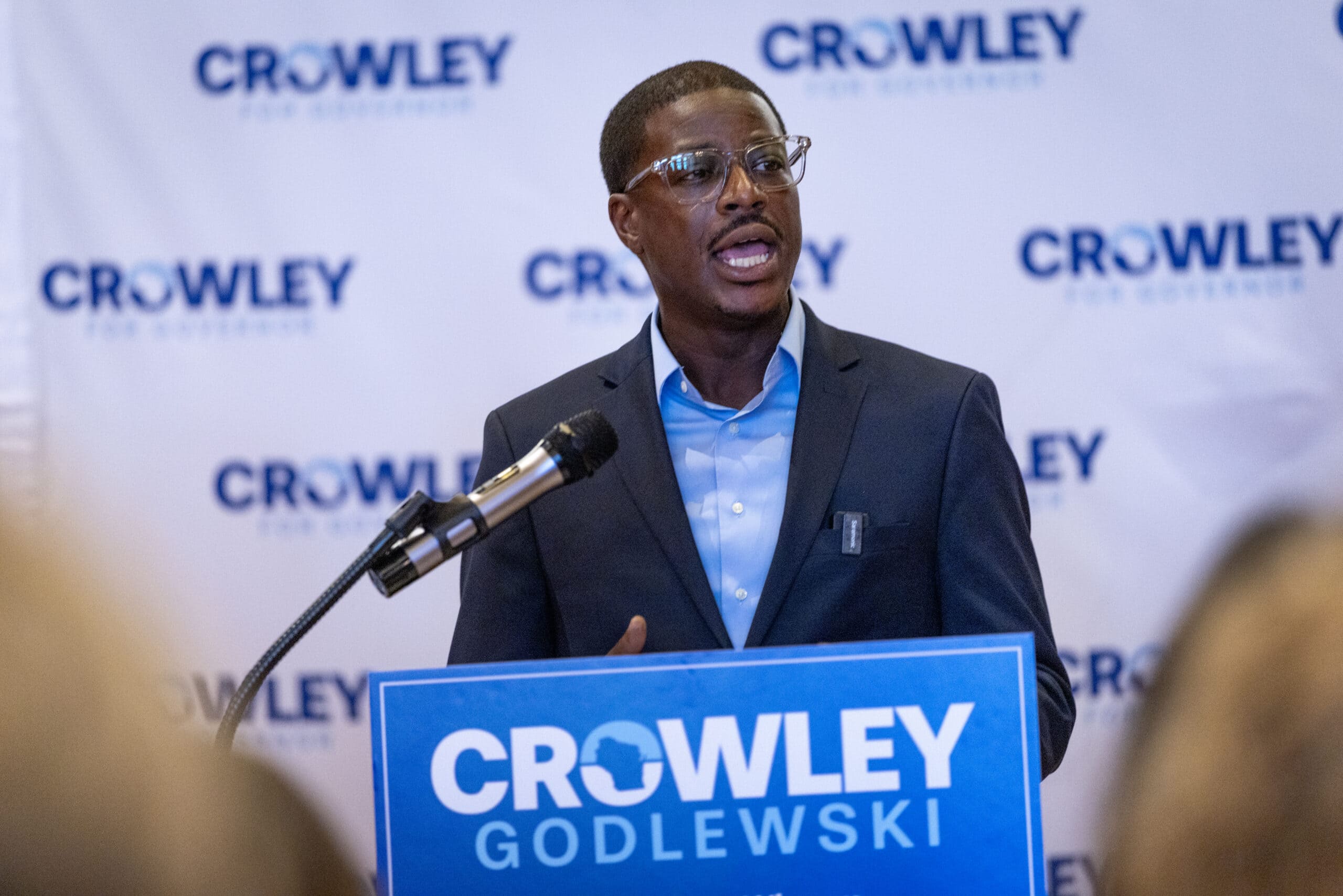
The narrative is taking shape quickly. Influencers post photos from American Family Field with captions crediting County Executive David Crowley for negotiating a deal that keeps the Brewers in Milwaukee through 2050. Social media amplifies the story. Crowley becomes the deal-maker, the person who saved baseball for Wisconsin.
The timeline tells a different story. First, it’s important to recognize that this current season of Brewers baseball was always going to be played in Milwaukee. The “keeping the Brewers in Milwaukee” narrative refers to the team’s plans after 2030, when their stadium lease was set to expire.
In June 2023, Crowley signed a Milwaukee County Board resolution opposing any use of county tax levy dollars for long-term stadium renovations. The resolution stated plainly: the county had more pressing funding needs. Crowley’s position was clear. If the Brewers were to remain in Milwaukee, the funding would have to come from elsewhere.
Two months later, when Republican state lawmakers proposed a plan that included county funding, Crowley objected publicly. The proposal, he said, “sticks it to Milwaukee County taxpayers.” He repeated his position: contributions should come from the state and from the Brewers themselves, not from the county.
This opposition mattered. Crowley held the county’s veto power over any stadium deal that required local revenue. Without the county executive’s support, a plan that included county money would face enormous headwinds on the county board.
What changed between June and the deal’s completion in December was not Crowley’s doing. It was what came into the room around him. The Wisconsin Legislature moved a bill forward. Governor Tony Evers supported it and eventually signed it. Milwaukee Mayor Cavalier Johnson backed the arrangement. State Republican leadership negotiated the framework.
The final bill, Wisconsin Act 40, reflected that broader coalition. The state committed $365.8 million, a reduction from earlier proposals. Milwaukee County contributed $67.5 million annually, funded by a new 0.4 percent sales tax increase the county implemented in January 2024. The City of Milwaukee added $67.5 million. The Brewers committed $100 million. The team’s original lease ran through 2030. This deal extended that commitment to 2050.
The deal required multiple players to move. The Legislature had to pass the bill through both chambers on a bipartisan vote. Governor Evers had to commit state funds. Mayor Johnson had to secure city participation. Crowley had to shift from opposition to negotiation. Each was one person in the negotiation process, not the single-handed reason the deal was passed.
When the Brewers play in October, they deserve the attention. When politicians claim credit for the deal, the accuracy of that claim matters. Crowley initially opposed the deal and then was one of many who were part of the negotiations – not the ringleader. That is a different story from having single-handedly negotiated their future in Wisconsin.
