


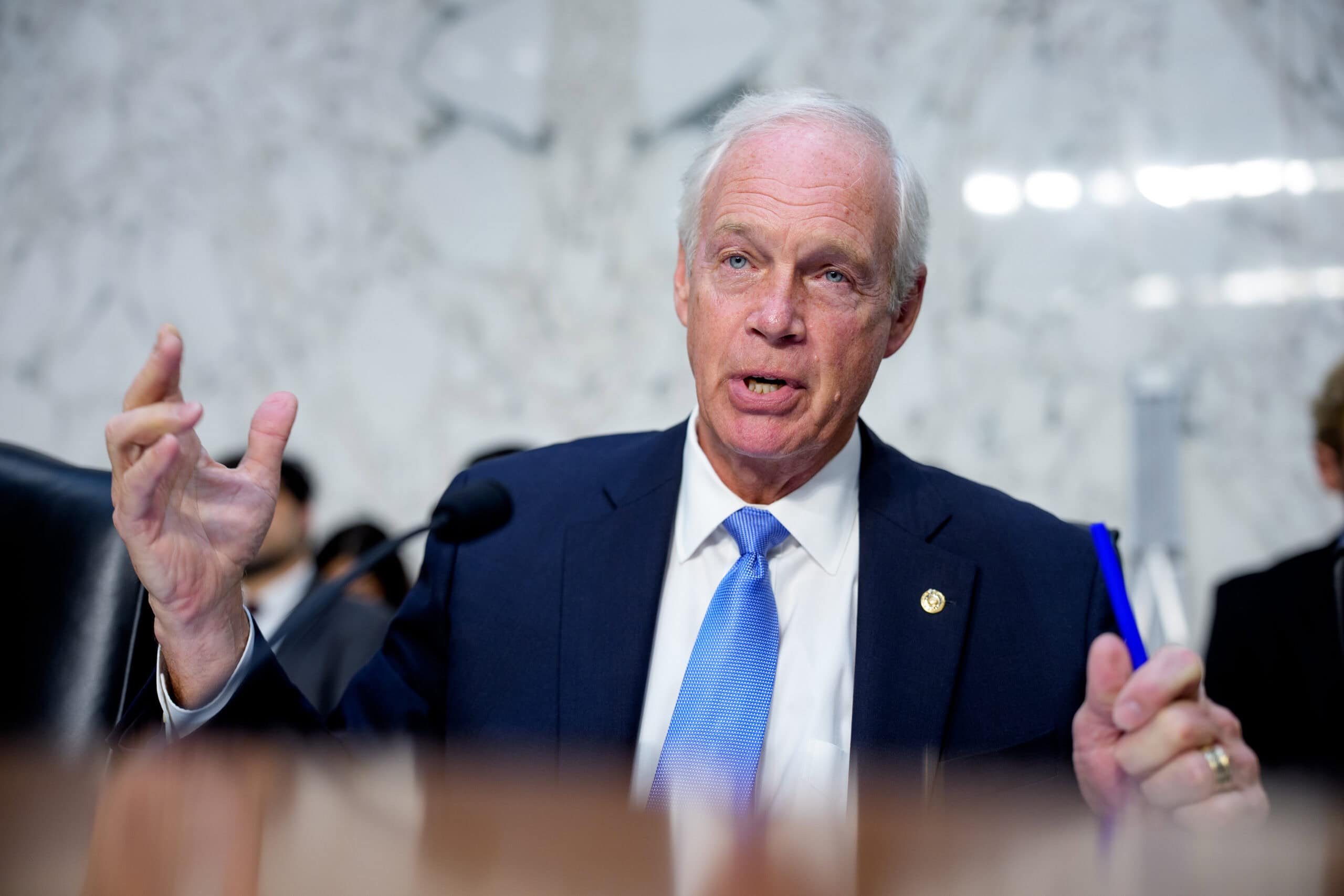
As a Former Pharma Insider, Senator Ron Johnson’s Questions About COVID Vaccine Accountability Hit Close to Home
I was working in the pharmaceutical industry during the mRNA COVID vaccine rollout, specializing in small molecules / generics. Our company manufactured pharmaceuticals for Pfizer and several of the world’s largest drug companies, and my daily activities revolved around FDA regulatory compliance, quality assurance, quality control, manufacturing standards, and patient safety. This gave me a unique perspective during my conversation with Wisconsin Senator Ron Johnson.
In April, Johnson released a damning report regarding Biden’s Health Officials purposely turning a blind eye to various warnings and safety signals during the COVID-19 vaccine rollout.
The questions raised during our conversation strikes at the heart of how the pharmaceutical industry operates, how FDA oversight is supposed to function, and what happens to insiders when they challenge the official COVID narrative. Senator Johnson described a massive cover up and a broken public health system that many Americans no longer trust, and for good reason.
The FDA has Two Worlds — Understanding the Difference
I worked in generics throughout my entire pharmaceutical career, which was regulated by the FDA’s Center for Drug Evaluation and Research (CDER) division. This is the largest division within the FDA overseeing traditional pharmaceutical drugs, monitors safety, efficacy, manufacturing quality and post-market surveillance to ensure the drug is safe and effective.
The COVID mRNA vaccines fell under a different regulator branch of the FDA known as the Center for Biologics Evaluation and Research (CBER). This division regulates vaccines, gene therapies, and other advanced biological products.
That distinction became critically important in March 2021 when a veteran FDA scientist named Dr. Ana Szarfman (from the CDER side of the agency) warned officials at CBER that the safety monitoring system being used for COVID vaccines had a serious flaw. According to Senator Johnson, that warning was completely ignored.
Dr. Szarfman was monitoring the Vaccine Adverse Event Reporting System (VAERS) — a national vaccine surveillance program — when she discovered the serious flaw. The VAERS system is jointly administered by the Food and Drug Administration (FDA) and the Centers for Disease Control (CDC) to collect and analyze reports of adverse events following vaccination. This program serves as a warning system to identify potential safety concerns that may warrant further investigation, FDA recalls or other safety measures.
Senator Johnson described how Dr. Szarfman warned FDA leadership including Dr. Peter Marks — the longtime CBER director who oversaw the authorization and approval process for the mRNA vaccine rollout. Szarfman told Marks that the agency’s standard data-mining algorithm used to identify unusual patterns and adverse events suffered from a problem called “masking.” It was hiding important safety signals instead of flagging them.
Dr. Szarfman had already developed a better algorithm designed to correct the problem and brought this to the attention of Dr. Marks.
“On March 1st (2021), you get warned that the algorithm you’re using to analyze all those data reports is gonna mask and hide signals,” Johnson told me. “Then 26 days later, she comes up with the data from the new algorithm.”
According to Johnson, her updated algorithm revealed dozens of statistically significant safety signals for serious adverse events, including sudden cardiac death, pulmonary infarction, various strokes, and Bell’s palsy. These safety signals had previously been obscured.
Internal records and testimony indicate that senior FDA officials including Dr. Marks were made aware of Szarfman’s improved algorithm and its findings, however the FDA chose not to implement it. Rather than fully exploring her concerns, FDA leadership sidelined her, essentially instructing Szarfman to stay in her CDER lane.
According to Johnson, the timing of the warning was significant. FDA officials were already receiving an onslaught of adverse-event reports on VAERS unlike anything the FDA had ever experienced.
As head of CBER, Dr. Marks was facing immense pressure both politically and socially. “You’re under a great deal of pressure from the administration and the public,” Johnson said. “‘We want something to protect us. We want to end this pandemic.”
Shortly after the Emergency Use Authorizations were granted under Operation Warp Speed, the system was inundated with reports of adverse events. According to Johnson, the contractor responsible for processing those reports had to hire over 250 additional employees simply to address the backlog in the VAERS reporting system.
Johnson suggests the volume alone should have triggered concern. “Even though the deluge of reports is a screaming safety signal in and of itself,” Johnson said, FDA officials continued using the flawed system.
“Since the start of VAERS, on average, about 280 deaths are reported associated with a vaccine every year,” Johnson said. “In 2021, there were 21,000 deaths reported worldwide.”
“I know VAERS doesn’t prove causation,” he said. “But that’s a correlation that you have to be concerned about.” He pointed to data showing a significant percentage of reports occurring withing 1-2 days after receiving the COVID shot. This should immediately prompt further investigation.
Johnson believes acknowledging flaws in the safety-monitoring process would have raised difficult questions about decisions that were already made and protocols that were already in place. Acknowledging the problem and launching an internal investigation could have potentially undermined public confidence in the agency, which was already facing intense pressure. This is likely why the FDA chose not to investigate the VAERS reports or the flawed algorithm.
“I don’t have the proof. I don’t have the documentation,” Johnson said, “But it’s pretty easy to do that mind game and realize it’s probably just what these guys are thinking.”
Johnson believes the timing and circumstances raise serious questions, describing the controversy surrounding the FDA’s handling of these warnings as “the biggest scandal of his lifetime.”
Follow the Money and the Immunity
Pfizer’s COVID-19 mRNA vaccine generated roughly $90-95B in revenue between 2021-2024, while Moderna’s mRNA vaccine generated ~$46-50B over the same time period, making the mRNA vaccine rollout the most financially lucrative pharmaceutical product launch (in the shortest amount of time) in history.
I asked Johnson about the sweeping liability protections granted to vaccine manufacturers under the PREP Act, and whether individual states and Attorney Generals might eventually find ways to investigate pharmaceutical companies despite federal protections.
“It’s just interesting,” he responded, “if these things are so safe and effective, you wouldn’t need immunity, would you?”
Johnson revealed that his office continues seeking documents from the Department of Health and Human Services related to the Biden administration’s decision to extend PREP Act protections.
“A group of documents that we’re getting stonewalled to this day from (Biden’s) HHS has relevant information and communications regarding Joe Biden’s extension of the PREP Act immunity,” Johnson said.
Those documents, he believes, could help explain the rationale behind continuing legal protections for manufacturers despite mounting questions about safety and efficacy.
Personally, I would like to see a multi-state lawsuit against Fauci, even if the suit simply triggers the discovery phase, prompting further investigation into the origins of COVID and the involvement of these pharmaceutical companies.
“I hope somebody does engage in some kind of lawsuit against the whole COVID cartel,” he told me. “I think they’re all culpable from my standpoint.”
The Revolving Door Inside the Agency
I brought up the cozy relationship between regulators and the pharmaceutical industry (not to mention peer reviewed medical journals, but that’s another story).
Dr. Peter Marks later joined Eli Lilly after overseeing CBER during the vaccine rollout. “The incestuous relationship between pharma and the FDA is rampant, to say the least,” I told Johnson.
No evidence has emerged suggesting wrongdoing related to Mark’s employment transition, however it highlights the long-established public skepticism and scrutiny regarding the revolving door between FDA regulators and the companies they regulate.
It reminds me of the closing quote from Regina King in the 1998 film Enemy of the State, when she says “Well, who’s gonna monitor the monitors of the monitors?” FDA leadership demonstrated a unconscionable level of inconsistency in its ability to regulate itself during the vaccine rollout. The agency was purposefully selective in the information it released to the public, just as it was strategic about the information it chose to ignore.
The Reckoning has Only Begun
I fully understand the importance of innovation and the necessity for regulatory oversight, but if there’s anything we can take away from the draconian policies that were implemented and weaponized by our own government, it’s that public trust depends on transparency, and it’s nearly impossible to restore public trust once it’s been destroyed.
Trust relies on regulators following the data wherever it leads, and requires asking difficult questions even when the answers may be harmful to the reputation of the industry. Senator Johnson has spent years pursuing those questions.
“There’s not one thing that I’ve said during COVID that’s been proven wrong,” said Johnson. “I’m not going to give up.”
Johnson is a relentless truth-seeker and his unwavering commitment to forcing investigations and demanding accountability does not go unnoticed. For years, Johnson has endured unrelenting criticism, media scorn, censorship, and resistance from powerful institutions.
Regardless of where one stands on the COVID vaccines, Johnson’s commitment to following the facts wherever they lead reflects the exact leadership we need to course correct after years of deception and coverup.
Johnson’s “radical transparency” approach demands full public disclosure and unredacted data from federal health and regulatory agencies regarding COVID-19 vaccines, public health policies and federal oversight.
For the millions of Americans whose lives were negatively affected (and in many cases, permanently altered) by pandemic-era policies, the search for truth is far from over. We cannot be complacent now — we have a long road ahead.
Related Story — Sen. Johnson Helping Lead COVID Reckoning as Fauci Narrative Crumbles– The Senate Homeland Security and Governmental Affairs Committee heard explosive testimony from CIA whistleblower.
