


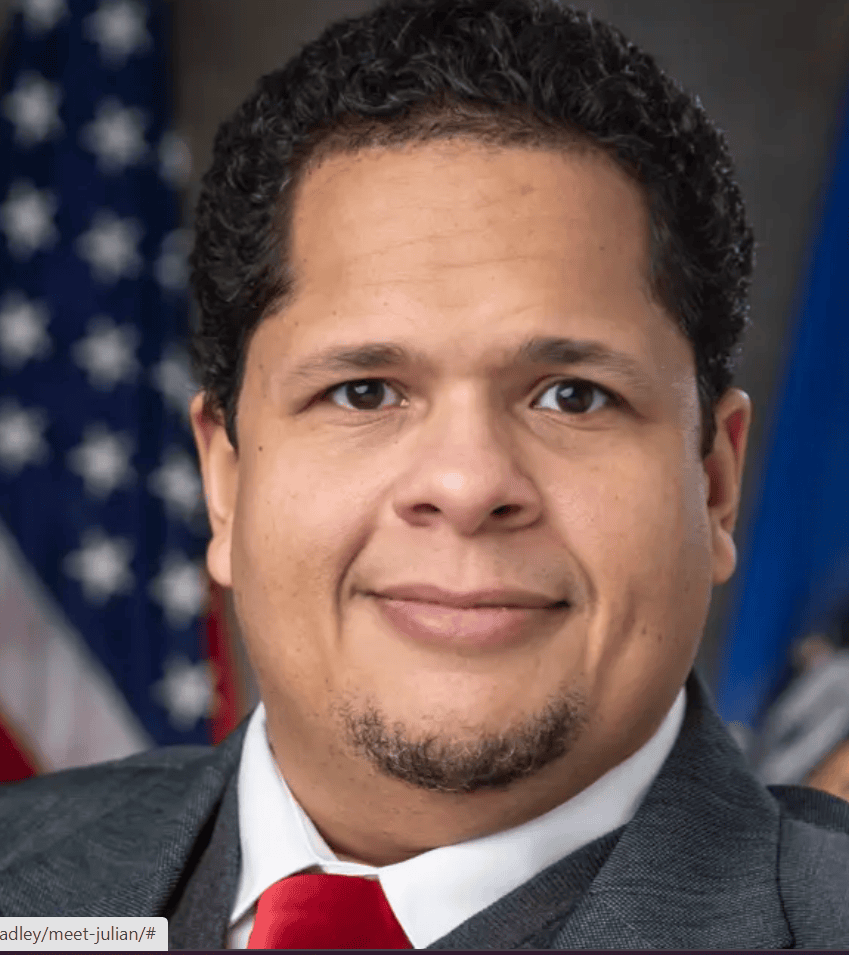
Wisconsin Senate Republicans elected Sen. Julian Bradley of New Berlin as their minority leader for the next session during a closed-door caucus Thursday, according to a WisPolitics report by JR Ross.
Bradley acknowledged the new reality in the Capitol and said the caucus is ready to fight.
“Tuesday’s results changed the math in the Senate, but they didn’t change what we believe or who we work for,” Bradley said. “Wisconsin families still want safe communities, good jobs and a government that lives within its means. We’re going to keep fighting for those goals and our state. I’m grateful to my colleagues for the trust they’ve placed in me. Leading this caucus is a responsibility I don’t take lightly.”
Bradley will lead Senate Republicans when the new legislative session convenes in January 2027, with the caucus focused on protecting taxpayers and expanding opportunity for every Wisconsinite.
Bradley confirmed the result to a reporter after the vote but declined further comment until he could speak with his staff. Prior to the caucus, Senate President Mary Felzkowski, President Pro Tempore Patrick Testin and Sen. Eric Wimberger had all expressed interest in the post. Felzkowski told colleagues that members wanted change and described Bradley as “a fresh face.”
The selection comes two days after Democrats flipped control of the Senate, moving from a 15-18 minority to an 18-15 majority in the Nov. 3 election. Republicans, who held a near-supermajority as recently as four years ago, will now serve in the minority.
Bradley, first elected in 2020, is the first Black Republican to serve in the Wisconsin Senate. A former professional wrestler and corporate manager who rose from poverty, he has focused on public safety legislation and sits on the Joint Finance Committee. He represents the 28th District covering portions of Racine, Walworth and Waukesha counties.
In a letter circulated to colleagues before the vote, Wimberger sharply criticized past leadership for losing control. He wrote that the caucus “collapsed from a near supermajority to a caucus of 15” through “a series of actions and inactions,” citing budget strategy, a failed legal approach on election issues and a reluctance to engage Democrats aggressively on the floor.
