


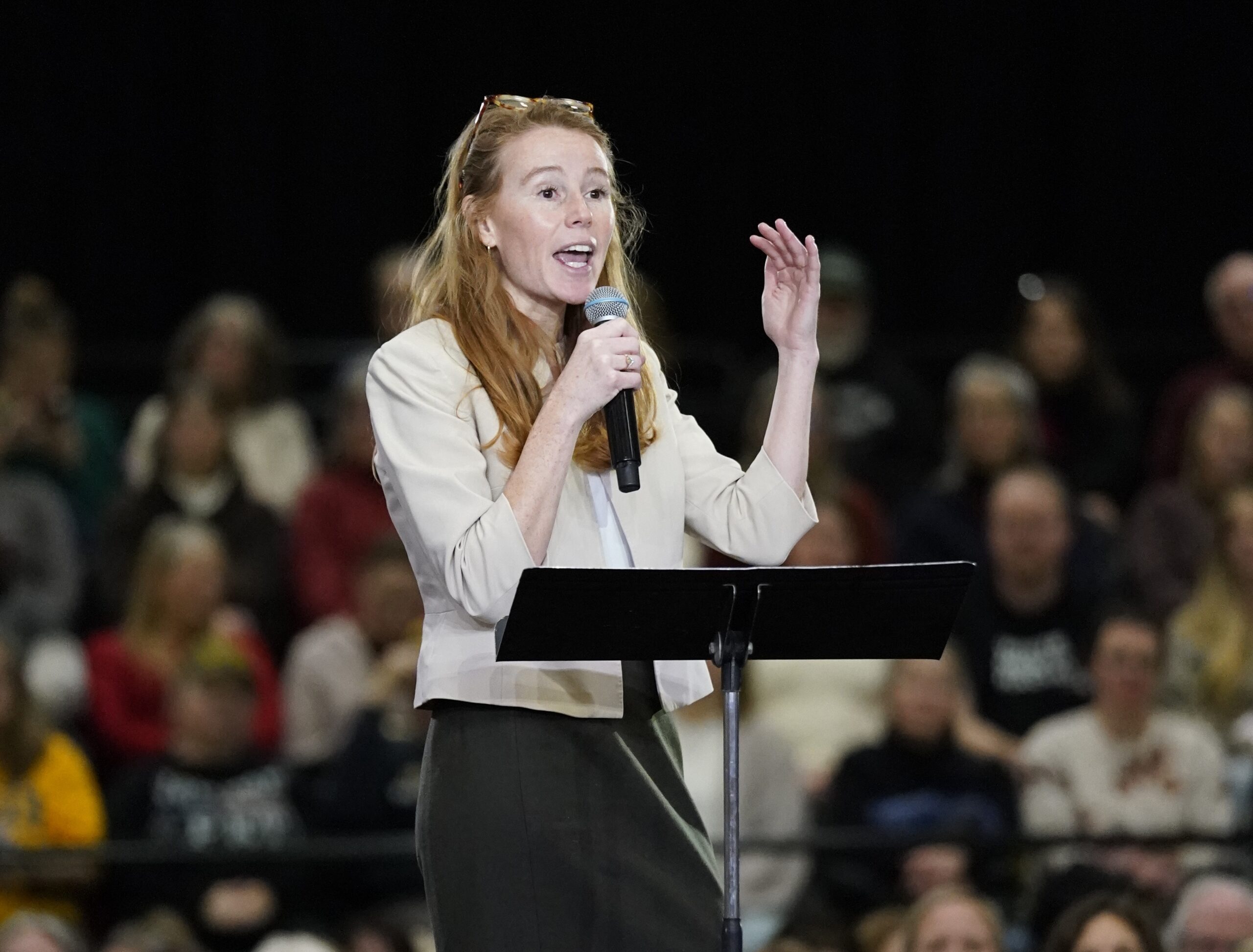
Democrat Rebecca Cooke has spent years telling voters in Wisconsin’s 3rd Congressional District that health care is too expensive and that coverage must be dramatically expanded, even racking up a powerful endorsement from Sen. Bernie Sanders, the nation’s leading advocate for Medicare for All. However, federal campaign records show her own well-funded operation has not paid for health insurance or even a healthcare stipend for campaign staff.
Cooke’s July filing with the Federal Election Commission lists staff salaries but no disbursements for health insurance or a healthcare stipend. FEC records also show her campaign stopped paying for workers’ compensation insurance last October.
The gap is striking given Cooke’s public record: She has called health care a top concern for western Wisconsin and supported expanding Medicare to cover vision, dental and hearing. She has also long advocated extending Affordable Care Act tax credits.
“I’m hopeful that we win back the House majority this fall, and day one, when Democrats win back the House and we have gavels, H.R.1 [federal reconciliation legislation signed in 2025] has got to be focused on healthcare,” Cooke said during a primary debate last month.
During that debate, she called for expanding Affordable Care Act tax credits and Medicare “to cover vision, dental, and hearing–the things that deteriorate as folks age.”
“In addition to expanding Medicare,” she added, “I want to make sure that we have a public option so that people can afford the healthcare that they need and deserve.”
Cooke’s rival for the Democratic nomination, Emily Berge, ran explicitly on Medicare for All and paid workers’ compensation insurance for her staff. Berge pressed Cooke to release her personal financial disclosure before the August 11 primary, arguing that voters deserved the information while they could still act on it.
Cooke requested a 90-day extension in April, pushing the disclosure deadline to August 13; two days after the primary. The delay drew criticism from Berge and Republican Rep. Derrick Van Orden, who said it left primary voters in the dark. Cooke’s campaign compared the request to a routine tax extension and said she had filed prior disclosures on time.
The timing now looks convenient. A well-funded campaign that raised more than $8 million could have chosen to cover staff the way it urges government to cover everyone else. Instead, it reported salaries only and dropped workers’ compensation coverage months earlier. Critics say that pattern undercuts the working-class image Cooke has cultivated as a waitress and small-business owner.
Cooke won the Democratic nomination and will face Van Orden in November.
