


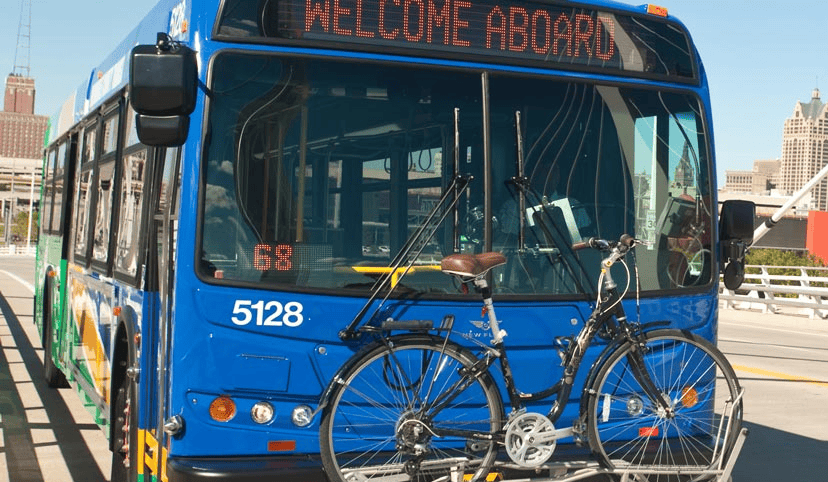
Milwaukee County Transit System (MCTS) is staring down yet another financial disaster. This time, the consequences will hit every route, every stop, and every rider who depends on public transit to get to work, school, appointments, and basic daily life.
So where is County Executive David Crowley? Where is the explanation for how we got here?
Milwaukee County residents are being told to brace for 25% service cuts, and Crowley has offered no real plan, no accountability, and no answers.
Transit leaders revealed this week that MCTS is facing a $15 million deficit in 2027, ballooning to $37 million by 2031.
To survive, MCTS is weighing two drastic concepts, both built around a 25% reduction in service.
Under the ridership concept #1, MCTS would concentrate buses on fewer routes and run them more frequently. Ricky Angueira of Jarrett Walker & Associates explained, “In some places with this concept, they have to walk longer to a more frequent service.”
Some neighborhoods will lose their bus entirely. Others get better service, but only if they live along the “chosen” routes.
Angueira argues this could make transit more useful for riders on those remaining corridors.
But what about everyone else? What about seniors, students, workers, and families who don’t live near those routes? Milwaukee’s most vulnerable riders will pay the price.
The coverage concept #2 keeps more routes but slashes frequency.
Angueira gave one example, “Center Street is changing from every 30 to every 60 minutes.”
That puts riders out by waiting an hour for a bus in winter, in the rain, in unsafe conditions, or while trying to get to work or school on time. This concept keeps buses “near everyone,” but at the cost of reliability. A bus that comes once an hour is not acceptable.
Michael Brown of the Amalgamated Transit Union said what many parents already fear, “You’re going to make it even worse for children and teens to go out and catch the bus to school. They’ll have to leave the house at 5 a.m. to get to school at 8 a.m.”
This is the reality of cutting service in a city where thousands of students rely on MCTS every single day. Cuts don’t just inconvenience riders. They punish them.
MCTS says the cuts will provide “short‑term stability” Fuentes claims the 25% reduction would allow MCTS to fully fund service levels for three years.
Is that the best-case scenario? Milwaukee will be right back in a crisis situation. Riders will have fewer routes, longer waits, and a damaged transit network that will be even harder to rebuild.
This is the result of years of mismanagement, shrinking ridership, fare evasion issues, and a county government that has failed to stabilize transit funding. Crowley should be front and center to answer for this. However he remains silent.
MCTS will hold informational sessions and gather public input throughout September and October. A final redesigned network is expected in summer 2027.
These concepts are not final, but they show exactly how dire the situation is.
Milwaukee cannot thrive without reliable public transit. Workers, students, seniors, and families all depend on buses.
The county executive should be accountable for letting MCTS get so out of control, but he is otherwise preoccupied. If MCTS collapses, Milwaukee’s economy collapses with it. I guess he is too busy campaigning or eating cake!
