


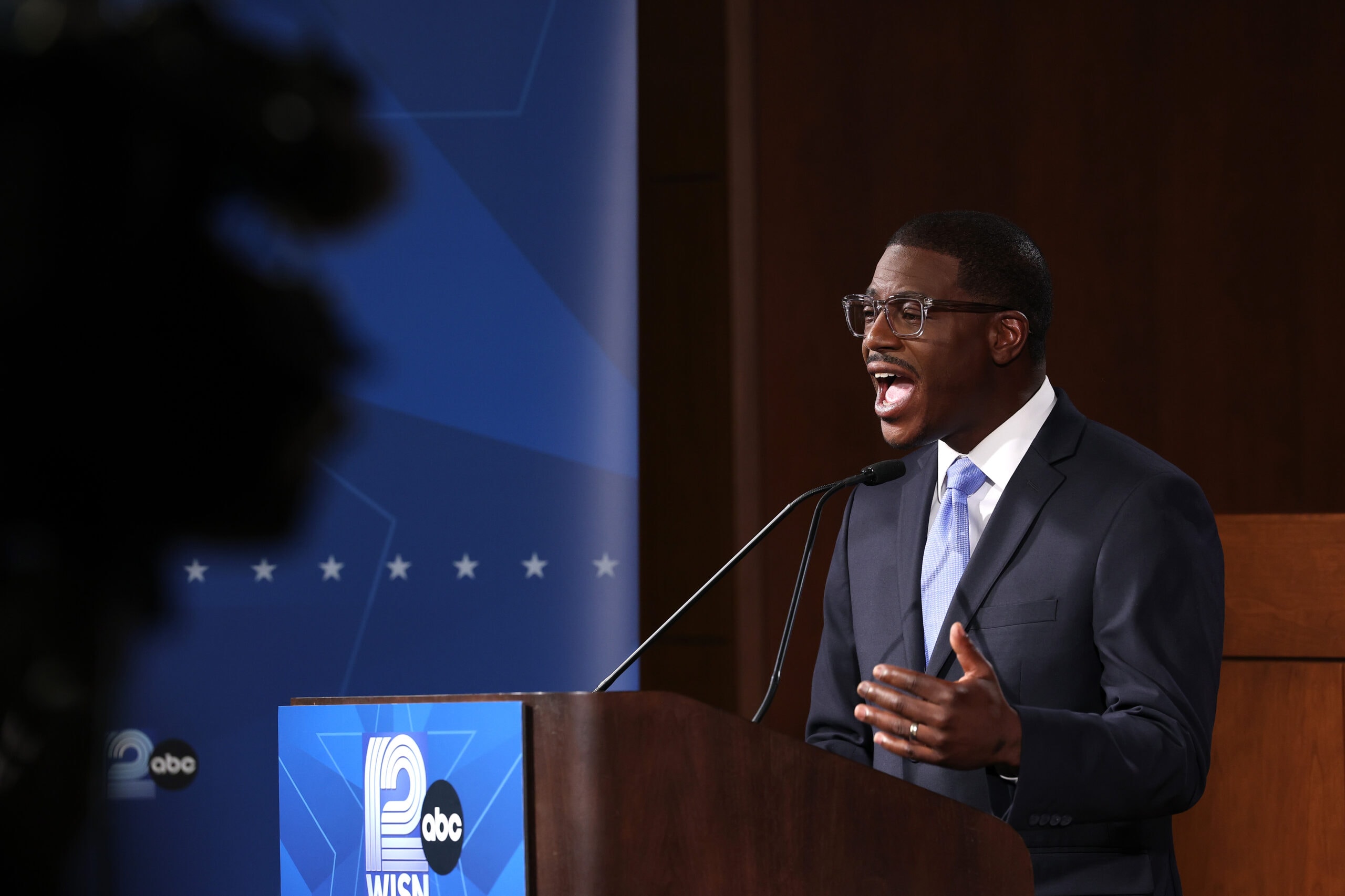
Last night’s gubernatorial debate offered a clear window into David Crowley’s only campaign strategy. Unable to effectively counter Tiffany’s policy positions on taxes, energy costs, education, and healthcare, Crowley repeatedly returned to the same line: overemphasizing his opponent’s title as Congressman. This approach signals exactly what the campaign’s final stretch will look like. Rather than contest Tiffany’s specific policy agenda, Crowley is attempting to transform a state-focused race into a referendum on national politics and partisan identity. The strategy assumes that voters will prioritize national culture-war concerns over their own pocketbooks.
This isn’t particularly surprising. Wisconsin voters have heard the national politics playbook before, and they’ve grown weary of it. When families are struggling with rising property taxes and utility costs, when parents are worried about what’s happening in classrooms, when small business owners are drowning in regulations, they want real solutions to their very real problems. Crowley’s strategy assumes voters care more about scoring points on Trump than on their own livelihoods. Unfortunately for Crowley, pocketbook issues and community concerns continue to be the driving force for Wisconsin voters. It’s why, according to VoteHub, this race is one of only three gubernatorial races that has trended to the right since Labor Day.
Perhaps what is more telling from last night’s debate is what Crowley didn’t do. He didn’t articulate a compelling vision for Wisconsin’s future. He didn’t explain how his policies would tangibly improve Wisconsinites’ daily lives, and in fact, regularly dodged questions from the moderators asking for specific policy answers. He didn’t make the case for why his approach to energy policy, education, or healthcare would outperform Tiffany’s. Instead, he leaned on the assumption that simply evoking national partisan divisions would be enough.
But Wisconsin voters have made clear they’re looking for something different: a governor focused on their state’s specific challenges, not a proxy for exhausting national partisan warfare.
Gubernatorial elections in Wisconsin are different. Voters expect their governor to focus on state-specific issues. They want to know about jobs, schools, roads, and government efficiency. They want someone who understands that Wisconsin’s economy isn’t identical to California’s or New York’s, and that one-size-fits-all progressive policies designed in Washington don’t work in the industrial Midwest. Tiffany’s message, lower taxes, affordable energy, education that works, and accessible healthcare, directly addresses these top voter concerns.
Over the next 12 days, expect Crowley to double down on the national politics angle. It’s the only play left in his playbook. But Wisconsin voters have made clear they’re looking for something different: a governor focused on their state’s specific challenges, not a proxy for exhausting national partisan warfare.
Wisconsin is ready for a governor who will focus on Wisconsin. Tiffany’s message is resonating precisely because it does. Crowley’s gamble that voters will abandon their own interests for national political theater lost him the debate last night.
