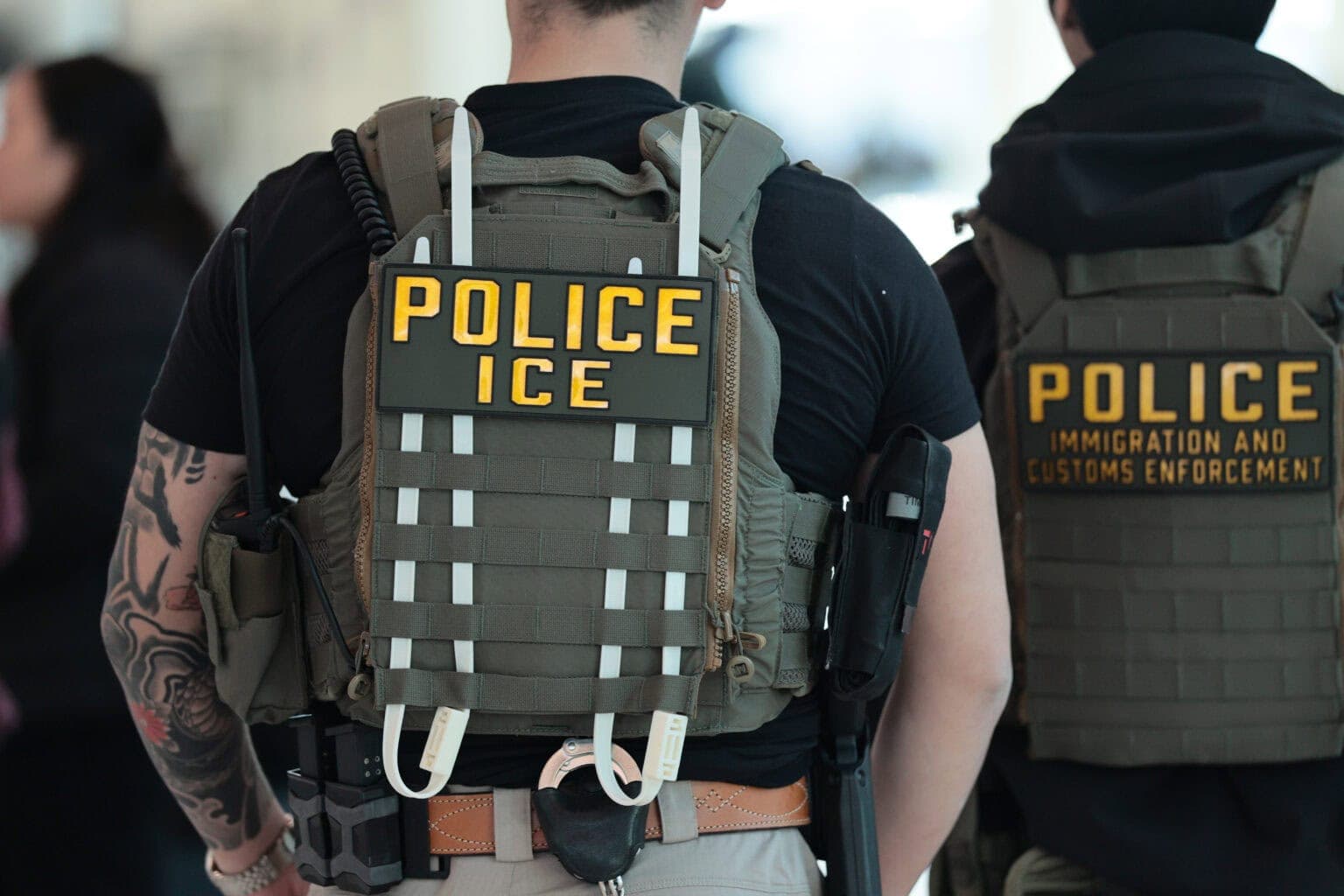


MILWAUKEE — The U.S. Department of Justice has filed suit against the City of Milwaukee, seeking to block enforcement of a city ordinance that prohibits law enforcement officers—including federal Immigration and Customs Enforcement (ICE) agents—from wearing face coverings that conceal their identities while interacting with the public.
The lawsuit, filed Thursday in the U.S. District Court for the Eastern District of Wisconsin, names the City of Milwaukee, Mayor Cavalier Johnson, City Attorney Evan Goyke, and Milwaukee Police Chief Jeffrey Norman as defendants. Federal officials argue the ordinance unlawfully interferes with federal law enforcement operations and violates the U.S. Constitution’s Supremacy Clause by attempting to regulate the conduct of federal officers.
The Ordinance
Milwaukee’s Common Council approved the ordinance in April 2026 as part of a broader package of immigration-related measures commonly referred to as the “ICE Out” initiative.
The law prohibits local, state, and federal law enforcement officers from wearing masks, balaclavas, or other facial coverings that obscure their identities while performing official duties in public. It also requires officers to display identification or, upon request, provide their agency affiliation, last name, and badge or identification number.
The ordinance includes exceptions for medical reasons, occupational safety, severe weather, and undercover assignments. Violations are subject to civil penalties ranging from $5,000 to $10,000.
Before its adoption, Milwaukee City Attorney Evan Goyke’s office reviewed the proposal and concluded it was legally enforceable.
Supporters of the ordinance argued it promotes transparency and public trust by ensuring residents can identify officers with whom they interact. Advocates also expressed concerns that masked officers could be mistaken for impersonators or increase public fear during enforcement actions.
Those concerns intensified after videos circulated online showing federal immigration enforcement operations in Milwaukee during June in which many ICE agents wore masks while executing arrests, some involving drawn firearms and the use of tasers.
Federal Pushback
Federal officials objected to the ordinance almost immediately after its passage.
The Department of Homeland Security maintained that officers would continue wearing protective face coverings during operations, describing efforts to prohibit masks as dangerous and harmful to officer safety.
On July 10, the Justice Department sent a formal letter to Mayor Johnson and City Attorney Goyke demanding assurances that Milwaukee would not enforce the ordinance against federal personnel. The letter, signed by Assistant Attorney General Brett A. Shumate and First Assistant U.S. Attorney Brad Schimel, argued the measure is unconstitutional because local governments cannot dictate how federal officers perform their duties.
Federal officials also warned that requiring agents to reveal their identities could expose them and their families to harassment, doxxing, and potential violence.
The Lawsuit
In a July 17 response, Goyke rejected the federal government’s request.
He characterized the ordinance as “a vital public safety measure” designed to improve accountability and reduce the risk of individuals impersonating law enforcement officers.
Goyke argued the law does not prohibit federal immigration enforcement itself but instead establishes reasonable identification requirements that apply broadly to law enforcement officers. He also noted that courts have not yet issued a final ruling invalidating similar ordinances adopted elsewhere.
Milwaukee indicated it intended to continue enforcing the ordinance unless ordered otherwise by a court.
The Justice Department’s lawsuit, filed July 23, asks the federal court to declare Milwaukee’s ordinance unenforceable as applied to federal officers and to prohibit the city from enforcing it against ICE agents and other federal law enforcement personnel.
Associate Attorney General Stanley E. Woodward Jr. said local governments cannot dictate the equipment federal officers use while carrying out their duties.
“State and local leaders cannot tell Federal officers how to do their job,” Woodward said in a statement. “And they certainly cannot prohibit them from ensuring their own safety in safeguarding our communities and enforcing federal law.”
Woodward also argued the ordinance could expose officers to harassment and violence by making it easier to identify them and their families.
Assistant Attorney General Brett A. Shumate similarly stated that decisions regarding protective equipment for federal officers rest solely with the federal government.
According to the complaint, protesters in several jurisdictions have used facial recognition technology and publicly available photographs to identify officers, publishing personal information online and exposing them to potential retaliation.
The Milwaukee lawsuit is part of a broader series of Justice Department challenges to similar local mask and identification requirements in New York, Philadelphia, California, Virginia, Connecticut, and New Jersey. Courts have granted preliminary relief to the federal government in several of those cases while litigation proceeds.
Legal Context and Next Steps
Legal scholars note the constitutional questions surrounding these ordinances remain largely unsettled.
Some analysts have suggested the outcome may depend on whether courts determine that face coverings are reasonably necessary for federal officers to safely perform their duties. Others point out that Milwaukee’s ordinance differs from previous laws because it applies broadly to all law enforcement agencies rather than singling out federal immigration officers.
As of Thursday’s filing, no court had ruled on the merits of Milwaukee’s ordinance.
The case now places a federal judge in the position of determining whether the City of Milwaukee may require federal officers operating within its boundaries to comply with local identification requirements, or whether federal authority preempts those rules under the Supremacy Clause.
The decision could carry implications well beyond Milwaukee as courts continue to define the balance between municipal police powers, public accountability, and the federal government’s authority to conduct immigration enforcement operations.