


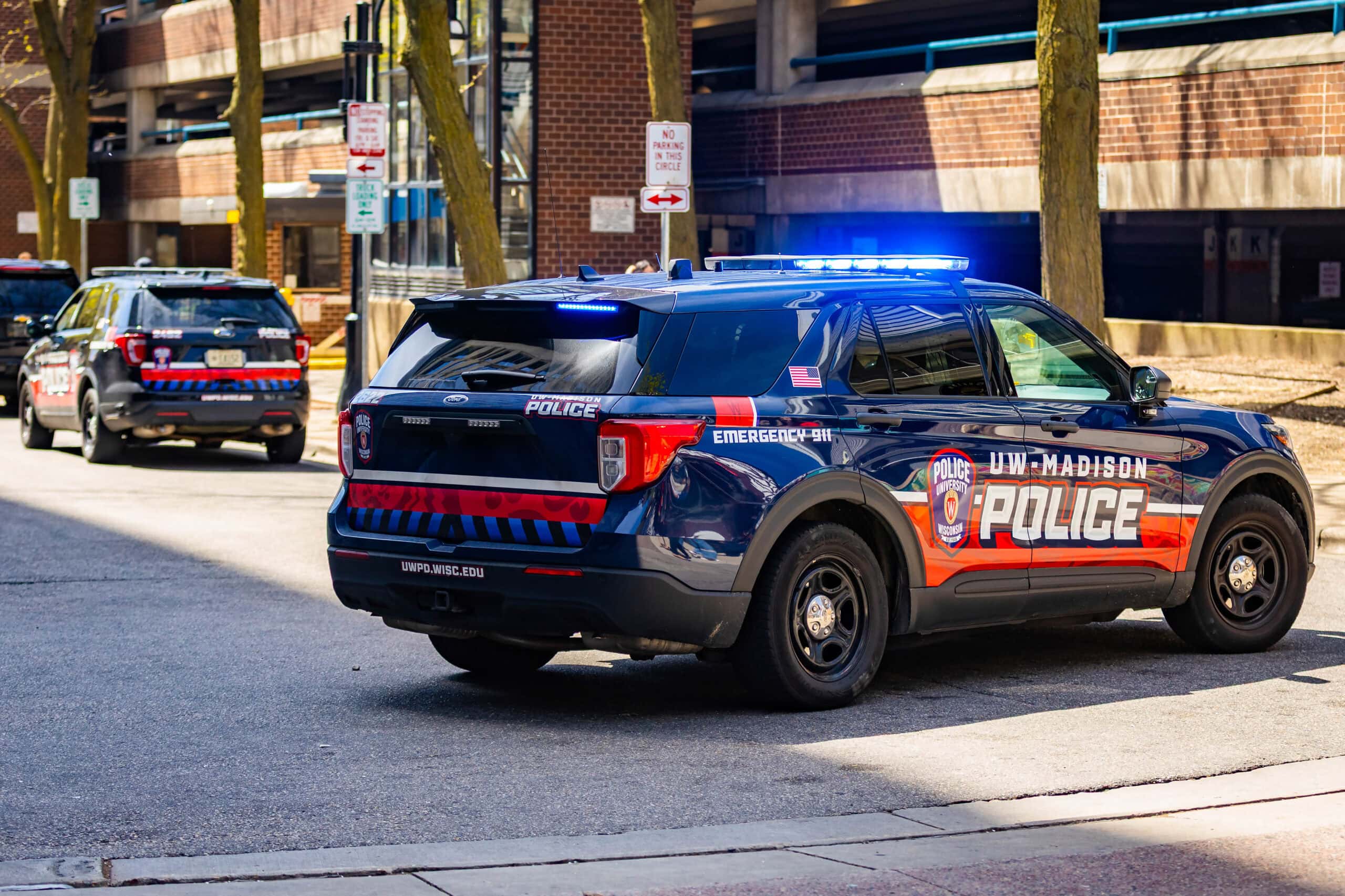
Madison police officers who regularly interact with the public are expected to begin wearing body cameras by the end of 2027, two years ahead of the city’s original timeline.
Mayor Satya Rhodes-Conway announced Thursday that a $350,000 grant from the Madison Community Foundation will help fast track the long delayed program.
The announcement comes just months after the fatal officer involved shooting of Corey Ruiz in July, a case that intensified public scrutiny over Madison’s lack of body-worn cameras. While cellphone footage captured parts of the incident, no officer-worn video was available.
Bob Sorge, President and CEO of Madison Community Foundation said, “The community has made clear that greater transparency in interactions between police and residents is crucial to building trust. The City and Madison Police Department had already created a path forward, but cost was a significant barrier limiting how quickly they could act. We saw an opportunity for MCF to help.”
For years, city officials cited budget constraints and policy concerns as reasons for delaying body camera deployment. Despite being Wisconsin’s second largest city and employing more than 400 police officers, Madison only has body cameras for SWAT and motorcycle officers.
Under the proposal, the initial grant will fund 220 body cameras along with software, two IT specialists, and a forensic analyst for a one-year period. City officials are also seeking federal funding through the U.S. Department of Justice to help cover equipment and operational costs.
“I’m really grateful and I am very relieved that we’re able to do this all in one year,” Rhodes-Conway commented during Thursday’s announcement.
The proposal still requires approval from the Madison Common Council, though the mayor indicated she expects strong support. Common Council President Sabrina Madison has already formed a committee to review body camera policies, oversight procedures, and implementation issues.
Madison Police Chief John Patterson and the Wisconsin Professional Police Association, which represents Madison officers, have both publicly supported the move.
“Body-worn cameras are an essential tool in modern policing and will help support our department’s values of transparency and accountability,” Patterson said.
According to Patterson, all uniformed officers who have direct contact with residents, including patrol, traffic, neighborhood, and community policing officers, would be required to wear the cameras while on duty.
The accelerated rollout marks a significant shift in Madison’s approach to police accountability. Supporters argue body cameras can provide objective evidence during critical incidents, improve transparency, and strengthen public trust. Critics of the city’s previous timeline contended that waiting until 2029 was increasingly difficult to justify as body cameras became standard equipment for law enforcement agencies across Wisconsin and the nation.
With funding now secured and political support appearing to grow, Madison is poised to finally join the majority of major police departments that use body-worn cameras as a routine part of daily policing.
