



Democrat gubernatorial candidate Mandela Barnes unveiled his “Wisconsin Way” agenda this week, pledging to reduce costs for working families through measures targeting corporations, utilities, and out-of-state interests, while positioning the plan as a defense of traditional Wisconsin values.
The platform, available on his campaign website, proposes freezing utility rates by instructing Public Service Commission appointees to deny all increases, capping executive compensation at utilities, and reallocating legacy coal-plant costs away from ratepayers. Additional measures include enforcing state antitrust laws against meatpacking companies, seeking tariff refunds from the Trump administration, enacting a right-to-repair law for farm equipment, prohibiting foreign and out-of-state entities from purchasing Wisconsin farmland, and lowering regulatory fees for livestock operations. But taking a look beyond the bullet points, voters should realize that Barnes’ progressive rhetoric and policy find itself somewhere between unworkable and illegal.
Even left-leaning outlets have flagged core elements as impractical. The Milwaukee Journal Sentinel reported that Barnes’ utility rate freeze plan is illegal under state law governing the quasi-judicial Public Service Commission, which must set “just and reasonable” rates. Experts described the pledge to pre-commit commissioners to blanket rejections as unworkable and likely to invite lawsuits or service disruptions. Barnes, as lieutenant governor, oversaw approval of more than $2.2 billion in utility rate increases out of $3.1 billion requested.
On agriculture, Barnes claims Wisconsin farm bankruptcies have risen 700 percent, citing a jump in Chapter 12 filings from two in 2024 to 16 in 2025. Critics note the absolute numbers remain tiny relative to roughly 58,000 operating farms and reflect broader market pressures rather than any single administration’s policies. Several planks in the agenda mirror Republican-backed measures that Barnes’ former boss, Gov. Tony Evers, previously vetoed, including right-to-repair legislation and restrictions on foreign ownership of farmland.
Barnes also wants to forgive medical debt and expand government healthcare programs. “Forgiving” debt simply shifts the burden onto taxpayers or forces hospitals to absorb losses, often leading to higher prices elsewhere. It does nothing to address root causes like over-regulation, defensive medicine, or administrative bloat. Expanding BadgerCare further would add billions in long-term costs at a time when Wisconsin already has strained budgets and rural hospitals are struggling.
Barnes’ agenda promises universal childcare, paid family leave, and mandated higher pay for providers. Similar programs in other states (e.g., parts of New York, California, and Washington) have produced massive waitlists, severe staffing shortages, and exploding taxpayer costs. Small businesses and families end up paying more through higher taxes or reduced hours, while providers struggle with the new mandates. Wisconsin already faces childcare access issues—layering on expensive universal requirements risks making the problem worse rather than solving it.
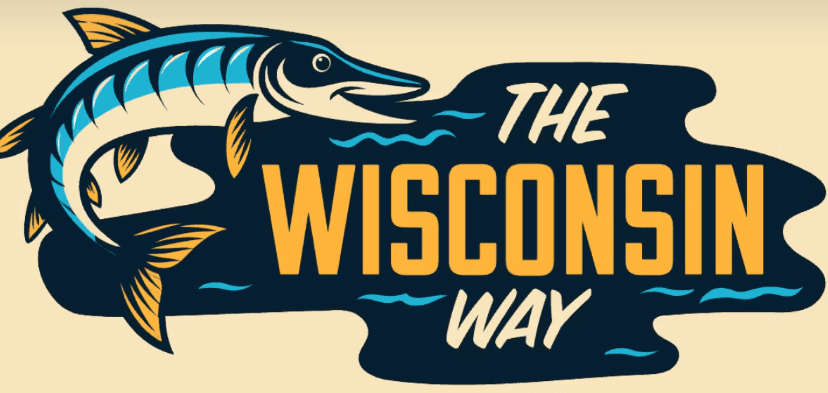
But it’s not just the unworkable and illegal policy that is drawing negative attention. The campaign graphic accompanying “The Wisconsin Way” featured a fish resembling a barracuda or another ocean species rather than Wisconsin’s state fish, the muskellunge. The headline image showed a fish with multiple dorsal fins, which is inconsistent with muskie anatomy and more consistent with AI-generated slop from an intern who has never seen a fish except on a plate. The original document also contained the misspelling “Wisconin Way.”
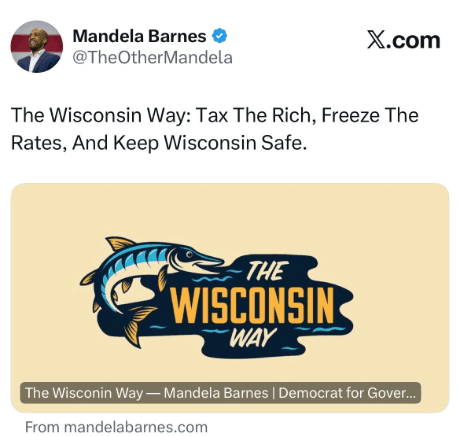
The errors are emblematic of a broader lack of attention to detail. “Nothing says ‘The Wisconsin Way’ quite like a fish you won’t find in Wisconsin waters,” one post stated, while others noted the spelling mistake as further evidence the candidate “doesn’t know Wisconsin fish nor how to even spell it.”
Additional planks drew scrutiny for expanding government reach. The agenda calls for new taxes on millionaires and estates over $15 million, repeal of Act 10 and right-to-work laws, legalization of recreational marijuana with proceeds directed to schools and childcare, and a moratorium-style pause on certain data center projects. Critics called the laundry list of promises high on rhetoric and low on implementation details, noting that similar Democratic priorities under the current administration have stalled for years. Repealing Act 10 would result in ballooning local budgets. After 15 years, the Walker Era reform is still delivering massive taxpayer savings and balanced budgets. According to the analysis, Act 10 has saved $35.6 billion since 2012.
Barnes’ policy agenda tries to help the candidate elbow his way through an increasingly crowded progressive lane. But many of these positions put him at odds with city voters and moderates who support things like School Choice. Those supporters have criticized his opposition to expanding options for Milwaukee families, arguing it would pull support from roughly 30,000 students currently using the program and push them back into a failing school district considered one of the worst in the nation.
The combination of policy proposals facing legal and practical hurdles and visible production missteps in the rollout clearly indicates that the Barnes campaign is not a serious operation.
