


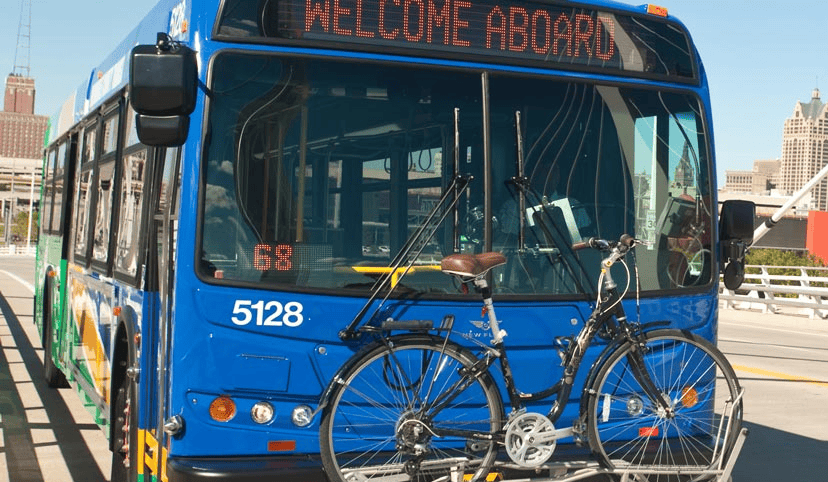
The Milwaukee County Transit System (MCTS) is planning a 25% reduction in service by slashing routes or reducing bus frequency. County officials say the cuts are necessary to help MCTS address a $15 million budget deficit. County Executive David Crowley has yet to publicly weigh in on either the proposed service reductions or the ongoing MCTS financial shortfall.
Blind and visually impaired riders are speaking out, warning that the county’s proposals would make their daily lives even more difficult.
Kevin Meyers, a blind bus rider from Greenfield, relies heavily on public transportation. He worries the service cuts could make it harder for him to get to work and access other destinations throughout Milwaukee County. “It’s going to really mess things up for me,” Meyers said.
For many residents, a longer walk to a bus stop may be a minor inconvenience. For blind, visually impaired, elderly, and mobility-challenged riders who rely on canes, walkers, or other assistance devices, it can become a significant barrier.
MCTS is presenting two possible paths forward…neither of them particularly good. In the first, MCTS would concentrate service on fewer routes while increasing frequency on those routes. However, that would mean blind riders like Meyers would have to walk farther to get to each stop.
The second option would preserve more routes but significantly reduce frequency. Some routes that currently operate every 30 minutes would run only once an hour, forcing riders to endure longer wait times and less flexibility in their daily schedules.
Both concepts present serious challenges for disabled riders who are already coping with previous MCTS service reductions, route changes, and fare increases. For many transit-dependent residents, these proposals represent another obstacle to maintaining their independence and mobility.
The concerns extend beyond individual riders. Businesses and organizations that employ and serve disabled residents are also concerned.
Rob Buettner, President and CEO of Beyond Vision, expressed serious reservations about the proposals.
“Our initial review of the two concepts under MCTS Forward is concerning to us, both as an employer and as an advocate for people who are blind or visually impaired,” he said. “The plan concentrating service on high-ridership routes appears likely to significantly reduce or eliminate bus and paratransit access to western Milwaukee County, home to Beyond Vision.
“For our employees, that’s not a commute inconvenience; it’s the loss of access to their jobs, along with the services, shopping, recreation, and medical care they rely on throughout this part of the County.”
Buettner’s comments underscore the reality of this transportation debate. Public transit is not simply about moving people from one location to another. For many disabled residents, it is the link to employment, healthcare, shopping, social services, and community life.
As MCTS continues to struggle with financial challenges, many residents are questioning whether county leaders fully appreciate the impact these cuts could have on those with the fewest transportation alternatives.
The future of Milwaukee’s transit system should not be decided solely by budget calculations. Policymakers must also consider the human cost. For disabled riders, reliable public transportation is not a luxury. It is a necessity that directly affects their independence, economic opportunity, and quality of life.
MCTS is collecting public input through community events and an online survey through October 26th.
