


In the spring of 2008, conservative radio host Rush Limbaugh launched what he dubbed “Operation Chaos,” encouraging Republicans in states with open primaries to vote for Hillary Clinton instead of Barack Obama. The goal wasn’t to elect Clinton—it was to prolong the bitter Democratic primary, deepen divisions within the party, and force Democrats to spend time and money attacking one another before the general election. Whether the effort meaningfully changed the outcome remains debatable. Still, it cemented “Operation Chaos” as a lasting part of the political lexicon whenever one party considers meddling in the other’s nomination contest.
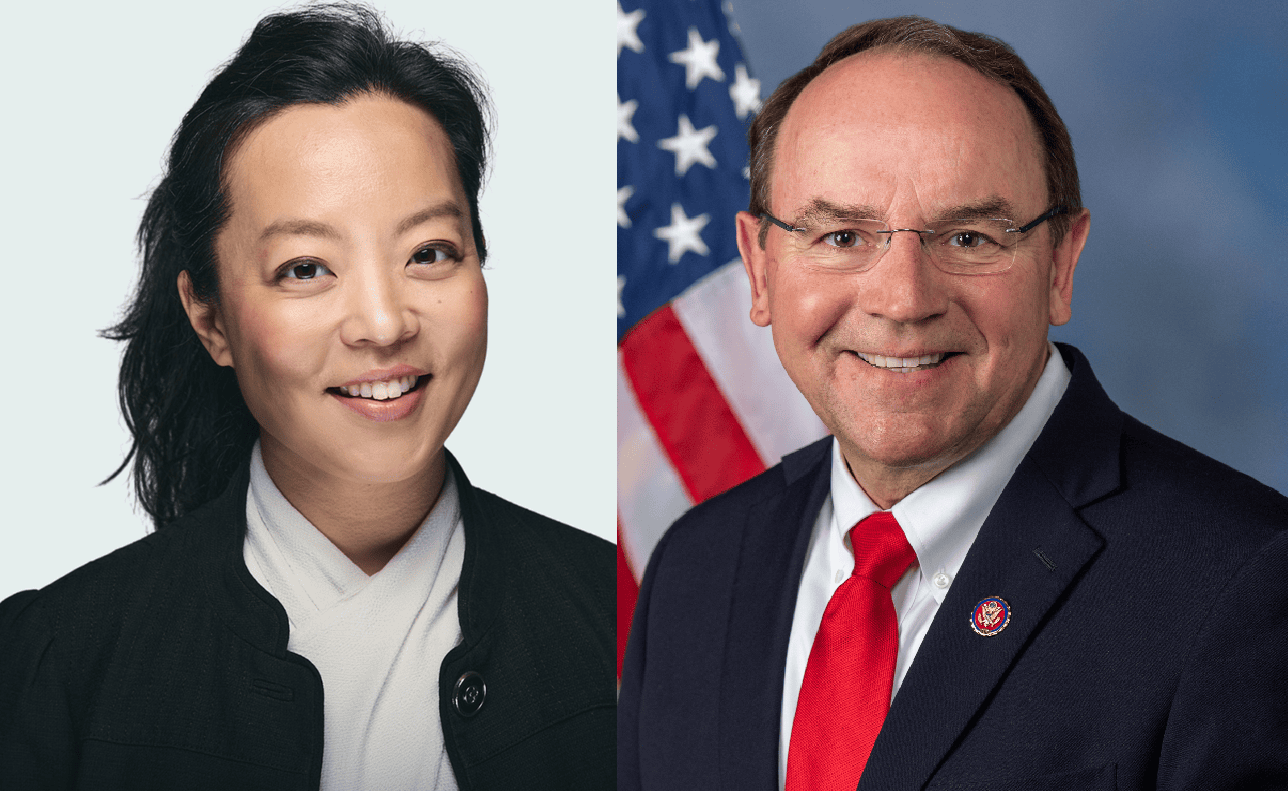
Nearly 20 years later, many conservative Wisconsin political observers are asking a similar question: Should Republicans launch their own version of Operation Chaos by crossing over in Wisconsin’s open primary to help nominate Francesca Hong? Both Republican strategists and many Democratic insiders view the self-described Democratic Socialist as a more favorable general election opponent for Tom Tiffany than some of the other Democrats in the field. With early in-person voting now underway, some Republicans have openly discussed crossing over into the Democratic primary to vote for Hong in hopes of improving Tom Tiffany’s general election matchup. But before embracing that strategy, Republicans should ask whether it’s even necessary.
Democrats Have Plenty of Chaos On Their Own:
Before looking at the chaos that has consumed Wisconsin’s Democratic gubernatorial primary, it’s worth highlighting an important distinction between Rush’s Operation Chaos in 2008 and the calls for a similar strategy ahead of Wisconsin’s August 11 primary.
Rush’s Operation Chaos was designed to prolong a bruising Democratic presidential primary between Barack Obama and Hillary Clinton, dragging out Obama’s inevitable victory and forcing the two campaigns to drain financial resources and expend political capital while John McCain had the Republican primary sewn up.
Rush’s goal wasn’t to boost a weaker general election candidate, but rather to extend the Democrat primary further. This strategy makes sense within the context of a national primary where candidates need to make a play in numerous states to win. But Wisconsin only has one primary date, and it’s already one of the latest in the country. There’s nothing left to prolong beyond the lingering tensions between competing Democratic factions trying to unite before November.
The Democrat primary has already become its own version of Operation Chaos. The quiet panic among Democrat insiders over Francesca Hong’s insurgent campaign boiled over when Sara Rodriguez’s campaign imploded following its campaign finance scandal.
David Crowley, who previously had dropped out and endorsed Rodriguez, subsequently re-entered the race with Tony Evers breaking his pledge of neutrality and endorsing Crowley, the first time the Democrat Governor had endorsed in a primary throughout his tenure in office. The maneuvering on the part of the establishment has sent Democrats scrambling, sparking a civil war between establishment Democrats and a DSA-aligned grassroots movement backing Hong.
David Axelrod, a prominent national Democrat pundit who was the chief strategist for Obama’s two successful campaigns for president, described the Democrat primary as a “slow-rolling car headed for a cliff” and warned that if Democrat operatives don’t get a handle on the situation, it could jeopardize them beyond just 2026.
Which begs the question: Do Democrats even need Republicans to engage in an Operation Chaos?
The primary has spiraled out of control in recent weeks, all while Democratic Socialist Francesca Hong feels more inevitable every day that passes. She has led every Marquette Poll, including a recent one showing her with an 11% lead over Mandela Barnes. Internal polls by Barnes and Crowley show Hong up by 13 and 20 points, respectively, while a recent State Navigate poll of likely primary voters showed Hong leading with 44%, up 29 points on her nearest competitor (Crowley).
Every publicly available indicator points in the same direction. Hong has led every Marquette poll, internal polling from both Barnes and Crowley shows her with commanding leads, and a recent State Navigate survey put her nearly thirty points ahead of her nearest opponent. She has built the strongest grassroots operation in the field, ballots are already being cast, and at this stage even a unified establishment effort behind Crowley may not be enough.
At this stage in the race, Francesca Hong likely does not need Republican votes to carry her over the top. But there are plenty of Republican candidates on the August ballot who do.
Low Turnout Election Means Republican Votes Matter More in Key Primaries:
With Tom Tiffany essentially unopposed for the Republican nomination, turnout on the Republican side of the primary ballot is expected to be very low. But there are still plenty of candidates running in key statewide and local elections who need your vote, and your vote will have far more impact with them than it will in a Democrat primary that appears to already be over.
In Wisconsin, voters can only vote in one party’s primary–meaning you can’t vote in the Democrat primary for Governor and then vote Republican the rest of the way. This means Republicans who cast a vote for Hong are effectively giving up their vote in statewide elections for Lt. Governor and Secretary of State, as well as in more localized races like state legislature or sheriff–offices that often have a more direct impact on your day-to-day life.
In the Lt. Governor’s race, Republican voters get to choose who will be Tom Tiffany’s running mate between Racine businessman Will Martin and former Lancaster mayor David Varnam. For Secretary of State, there is a four-way primary between farmer and small business owner Nate Pollnow, newcomer Bradyn Myer, and perennial candidates Jay Schroeder and Cindy Werner. Who is elected to be on the ticket with Tiffany matters, and Republican voters have the chance to choose who they feel will help deliver victory for Republicans statewide this fall.
We also have several open primaries for State Assembly and State Senate. Often, state legislators serve a decade or more in state government, so for Republican voters, it’s important that they have a say in who that person is. Open Senate races in Wisconsin’s 1st, 11th, and 25th Senate districts will drastically shape the type of leadership we see in the State Senate, while districts like Wisconsin’s 33rd Assembly seat will determine who will replace outgoing Speaker Robin Vos in the Assembly.
18 counties across Wisconsin also have competitive Republican primaries for sheriff, a constitutional office at the local level that serves a four-year term. Sitting sheriffs, especially in red counties, rarely face a challenge once elected, so voters across the state have a chance to shape the future of their sheriff’s department. Contested races in Kenosha County, where incumbent David Zoerner faces a challenge from police captain James Beller and sheriff’s deputy Brian Gonzales, as well as Waukesha County, where Sheriff’s Captain Nick Ollinger faces off against county board supervisor and realtor John Gscheidmeier, have generated some attention locally while other races have fallen under the radar.
Be Careful What You Wish For:
The assumption behind Operation Chaos is simple: nominate the weakest Democrat and November becomes easier. But Wisconsin politics rarely work that way. While self-described socialist Francesca Hong may be a more favorable general election matchup for Tom Tiffany than a more traditional Democratic candidate, many people seem to be making the calculation that a Hong primary victory in August all-but guarantees victory for Republicans this November. But this assumption is dangerous, and Republicans need to be careful what they wish for.
The recent Marquette Law School poll showed Tom Tiffany beating Hong 43-40 among registered voters and narrowly beating her amongst likely voters. This is before Tiffany and Republican allies have spent any significant money driving down Hong’s negatives. In other words, it’s a good position to start in. But as we’ve seen both in this primary and in recent elections, politics can be unpredictable, and the state of the race can change at any moment.
While Democratic Socialism appears toxic amongst most voters (-30 net favorable rating in the recent poll), Trump’s favorability is also at an all-time low. Hong’s candidacy allows Tiffany and Republicans to neutralize the Trump issue by attacking Hong’s socialist values, but if the last thing voters see before voting in November is another massive spike in gas prices due to the Iran War, it might not matter. Voters often make decisions based on the political environment they’re living in—not the one that existed three months earlier.
Wisconsin is the ultimate swing state, with elections routinely decided by razor-thin margins. We are a state that has elected Democrat Tammy Baldwin and Republican Ron Johnson–two polar opposites–to the Senate on three separate occasions. We have cast our electoral votes for Donald Trump twice while later electing progressive Supreme Court candidates by double digits. Wisconsin politics are notoriously unpredictable. A single major event, changing economic conditions, or a difficult political climate could be enough to put a socialist in the Governor’s Mansion—potentially with a Democratic trifecta. Republicans shouldn’t take that risk lightly.
Since launching her campaign, Hong’s candidacy has been dismissed and underestimated until getting to the point where her support could no longer be ignored. Democrats didn’t realize this until it was too late. Republicans would be wise not to underestimate her either.
Tiffany’s campaign has even acknowledged this, with a leaked campaign memo back in April warning Republicans that Hong’s populist messaging and grassroots appeal make Hong a far different general election opponent for Republicans to define.
Recent polling conducted by Wisconsin Institute for Law and Liberty backs this up, showing that there is some ideological crossover between populist-leaning conservatives/MAGA voters and ideals more commonly shared by socialist politicians, especially on issues like price controls. Disdain for AI data centers is another issue that Hong has cleverly used as a wedge issue to broaden her appeal to more Trump-aligned voters, though Tiffany has also taken a very anti-data center stance.
In 2016, Democrat insiders schemed to help elevate Trump in the Republican primary for president, believing that he would guarantee Hillary Clinton’s victory in November. It backfired tremendously, and has reshaped modern American politics perhaps more than any other election in recent years. Republicans should remember that as they consider their own attempts at an Operation Chaos a decade later.
Tom Tiffany is well positioned to defeat Francesca Hong—or any Democrat—in November. But in Wisconsin, favorable matchups are not guarantees. Republicans don’t need to manufacture chaos in a Democratic primary that’s already consumed by it. They simply need to win the election in front of them.
