


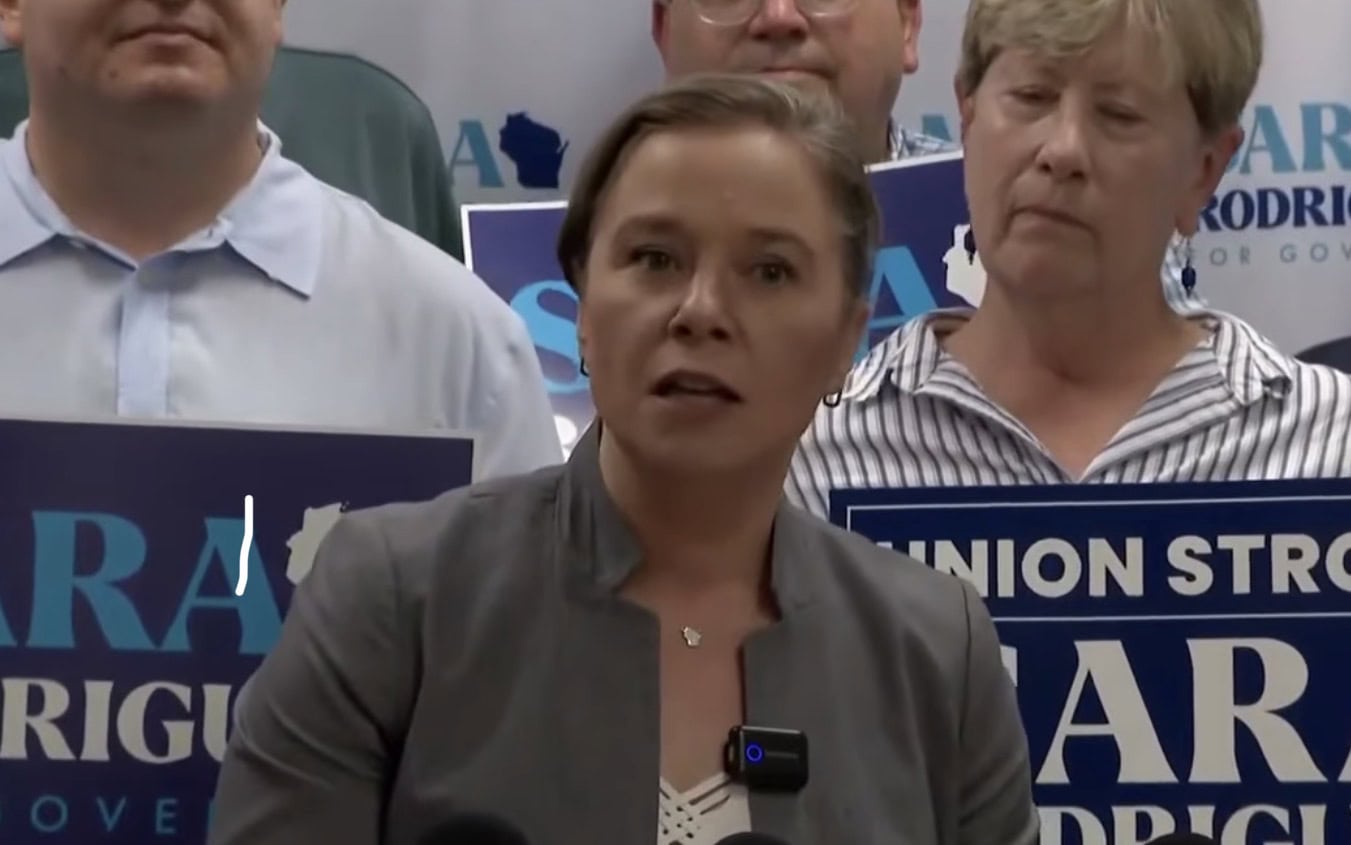
Just a week ago, Lt. Gov. Sara Rodriguez insisted she was preparing to make a $1 million advertising buy to propel her gubernatorial campaign into the final stretch of the Democratic primary. David Crowley had just suspended his own bid and endorsed Rodriguez, urging Democrats to rally behind her to stop socialist Francesca Hong. It looked like the beginning of a comeback.
But life comes at you fast, and one week later the question is no longer whether or not Sara Rodriguez can still win the primary—the question is why she’s still in it at all.
The unraveling began when Rodriguez announced she had fired her longtime campaign manager after discovering major errors in her campaign finance reports. According to Rodriguez, her campaign believed it had roughly $1.5 million available, only to discover it was actually short by approximately $1.3 million. The mistake wasn’t uncovered through careful internal oversight. Instead, Rodriguez acknowledged it only came to light when the campaign attempted to place its promised seven-figure television buy and discovered the money simply wasn’t there.
Rodriguez attempted to portray the firing as decisive leadership. But the explanation raised even more questions. The reporting errors originated in her January campaign finance filing, yet remained undiscovered for roughly six months. By Rodriguez’s own account, no one realized the campaign’s financial picture was wildly inaccurate until it tried to spend money it didn’t actually have.
The damage became even clearer with Rodriguez’s latest campaign finance report.
Rather than the roughly $200,000 cash on hand Rodriguez referenced during a chaotic press conference, the July Continuing Report showed just over $34,000 remaining in the bank. That’s barely enough to sustain a competitive state Senate campaign, much less mount a serious statewide gubernatorial effort with only weeks remaining before the Democratic primary.
Meanwhile, the filing disclosed more than $152,000 in incurred obligations owed to consultants and vendors. That figure only reflects debts through June 30 and doesn’t include additional spending on media consultants, crisis communications, or other expenses incurred as the campaign scrambled to contain the fallout.
Given those numbers, it’s no surprise that Democratic insiders, political commentators, and even Rodriguez’s primary opponents have publicly suggested she should suspend her campaign. With virtually no cash, mounting debts, and no realistic path to overtaking frontrunner Francesca Hong, Rodriguez’s campaign appears politically finished.
Which raises an uncomfortable possibility.
If Rodriguez cannot realistically win the nomination, remaining in the race may serve another purpose: continuing to raise money to satisfy outstanding financial obligations. Campaigns routinely retire debt after elections, but with more than $150,000 already owed—and likely more accumulated since—the incentive to stay in the race is little more than to try to bring her campaign out of the red.
The longer-term damage may be even more significant. Political campaigns are built on trust—trust from donors, vendors, staff, endorsers, and elected officials. Rodriguez’s handling of this episode has badly damaged all five. Major donors will undoubtedly think twice before entrusting another statewide campaign with six-figure checks after such a catastrophic breakdown in financial oversight. Vendors who remain unpaid may be equally reluctant to work with future campaigns. And reports that Rodriguez was aware of serious financial issues before Milwaukee County Executive David Crowley exited the race and endorsed her raise additional questions about whether key political allies were given the full picture before making consequential decisions.
Regardless of how the primary ends, Rodriguez’s collapse will likely be remembered as one of the most dramatic campaign implosions in recent Wisconsin political history. Future candidates and campaign operatives would do well to study it—not as a blueprint for victory, but as a cautionary tale of what happens when financial oversight disappears, and political reality is ignored.
