


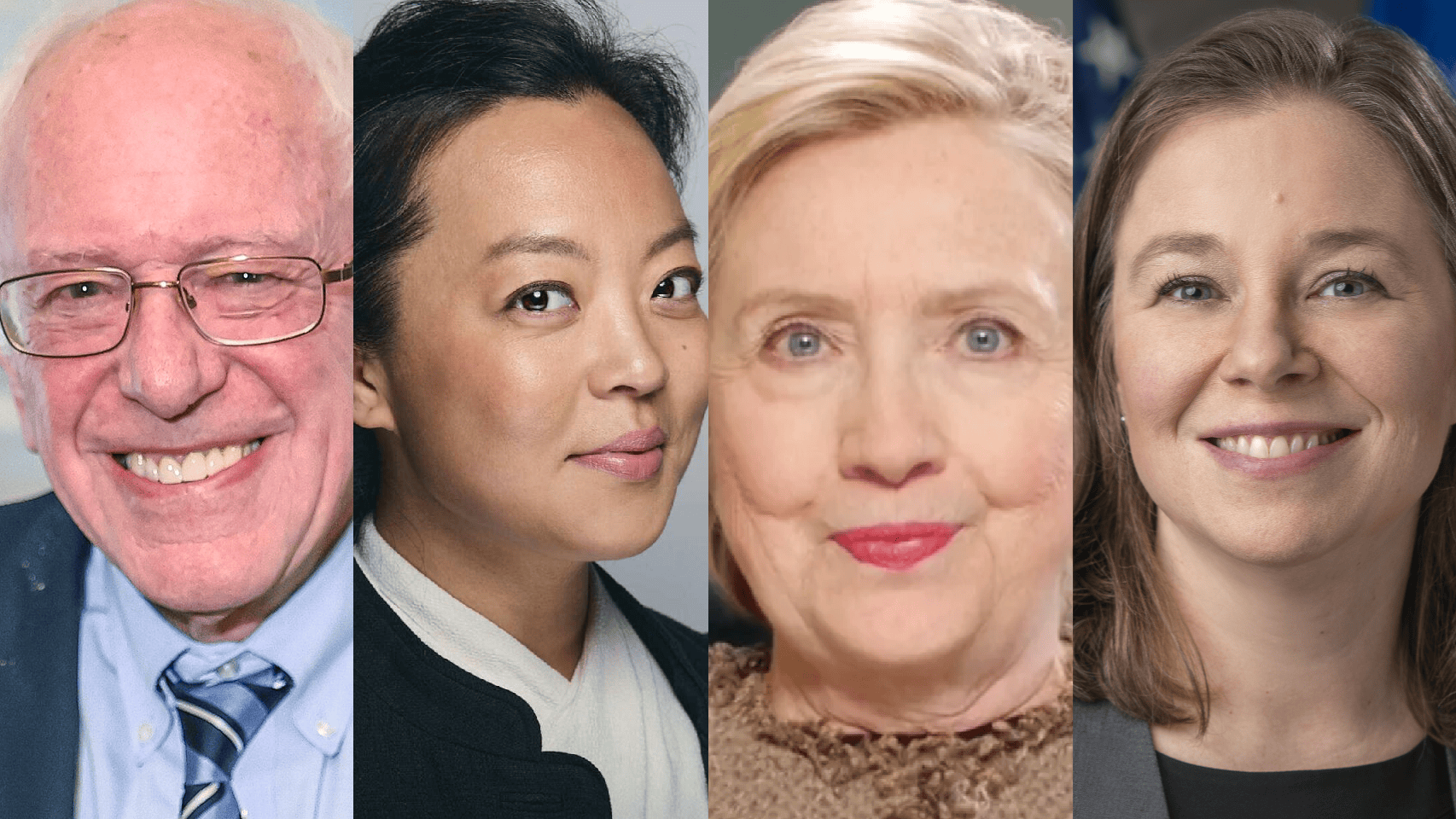
For a party that never stops lecturing the rest of America about “threats to democracy,” Democrats have an awfully consistent habit of denying their own voters a meaningful say in who represents them.
The pattern is older than most voters realize. It stretches from the smoke-filled back rooms of Tammany Hall, where party bosses hand-picked candidates and crushed reformers, to the present day, where the same machine has repeatedly anointed their preferred candidates against the wishes of their party’s grassroots base.
In many cases, the voters at least get the illusion of a choice in a primary while the machine pulls the strings behind a curtain. In other cases, the choice is denied altogether.
Nowhere is that tension clearer right now than in Wisconsin’s 2026 Democratic primary for governor. The establishment has quietly rallied behind Lt. Gov. Sara Rodriguez, the safe, bland, machine-approved choice viewed by party leaders as the best bet for the general election. The grassroots and DSA-backed candidate, state Rep. Francesca Hong, has surged to the top of the polls with a fiercely loyal base of support that looks a lot like the Bernie Sanders coalition from a decade ago.
The parallels are difficult to ignore, and once again the Democrat establishment appears to have settled on its preferred nominee while much of the party’s activist base is rallying behind someone else.
In 2016, Bernie Sanders won 71 of Wisconsin’s 72 counties in the Democratic presidential primary. Wisconsin Democrats overwhelmingly backed the insurgent candidate, but the party’s superdelegate system and institutional support favored Hillary Clinton throughout the nomination process. Many Sanders supporters never fully embraced Clinton’s candidacy, with some staying home or voting for third-party candidates in key swing states, including Wisconsin. Donald Trump ultimately became the first Republican since Ronald Reagan to carry the Badger State, and would go on to win the presidency.
A decade later, Wisconsin Democrats appear to be facing a familiar divide.
Hong, an outspoken democratic socialist who has gained prominence for her far-left positions and unconventional campaign style, has built an energized and increasingly organized grassroots coalition. As her campaign has gained momentum and begun alarming Democratic Party elites, establishment figures have increasingly consolidated behind Rodriguez in an effort to stop her insurgent bid.
Two lower-polling candidates—former Wisconsin Economic Development Corporation CEO Missy Hughes and Milwaukee County Executive David Crowley—recently exited the race and endorsed Rodriguez. Crowley insisted the moves were not coordinated. Critics, however, point to the timing of the withdrawals and the history of similar efforts in the modern Democrat Party as evidence that party leaders are once again attempting to unite behind a preferred candidate before the field can sort itself out.
Whether viewed as strategic politics or establishment intervention, the pattern is familiar.
In 2020, Pete Buttigieg and Bernie Sanders won the opening contests while Joe Biden struggled. After Rep. Jim Clyburn’s endorsement in South Carolina, the field rapidly consolidated around Biden as Buttigieg and Amy Klobuchar suspended their campaigns and endorsed him just before Super Tuesday. The establishment had found its consensus candidate.
In 2024, Democrats reshaped the primary calendar by moving South Carolina ahead of Iowa, a change widely viewed as benefiting President Biden. The Party also denied ballot access to challengers like Robert Kennedy Jr and Dean Phillips who wanted to present an alternative to the addled Biden. After Biden’s debate collapse created the permission structure for the Democrat establishment to replace him on the ticket, political observers briefly anticipated the first contested Democratic convention in decades. Instead, party leaders rapidly united behind Vice President Kamala Harris, ending any chance of delegates weighing alternatives.
In Wisconsin’s 2022 U.S. Senate primary, the Democratic field steadily consolidated behind Lt. Gov. Mandela Barnes as other candidates suspended their campaigns and endorsed him weeks before the primary election. Barnes ultimately lost to incumbent Republican Ron Johnson in the general election.
These episodes reflect a broader pattern: a party that champions democratic participation in public while carefully managing competition within its own ranks. That history makes the current maneuvering in Wisconsin—and in neighboring Michigan—all the more significant.
In Michigan’s Democratic Senate primary, DSA-backed Abdul El-Sayed has emerged as the leading progressive challenger to establishment favorite Rep. Haley Stevens. Sanders, Ro Khanna, Alexandria Ocasio-Cortez, and Hasan Piker have lined up behind El-Sayed, while Senate Minority Leader Chuck Schumer and former House Speaker Nancy Pelosi support Stevens. A third candidate, state Sen. Mallory McMorrow, exited the race without endorsing either remaining contender, though polling indicates her supporters are more likely to go to Stevens.
Wisconsin may present the sharpest test yet.
Hong’s rise has forced the party to choose between its rhetoric and its power structure. While many party insiders worry about Hong’s general-election prospects, they are also worried about their political survival and what a Hong nomination would mean for the future of the Democratic Party. Simply put, stopping Hong is as much about institutional self-preservation as it is about electoral strategy.
But the Democrat establishment’s efforts to deny Hong the nomination come with significant electoral risk. If the party bosses rig the primary against Hong in favor of Wisconsin’s version of Hillary Clinton — the bland and unexciting Sara Rodriguez — the backlash could be severe. Hong’s supporters are not going to quietly accept another establishment-backed coronation. And unlike a decade ago, they are better organized and far more numerous.
Hong herself has already proven that she can mobilize progressive voters to push back against the Democrat establishment.
In 2024, she helped lead Wisconsin’s “uninstructed” protest campaign against President Biden over U.S. policy toward Gaza. The effort produced more than 50,000 protest votes in a state where recent presidential elections have often been decided by around 20,000 votes. At the time, those votes were largely symbolic—a warning shot aimed at the Democratic establishment rather than an effort to influence the outcome of the election. But if even a fraction of that coalition were to stay home in November rather than support an establishment-backed nominee, it could cost them the election.
The socialist surge within the Democratic Party is real, and it shows little sign of fading. The young democratic socialist voters fueling candidates like Hong harbor as much distrust toward the party establishment as they do toward Republicans and the MAGA movement. That leaves Democratic leaders with a difficult dilemma: they need those progressive voters to win competitive states like Wisconsin, but they are far less enthusiastic about the candidates those voters are rallying behind. That dynamic could make stopping Hong far more difficult than previous efforts by the party establishment to steer the outcome of a contested primary.
The next Marquette Law School Poll and upcoming campaign finance reports will offer the clearest indication yet of where this race is headed. If Rodriguez remains mired in third place—as her own campaign’s internal polling reportedly suggests—the establishment’s window to stop Hong may be closing. But if Rodriguez gains ground, expect the pressure campaign against Hong, both behind the scenes and in public, to intensify.
Wisconsin’s Democratic primary is no longer just a contest between candidates. It has become a test of whether the party truly trusts its own voters—or whether, when confronted with a choice it dislikes, it falls back on the same institutional playbook it has used for generations.
