


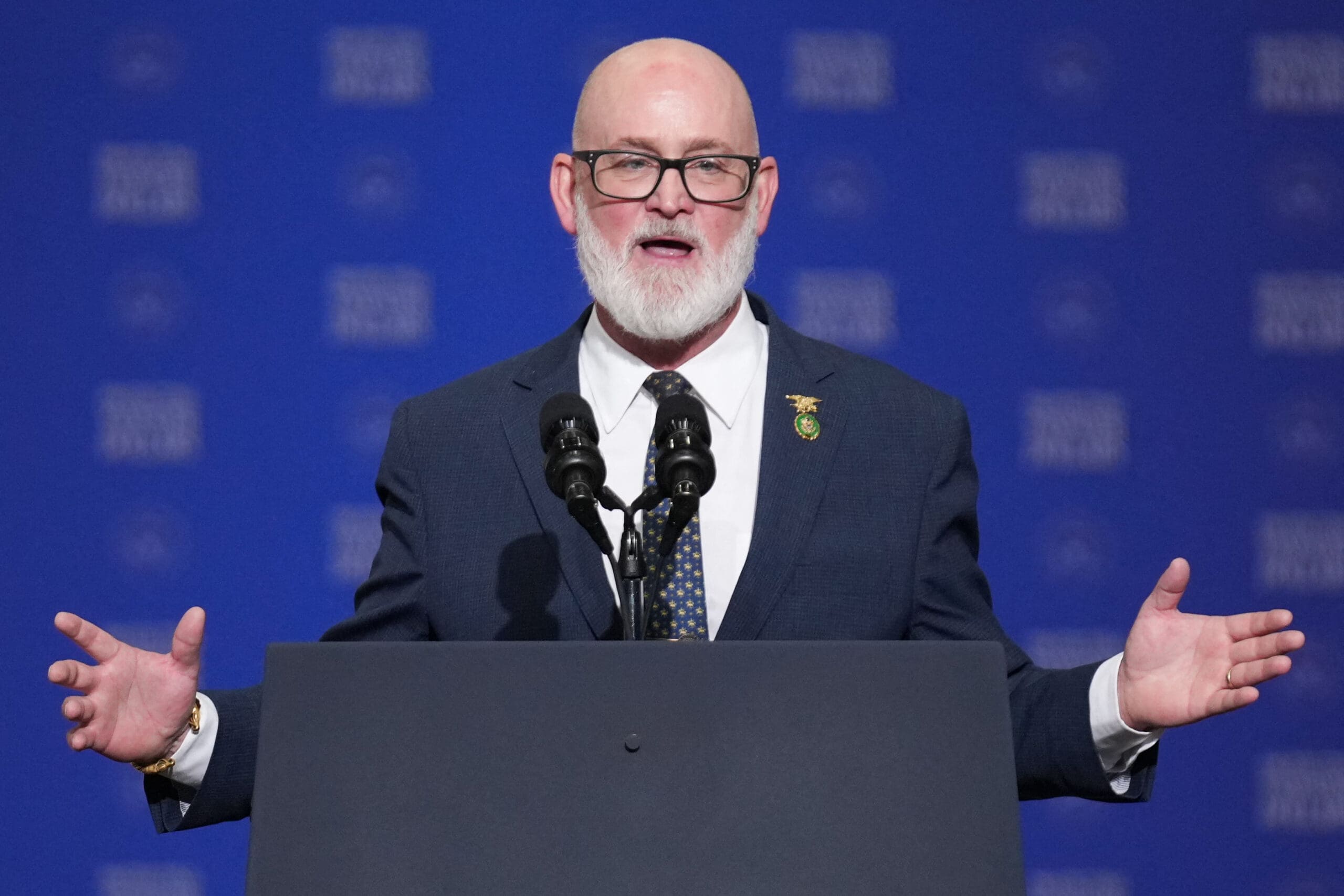
Congressman Derrick Van Orden is calling on Gov. Tony Evers to put the brakes on plans for a massive 765-kilovolt transmission line that could cut through the heart of western Wisconsin.
Van Orden, whose congressional district includes much of the Driftless region that would be affected by the proposed transmission buildout, called on Evers to halt the project as opposition continues to grow among farmers, landowners and elected officials.
State Sen. Howard Marklein, Rep. Tony Kurtz, and Rep. Travis Tranel, who also represent portions of southwestern Wisconsin, signed onto the letter.
The latest push comes as Wisconsin faces proposals for two interconnected 765-kV projects: MariBell through portions of the Driftless region and the roughly 190-mile Bell Center–Columbia–Sugar Creek–Illinois/Wisconsin State Line project, known as BECI. Both are part of the Midcontinent Independent System Operator’s massive regional transmission expansion.
Van Orden has been sounding the alarm for weeks.
Earlier this month, he wrote directly to Midcontinent Grid Solutions opposing the proposed BECI routes and accused the developer of failing to adequately address concerns from the people who actually live along them.
“I have heard directly from my constituents about the significant impacts of the proposed line,” Van Orden wrote. “They feel like they are being pushed around by your company. This is something I will not stand for.”
Van Orden pointed to potential impacts on agricultural operations, property values, future development and groundwater, while urging developers to consider existing utility, highway and railroad corridors before carving new pathways through Wisconsin farmland.
He is not alone.
“Wisconsin should not become a web of massive transmission lines crisscrossing our farmland because politicians failed to build reliable power right here at home,”
Republican Congressman and candidate for Governor, Tom Tiffany
Republican gubernatorial candidate Tom Tiffany has also come out firmly against the proposed 765-kV line.
“I oppose the 765-kV transmission line, and I do not support carving new transmission corridors through Wisconsin farmland when reasonable alternatives exist,” Tiffany said.
Tiffany has tied the project to a broader criticism of Wisconsin’s energy policy, arguing that the state has increasingly prioritized intermittent wind and solar generation while retiring dependable baseload power.
“Wisconsin should not become a web of massive transmission lines crisscrossing our farmland because politicians failed to build reliable power right here at home,” Tiffany said.
That connection is worth noting.
MISO’s regional transmission plan was designed around a changing generation mix that includes significant amounts of new renewable generation. Clean Wisconsin celebrated the transmission plan, saying it could support at least 6.6 gigawatts of additional wind and solar generation in Wisconsin while providing greater access to wind power generated farther west.
Clean Wisconsin’s political arm, the Clean Wisconsin Action Fund, endorsed Tiffany’s Democratic opponent, Milwaukee County Executive David Crowley, last month.
Crowley has since said he opposes the 765-kV project as currently proposed. But his broader energy platform calls for aggressive expansion of renewable energy. As Milwaukee County Executive, Crowley signed a county plan targeting net-zero carbon emissions by 2050 and legislation recommitting the county to the Paris Climate Agreement. During his campaign for governor, he has also called for statewide greenhouse-gas reporting and carbon scoring for major development projects.
The controversy is now headed to Wisconsin Dells.
Tiffany will participate Friday, Sept. 18, in a public town hall focused on the 765-kV line and Wisconsin energy policy. The event begins at 6 p.m. at the Kalahari Resort, with doors opening at 5 p.m. Crowley will not be in attendance.
The transmission fight is quickly becoming bigger than a dispute over where to place a few power lines.
For farmers and landowners in western and southern Wisconsin, it is a fight over private property and what could happen to land that has been in families for generations. For policymakers, it is becoming a much broader debate over how Wisconsin generates electricity, who pays for the infrastructure needed to move it and how much say rural communities should have when that infrastructure comes through their backyard.
Van Orden and Tiffany have now made their positions clear: they want the 765-kV project stopped.
