


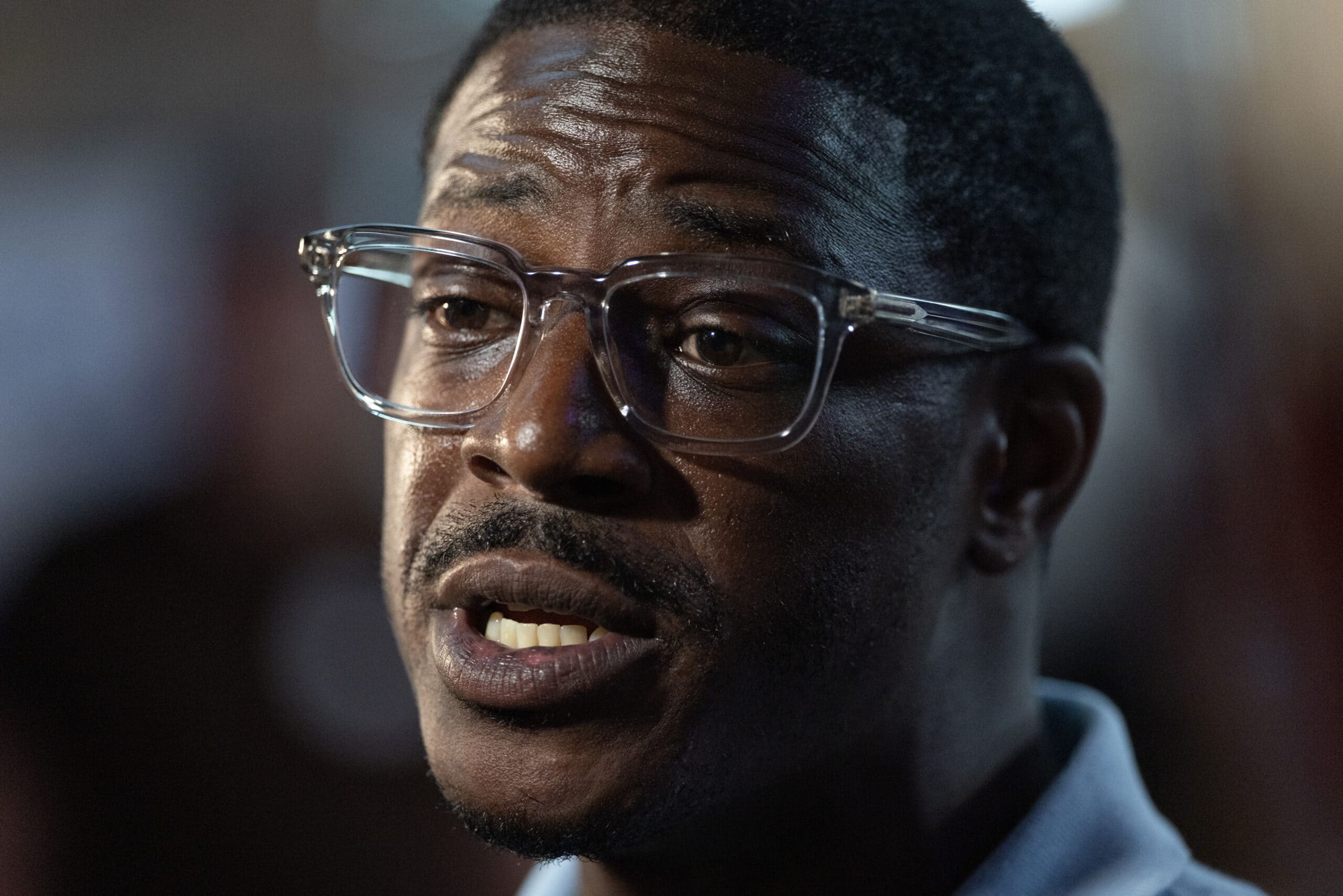
Milwaukee County transit is short on riders and short on money, and the fix being sold this week is a bigger check from the state. Week Without Driving runs October 1-8. It ends today with Mobilise’s Fall Summit. Mobilise, the coalition Transit Is Milwaukee, and Milwaukee County are asking residents to park their cars and sample the bus.
Co-Chair of the Transit Advocacy Committee Cinthia Téllez Silva, quoted by Urban Milwaukee in April when Transit Is Milwaukee launched, said the group wanted to “send the message loud and clear that ‘Transit is Milwaukee.’” She called transit “freedom,” “independence,” and “access to a job, to a health care appointment, to child care.”
County Executive David Crowley’s Department of Transportation has called on all county residents to give up the car for a week and instead walk, use a bicycle or a wheelchair, or ride the bus. The promotion also lists carpooling.
This push is made as MCTS faces an $18 million deficit and a larger hole in 2027. Crowley says the state owes Milwaukee $34 million for transit, according to an MCTS handout on proposed 2026 service. County Transportation Director Joe Lamers has said he will ask county attorneys whether Milwaukee can sue the state for more transit funding. n that report, Bielinski said there is “no way on earth we should be dealing with an $18 million deficit when there’s a surplus at the state that seems like it’s going to get unspent at this point.”
The 2025 MCTS annual report shows the average bus operating at less than 50% capacity. The system has more than 1,000 employees and is still spending roughly $200 million in pandemic dollars from the first Trump administration. Crowley’s 2027 budget taps emergency reserves for another year of transit deficits.
To make up for deficits in the transit budget, Crowley has sent the large majority of more than $100 million in vehicle registration fees to buses across seven budgets, and in the latest budgets all of it. A smaller share went to other transportation needs in earlier years. Although, state law allows for vehicle registration fees to go to transit, recent budgets seem to indicate that they are subsidizing the transit system entirely instead of going to local roads.
Coalition materials for Week Without Driving claim 40% of Milwaukee County residents do not have access to a car. A September 18 Mobilise post told residents to ride, bike, walk, or carpool “to experience what life is like for the 40% of Milwaukee County residents who lack access to a car.”
That math does not match the census. U.S. Census Bureau American Community Survey figures show about 12.5% of Milwaukee County households have no vehicle. Another 42.8% have one, 33.3% have two, and 11.4% have three or more. The coalition’s 40% claim is more than three times the share of households with no car.
The 40% figure matches a different statistic. Urban Milwaukee reported that 40% of Milwaukee County residents do not or cannot drive, according to the Wisconsin Department of Transportation. That is not a count of households without a car. WisDOT’s non-driver figure includes children ages 0 to 15. Census figures put about 23% of county residents under 18 and about 16% at age 65 or older. MCTS’s 2026 state-aid handout says 13% of households in the metro area do not have a vehicle, and that the city of Milwaukee share is higher than the national average of 8.5%. That is still far below the 40% claim on the campaign materials.
The coalition was launched in April by Mobilise, a 501(c)(3), with Crowley and Racine transit director Trevor Jung. Both are fall candidates for state office. Crowley is running for governor. Jung is running for state Senate. Mobilise has received taxpayer support, including ARPA dollars from Milwaukee County and a $4 million state workforce grant.
