


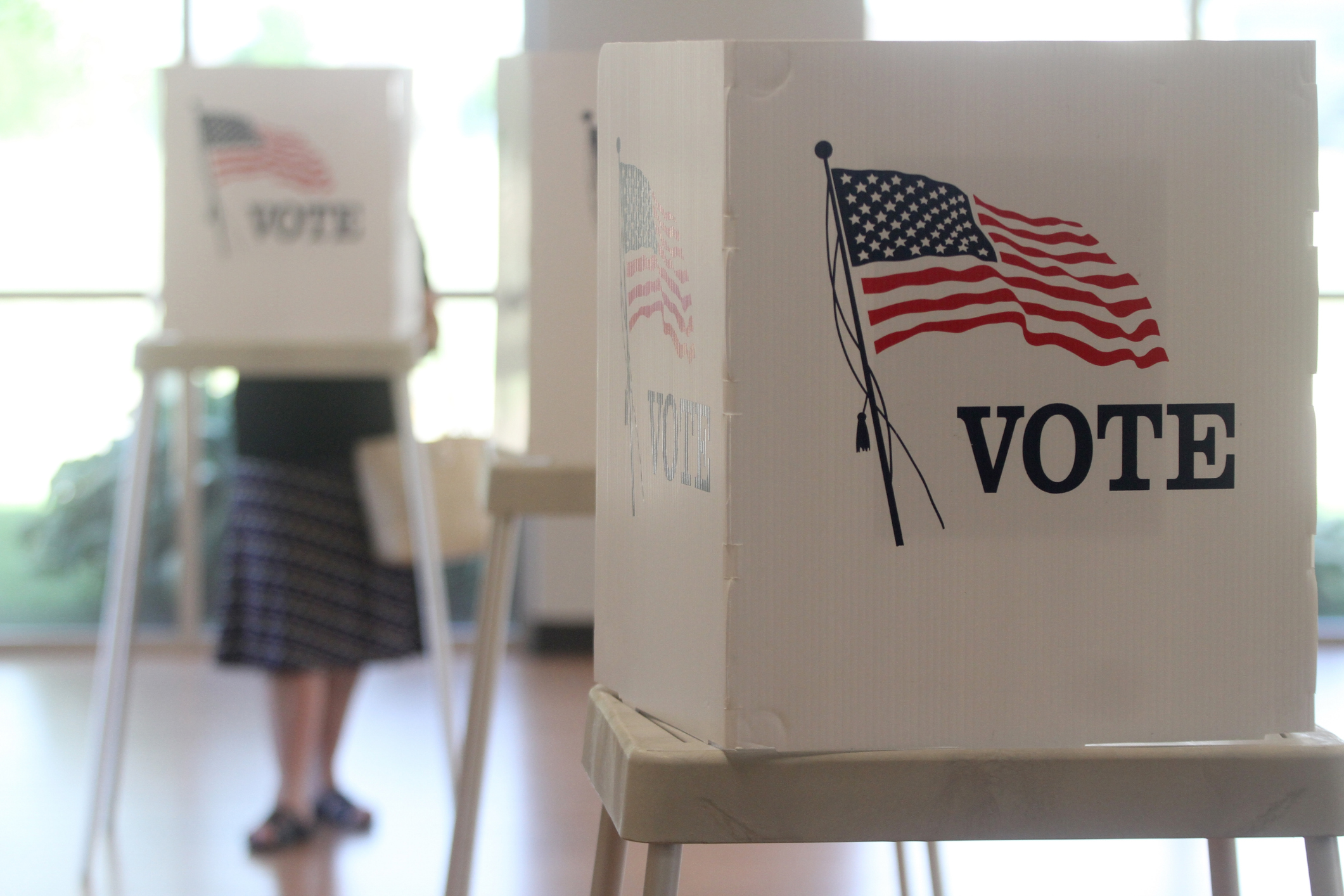
Democrats in the Wisconsin Legislature are pusing a bill introducing ranked choice “in Wisconsin elections for local, state, and federal offices.”
Democratic state lawmakers in Wisconsin are seeking co-sponsorship for legislation that would implement ranked-choice voting for local, state, and federal elections across the state.
The bill, LRB-5709/1, introduced by Sens. Mark Spreitzer, Brad Pfaff, and Chris Larson, along with Rep. Clinton Anderson, proposes replacing the current plurality-winner system—where a candidate wins with more votes than any other, even without a majority—with ranked-choice voting. Under the proposal, voters would rank candidates in order of preference on a single ballot. If no candidate secures an absolute majority of first-choice votes, the process conducts an instant runoff by eliminating the lowest vote-getter and redistributing those votes to voters’ next preferences until a majority winner emerges.
For multi-seat races, such as city councils or school boards, the bill would use single transferable vote, a variant that fills multiple positions based on ranked preferences and vote thresholds.The memo highlights drawbacks of the existing plurality system, including winners taking office with less than 50% support in crowded fields, reduced voter choice due to vote-splitting fears, and strategic voting to avoid spoilers. It contrasts this with traditional runoff elections used in states like Georgia and Louisiana, which require separate ballots, increase costs, and can lead to lower turnout from voter fatigue.
Proponents argue ranked-choice voting addresses these issues through an instant runoff on one ballot, potentially ensuring majority support for winners without added elections. The bill would eliminate the February primary for nonpartisan races starting in 2027, using ranked-choice in April elections, and apply it to partisan primaries in August and general elections in November. It allocates $1 million for voter education and outreach, plus funding for the Wisconsin Elections Commission and local clerks to handle implementation, including equipment and software updates.
Ranked-choice voting has gained use in more than 50 jurisdictions nationwide, including statewide in Alaska (approved by voters in 2020 and retained in 2024) and Maine (expanded recently after a decade of use), as well as in New York City primaries since 2019 and local elections in Minnesota, Illinois, and Michigan.
Past efforts to introduce ranked-choice voting in Wisconsin have not succeeded. Early 20th-century experiments with preferential or supplementary voting in primaries were repealed by the 1930s. More recent proposals, including bipartisan bills in the state Legislature, have advanced to hearings but failed to pass amid opposition viewing the system as overly complex or unconstitutional.
The co-sponsorship deadline for this latest effort is March 12th.
