


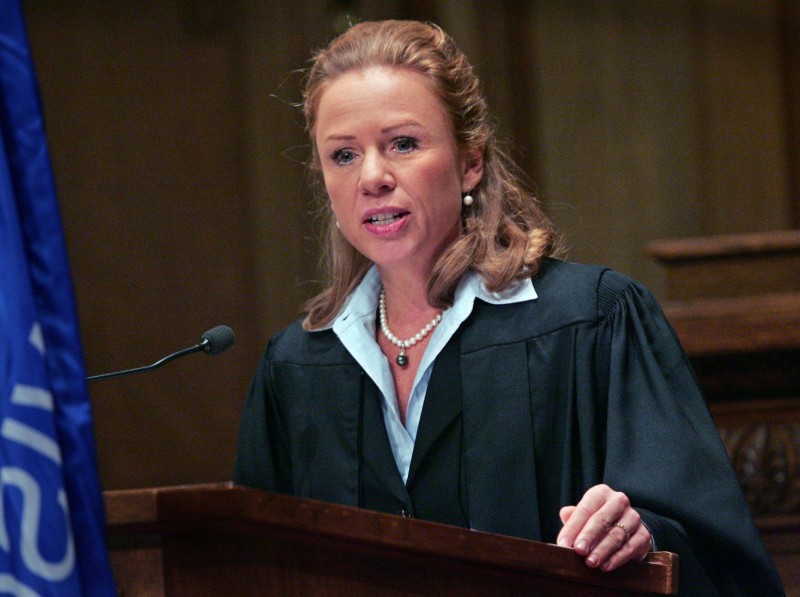
Staunch defender of Procedural Norms and Traditional Court Authority
Justice Annette Ziegler, a long-serving conservative on the Wisconsin Supreme Court, recently announced she will not seek reelection in 2027 when her current term expires. After nearly two decades on the state’s highest court—first elected in 2007 and reelected unopposed in 2017—Ziegler cited a desire to spend more time with her family following three decades in judicial service.
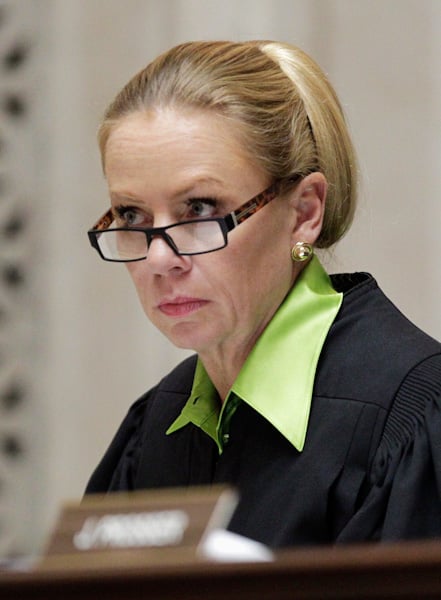
In a statement, Ziegler expressed continued appreciation for the people of Wisconsin and the judicial system, noting she looks forward to completing her term and transitioning the seat to a new justice.
Ziegler’s tenure has been marked by her role as a steadfast conservative voice on a court often divided along ideological lines. She served as Chief Justice from 2021 to 2025, elected by her peers after Patience Roggensack stepped down from the leadership role. During her time as Chief Justice and as an associate justice, Ziegler participated in numerous high-profile cases involving redistricting, election rules, and abortion.
One notable aspect of her impact was her defense of procedural norms and the traditional authority of the chief justice in managing the court’s operations. In 2023, following the election of Justice Janet Protasiewicz, liberals gained a 4-3 majority on the court. This shift led to significant internal changes, including revisions to operating procedures to make decision-making more inclusive and to accelerate the court’s calendar.
The new majority moved to adjust how the court sets its schedule and handles administrative matters, which conservatives, including Ziegler, viewed as an overreach that diminished the chief justice’s longstanding role in directing the flow of cases. Ziegler publicly criticized these actions, describing them in statements and emails as an improper exercise of power that bypassed established rules and undermined orderly judicial administration.
In response to efforts by the liberal justices to implement these procedural shifts—seen by some as an attempt to sideline conservative priorities and prevent delays on cases they favored—Ziegler stood firm in upholding what she saw as the proper separation of administrative authority. She argued that such changes were procedurally flawed and risked politicizing the court’s internal governance. Her vocal opposition highlighted tensions over who controls the court’s docket and pace, ensuring that conservative perspectives on judicial process were forcefully represented during a period of majority transition.
Ziegler’s stance reinforced the importance of institutional stability amid ideological changes, preventing what conservatives described as unilateral control over the calendar by one faction. This episode underscored her commitment to principled judicial administration, even when it placed her at odds with the new majority.
Beyond procedural matters, Ziegler contributed to key decisions on redistricting and other issues central to Wisconsin’s political landscape. Her dissents and opinions often emphasized textual interpretation and restraint, aligning with center-right judicial philosophy that prioritizes legislative authority and limited judicial intervention.
As Ziegler prepares to step down, her departure opens a competitive race for the 2027 election, potentially shifting the court’s balance further. Her legacy includes two decades of service as a conservative jurist who consistently advocated procedural integrity and resisted what she viewed as opponents’ overreaching.
Sources for further reading include announcements from the Wisconsin Supreme Court website (wicourts.gov), coverage from WisPolitics, the Associated Press, Wisconsin Examiner, and PBS Wisconsin, which detailed the 2023 procedural disputes and Ziegler’s statements.
