


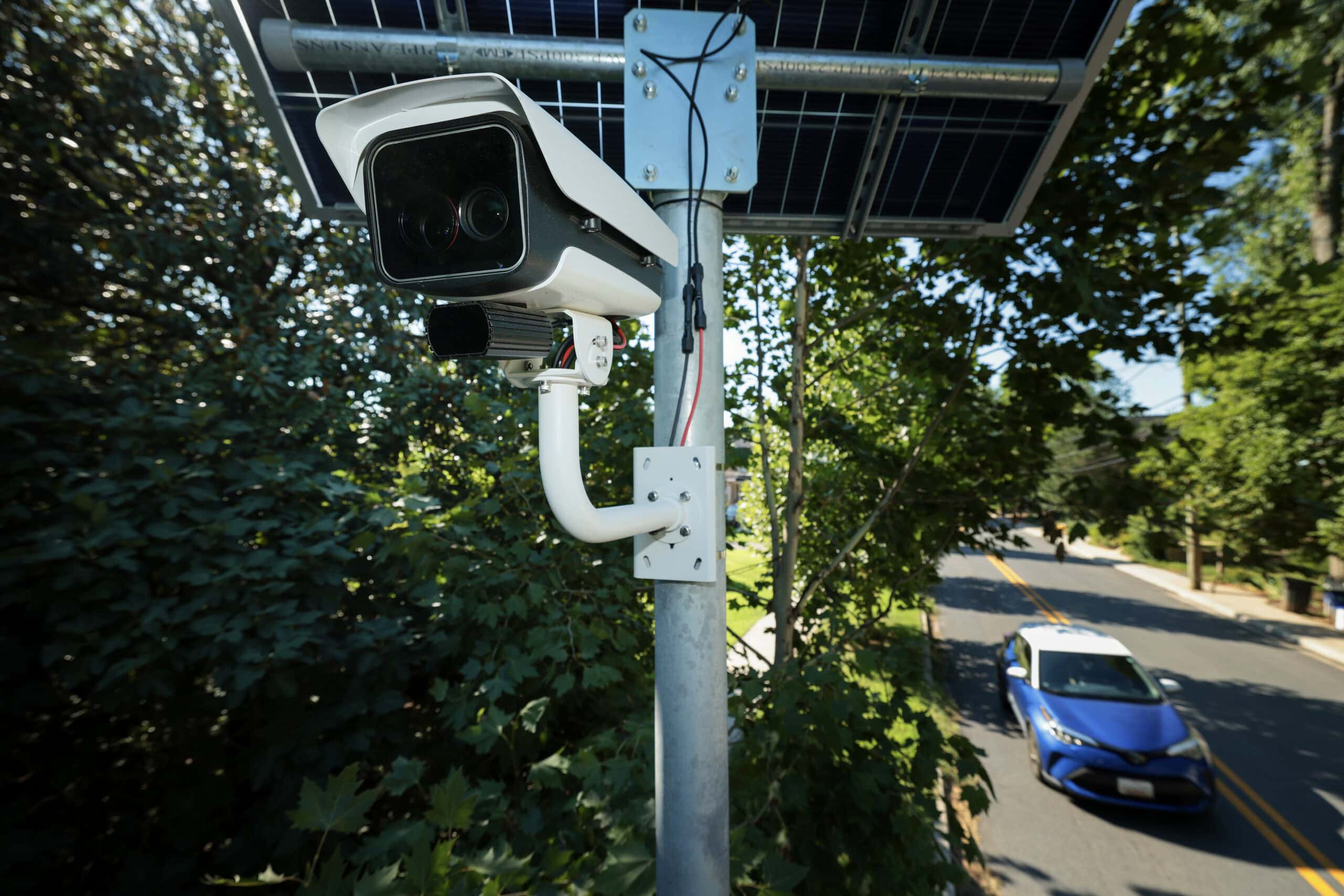
The American Civil Liberties Union of Wisconsin and the Electronic Frontier Foundation filed a petition on October 14, 2026, asking the Wisconsin Supreme Court to take original jurisdiction in a case challenging warrantless searches of data from automatic license plate reader (ALPR) systems operated by the cities of Green Bay, Milwaukee, Racine, and Kenosha.
The petitioners are the Wisconsin Council of Churches, which represents more than 2,000 congregations and over a million individuals statewide, and Green Bay pastor Melissa Pagel. They argue that the ability of law enforcement to retrospectively query vast amounts of data from ALPR cameras without a warrant constitutes a “search” under Article I, Section 11 of the Wisconsin Constitution, therefore, requires judicial authorization (except in limited circumstances such as genuine emergencies).
“Thousands of automatic license plate readers stationed across Wisconsin have created a mass surveillance machine constantly tracking, logging, and sharing information about us without a warrant,” said Wes Haslam, a staff attorney with the ACLU of Wisconsin. He added that the systems give the government “an intimate glimpse into our personal lives” and can be misused by individual officers without judicial oversight.
Dr. Kerri Parker, executive director of the Wisconsin Council of Churches, said member congregations and the people they serve — including those attending addiction recovery meetings, domestic violence services, or confidential pastoral counseling — have a reasonable expectation of privacy that these systems undermine. “We have a right to demand that the government’s surveillance programs are not used to undermine the confidentiality that is core to our work.”
Andrew Crocker, surveillance litigation director at the EFF, described ALPRs as enabling the government to “effortlessly scrutinize our movements in a way that just was not possible before.”
The EFF noted this lawsuit is its second suit challenging warrantless ALPR searches and pointed to a recent federal court ruling in Oklahoma that characterized ALPRs as a form of “indiscriminate mass surveillance.”
ALPR cameras, including those from vendors such as Flock Safety, photograph license plates and vehicle characteristics on public roads, timestamp the images, and upload them to searchable databases that can be shared across agencies. The petition alleges that the four cities operate or access such systems and conduct searches without a warrant. It also cites past instances of officer misuse for personal reasons including stalking.
The filing comes amid statewide controversy over ALPR technology. Multiple agencies have ended or declined to renew Flock contracts in recent months following concerns about data retention, sharing, and commercial use of information.
Others have retained the cameras while tightening internal policies. Green Bay, which has used Flock cameras since 2022 and currently operates dozens of them, updated its policy in September 2026 to shorten data retention from 30 days to seven. The city now requires a case or call number for searches, limits external data sharing (including to agencies within Brown County), and increased auditing and public reporting. City officials have defended the technology as a crime fighting tool while emphasizing the need for safeguards.
Kenosha terminated their Flock contract and has moved toward an Axon system under a large multi-year contract. Racine has taken also steps to end its Flock contract.
A separate lawsuit filed in September 2026 by the Wisconsin Institute for Law & Liberty challenges Flock camera systems in Waukesha County and several of its municipalities on Fourth Amendment grounds, also seeking a warrant requirement for database searches. That case has been moved to federal court.
Flock Safety stated that its cameras capture still images of vehicles visible in public, do not use facial recognition or identify occupants, and that more than 45 courts have found fixed license plate readers do not violate the Fourth Amendment or track the whole of an individual’s movements. The company noted a recent California dismissal of a similar ACLU/EFF lawsuit and said it supports legislation establishing accountability and oversight rules.
The Wisconsin Supreme Court first has to decide whether it will even hear this case directly. If the justices agree to take it, the lawsuit would skip the lower courts and go straight to the state’s highest court. In the meantime, the ACLU and EFF are still asking cities to cancel their license plate camera contracts and put stronger local rules in place. They say a statewide court decision is needed because these camera systems are so widespread and share data with each other. (The petition is docketed as case number 2026AP002417). The Heartland Post will continue to follow this case.
