


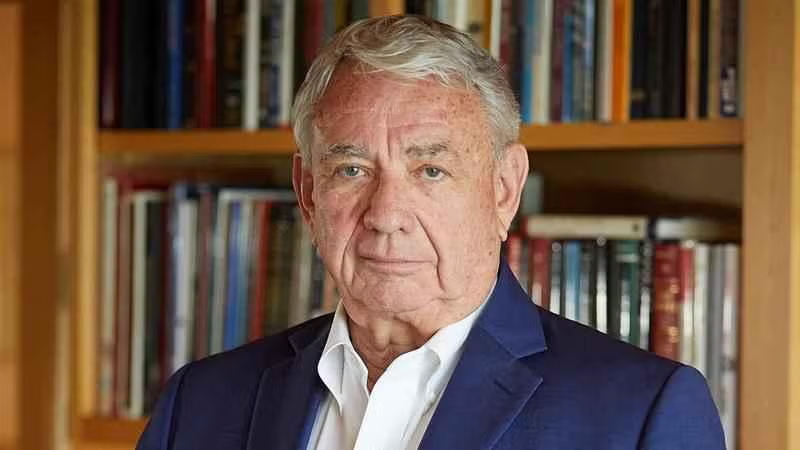
Tommy Thompson is the greatest governor Wisconsin ever had and a giant of conservatism–which is why he really needs to stop tarnishing his legacy by perpetually floating his name as a candidate for statewide office.
Tommy Thompson remains one of Wisconsin conservatism’s most accomplished figures: the longest-serving governor in state history, a four-time winner who transformed welfare into a national model of work and opportunity.
Yet for nearly two decades, the 83-year-old has repeatedly teased voters and fellow Republicans by floating his name for higher office, turning what should be a proud retirement into a recurring distraction that freezes the field and crowds out fresh conservative talent.
It started in May 2006. Thompson publicly ruled out a gubernatorial comeback but kept the door cracked for a U.S. Senate challenge to Democrat Herb Kohl. By June he formally declined, though longtime aide Jim Klauser confirmed the former governor had given a Senate bid “serious consideration” before family prevailed.
The pattern intensified in 2010. National outlets including Politico and Roll Call reported Thompson was “eyeing a Senate bid” against Russ Feingold, securing pledges and quietly exploring.
In mid-April he confessed at a rally, “I can’t describe how badly I wanted to run,” yet family again talked him out. A gubernatorial comeback against Democrat Jim Doyle received secondary thought but never gained traction.
In 2012 Thompson finally jumped in, winning a contentious Republican primary only to lose the general election to Tammy Baldwin by six points — his lone statewide defeat.
The cycle returned in January 2022. Thompson told WISN and others “everything is on the table” and “I’m physically and mentally capable.” He visited then-President Donald Trump at Mar-a-Lago to discuss a gubernatorial bid, admitting he “wanted to run.” On April 18 he bowed out, citing a “unanimous family decision.”
Now, in October 2025, Thompson is at it again, declaring on WTMJ he is “seriously considering” a record fifth term as governor in 2026 and that the idea remains “not too far removed from my brain.” At 85 upon inauguration, he would test not only endurance but the patience of a party eager to move forward.
This is no longer harmless nostalgia. Each public tease siphons donor dollars, media attention and momentum from serious, battle-tested conservatives ready to carry the torch. It signals doubt in the next generation at a time when Wisconsin Republicans need bold, energetic leadership to reclaim the governorship.
Thompson’s legacy of results stands tall on its own merits. The greatest service he could render conservatism today is to close the door once and for all, mentor worthy successors in private, and allow the party to focus on winning rather than wondering whether the old lion will roar again.
