


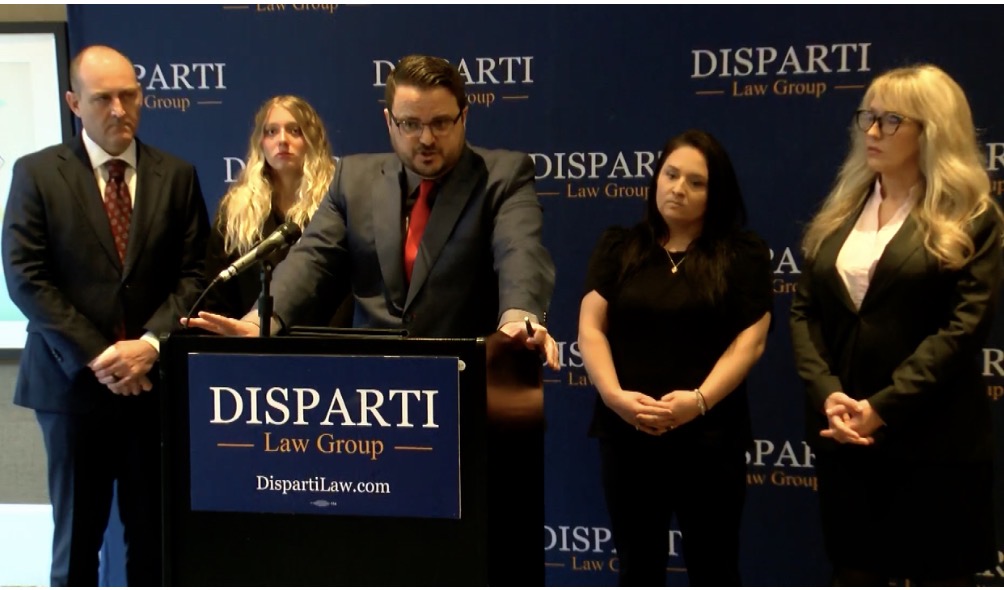
On March 11, 2026, a federal civil rights lawsuit was filed in Milwaukee’s U.S. District Court against the Oconto Falls School District. The lawsuit claims that years of bureaucratic negligence and lack of accountability put children at risk. It alleges that the district in northeastern Wisconsin allowed a “pattern of sex abuse” to continue for 15 to 20 years, from around 2005 to 2025. During this period, at least 11 staff members, including teachers and coaches, reportedly groomed and assaulted at least 17 victims. This case is a reminder that when schools focus on protecting themselves instead of students, children suffer. The lawsuit describes the grooming and sexual assault of students and claims the district did not properly investigate or stop the abuse.
Three former students filed the lawsuit through the Disparti Law Group in Milwaukee’s U.S. District Court. The suit names the district and former teachers, including Brynn Larsen (convicted in 2021 of third-degree sexual assault and sentenced to two years in prison), Gayle Gander (facing 11 felony counts and set for arraignment on March 26), and David Heisel (accused of grooming but not criminally charged). The plaintiffs had warned of legal action in August 2025, demanding justice, but the district’s response deflects blame: “The allegations… were previously reported… investigated… and referred to law enforcement,” and claims it had fulfilled its “duty to keep its students and schools safe.” Here, the school district is merely stonewalling, with lip service to “investigations” masking systemic rot.
This scandal doesn’t exist in a vacuum; it underscores the Wisconsin Department of Public Instruction’s (DPI) egregious cover-up of teacher misconduct, which flourished under liberal governance. A bombshell Cap Times investigation in October 2025 exposed how DPI shielded over 200 probes into educators for sexual misconduct or grooming from 2018 to 2023, allowing suspects to quietly surrender licenses and evade full scrutiny. Republican critics, including U.S. Rep. Tom Tiffany, rightly blasted it as a “cover-up” that endangers kids, while State Superintendent Jill Underly’s defense—”investigations are conducted thoroughly, professionally, and within the legal authority”—rings hollow amid revelations of no statewide tracking and districts charging outrageous fees for records. Governor Tony Evers, who oversaw DPI as superintendent from 2009-2019, bears direct responsibility for this era of opacity; it’s easy to see how Evers created a breeding ground for predators, prioritizing union protections over parental rights and child safety.
State Superintendent Jill Underly said the agency conducts investigations “thoroughly, professionally, and within the legal authority,” and that they are based on evidence, not speculation. That same day, she announced reforms, including a new database for revoked licenses and additional resources, including 1.5 full-time investigators and legal staff. However, Underly was criticized for not attending a legislative hearing that week, instead choosing to attend her alma mater for what she described as an “awards ceremony.”
The report highlighted a lack of statewide tracking or easy public access to records, and some districts charging exorbitant fees for misconduct documents. Governor Tony Evers, who served as DPI superintendent from 2009 to 2019, was criticized for his role during that time, prompting calls for accountability.
There is some hope with the bipartisan “anti-grooming” bill that Governor Evers signed into law on March 6, 2026. Assembly Bill 677, now called 2025 Wisconsin Act 88, makes grooming a felony and defines it as a “course of conduct… with the intention to condition, seduce, solicit, lure, or entice a child” for exploitation. The law also extends the statute of limitations for victims to age 45 and strengthens rules about school staff misconduct. Another measure requires clear policies on staff-student communication. This law was passed after much effort from GOP lawmakers, despite opposition to stricter crime laws.
Bill co-author Rep. Amanda Nedweski (R-Pleasant Prairie) hailed it: “After nearly two years of working to strengthen protections for children in Wisconsin, I’m grateful to see these two important bills signed into law. This is a major step forward in protecting kids, supporting victims, and ensuring that those who prey on children are held accountable.” She added, “These bills came together through our bipartisan collaboration with law enforcement, prosecutors, and victim advocates with a shared commitment to keeping kids safe,” and emphasized: “The strong penalties in AB 677 serve as a stern warning and deterrent to bad actors. The bill ensures that adults who exploit positions of trust to manipulate and prey upon children can no longer hide behind misdemeanor charges or technical gaps in state law.”
Sen. Jesse James (R-Altoona), the other co-author, echoed: “Time and again, we see headlines in the news about our children being groomed by individuals whom they should trust. Unfortunately, without a definition of what grooming is and no penalty currently in statute, we are limited in our ability to stop the damage before it’s too late.” He explained: “Grooming is a frequent, deliberate, and gradual process that often occurs through digital communication, emotional manipulation, isolation, or the abuse of trust. By the time enticement or physical contact occurs, substantial harm has already been done.”
We should applaud this as a step toward restoring parental trust and moral clarity in schools, but it’s just the beginning. We need full DPI transparency, Evers’ accountability, and more reforms to dismantle the liberal veil shielding predators. Our kids deserve nothing less—government exists to protect, not enable harm.
