


The 7th Congressional District Republican Caucus did not endorse a candidate in a crowded congressional primary Saturday.
In a surprising turn at the Wisconsin 7th Congressional District GOP caucus on Saturday, March 14, caucus leaders declined to endorse any candidate in the crowded Republican primary. This decision is a setback for 26-year-old Michael Alfonso, the Trump-endorsed son-in-law of U.S. Transportation Secretary Sean Duffy, despite his high-profile backing from the former president and top House Republicans. Political insiders called the outcome “terrible news” for Alfonso, noting that he “should have sailed to the nomination with the Trump endorsement” but lacks grassroots support in the Northwoods district.
The seat vacated by Rep. Tom Tiffany, who is running for governor, has attracted five Republican candidates ahead of the August 11 primary. Alfonso, a UW–Madison graduate and political newcomer, launched his campaign last fall. He previously worked in construction and later as a producer for “The Dan Bongino Show.” Married to Duffy’s daughter Evita, Alfonso has positioned himself as an “America First” conservative. President Trump endorsed him in January, calling him a “MAGA Warrior” and a “young STAR.” Wisconsin’s House Republicans Scott Fitzgerald, Bryan Steil, and Tony Wied also endorsed him.
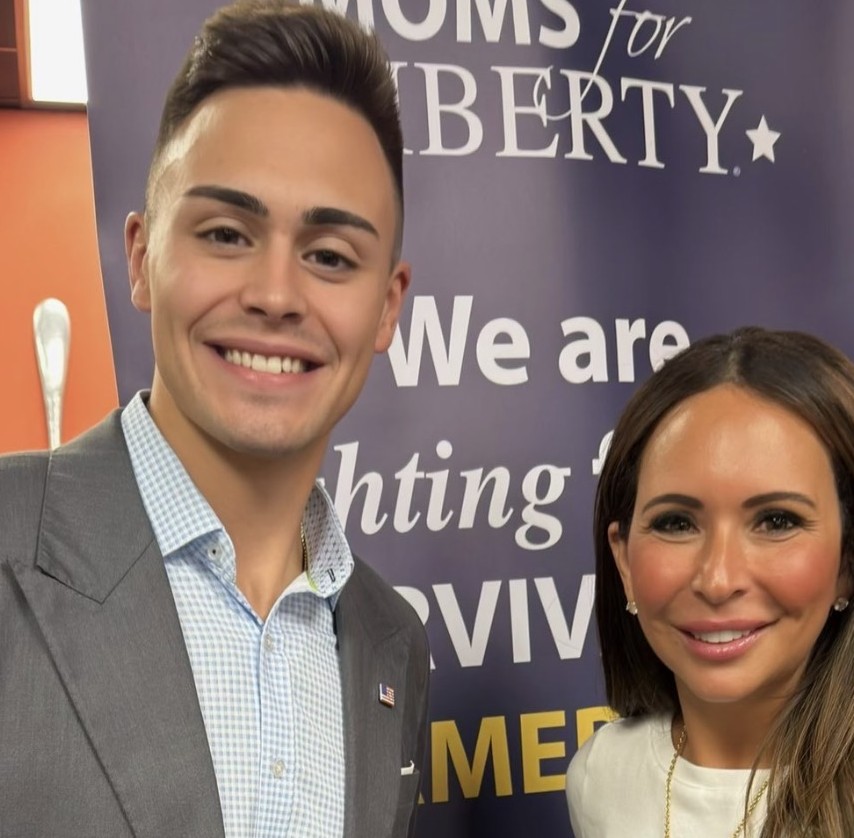
Days before the caucus, Alfonso announced an endorsement from Scarlett Johnson, a prominent Wisconsin Moms for Liberty leader. “I am incredibly honored to announce that I have been endorsed by Wisconsin Moms for Liberty warrior Scarlett Johnson!” Alfonso posted. Johnson’s statement praised him, saying, “Michael Alfonso is the kind of conservative fighter Wisconsin families have been waiting for. He understands that parents—not government bureaucrats—should be raising our kids, that schools should be educating instead of indoctrinating, and that our freedoms are worth defending every single day. I’m proud to stand with Michael Alfonso and endorse him for Congress.”
The caucus revealed divisions within the party. Reports indicated that Alfonso’s supporters lobbied to avoid any endorsement vote after an initial plan for multiple rounds of balloting. This push for “no endorsement” highlighted concerns about Alfonso’s limited grassroots support.
Alfonso’s campaign has relied heavily on outside funding linked to his family connections. Campaign finance records show significant contributions from transportation-industry PACs, including Delta Air Lines, roadbuilders, General Motors, and Lockheed Martin. He has also raised tens of thousands from registered lobbyists and senior financial services executives. Sawyer County GOP Chair John Righeimer criticized the transportation industry funding as “sickening,” accusing Alfonso’s campaign of being “force-fed” to the district. Grassroots county leaders have echoed these concerns, arguing that transportation-sector contributions create the appearance of special-interest influence in a district shaped by local manufacturing, agriculture, and small business.
In contrast, two self-financing businessmen have emphasized their independence. Paul Wassgren, a lawyer and financial services broker from Ashland with fifth-generation ties to the area, has loaned his campaign over $1.5 million. Like Alfonso, he was recently registered to vote in Florida. Kevin Hermening, a Marine veteran, Wausau businessman, and former Marathon County GOP chairman, has also invested personal funds in his campaign while highlighting his “deep local roots.”
Jessi Ebben, who works in government and public affairs for Ashley Furniture and has experience in rural healthcare, has received support from prominent state GOP figures. Her fundraising includes contributions from billionaire donors Diane Hendricks and Liz Uihlein, U.S. Senate candidate Eric Hovde, and the Club for Growth. Ebben presents herself as a Trump-conservative focused on parental rights and economic issues, though critics note her past signature on the Scott Walker recall petition and her recent move to the district.
The caucus snub highlights a broader tension in the race between national donor support and local grassroots backing. Alfonso has downplayed his lack of elected experience, telling local media that Trump’s endorsement “carries more” weight after the president’s first year back in office. However, insiders caution that without county party momentum, his path to the nomination remains uncertain in a reliably red district that values homegrown candidates.
The primary remains anyone’s race. Alfonso’s outside PAC spending, including nearly $1 million indirectly through Duffy-linked efforts, has flooded mailboxes with pro-Alfonso mailers. But self-funders Wassgren and Hermening, along with Ebben’s donor network, are mounting credible challenges. As one insider noted after Saturday’s proceedings, “Trump’s endorsement was supposed to clear the field. Instead, the grassroots just refused to fall in line.”
The August primary will ultimately decide whether Alfonso’s star power translates into victory or whether the 7th District’s independent streak prevails. For now, the caucus’s refusal to endorse stands as a stark reminder that in Wisconsin Republican politics, even President Trump’s blessing cannot substitute for local support.
