


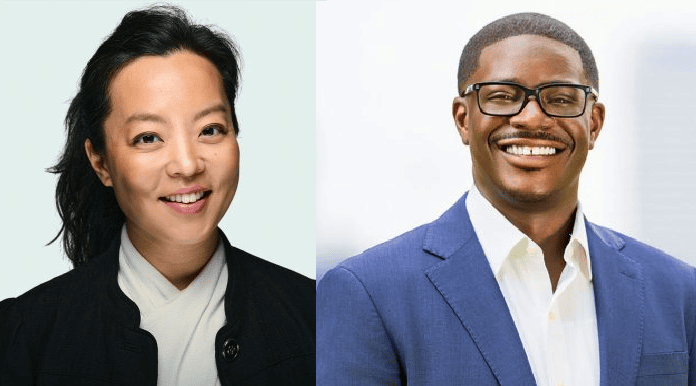
Gov.-elect David Crowley broke another campaign promise on Tuesday. By late that afternoon, the person explaining it for him was Francesca Hong, the democratic socialist he beat in August. Her explanation didn’t match his.
That is where Crowley stands seven weeks before he takes the oath. He has dropped a signature promise; even the left calls it a flip-flop, and his most prominent defender argues for a position he already rejected.
The story went national Tuesday morning. Politico reported that Crowley now considers full Medicaid expansion no longer viable because the “dollars that were on the table are no longer there.” The Daily Caller News Foundation and Townhall had it within hours.
At 10:32 a.m., Crowley posted: “WI families can’t afford to wait for D.C. to act on healthcare. Even with federal roadblocks, we must find solutions here at home.”
The day before, he told the Milwaukee Courier’s Drake Bentley something else. “There’s no way states are going to be able to fix healthcare completely on their own,” Crowley said in the Courier Q&A. “This has to happen nationally.”
On Monday, the fix had to come from Washington. By Tuesday, Wisconsin could not wait for Washington.
The left didn’t buy either version. Streamer Hasan Piker, who campaigned during the primary with Crowley’s socialist opponent, wrote that “establishment democrats don’t concede ahead of time challenge: impossible difficulty” and that Wisconsin “could’ve had a real fighter” running the new Democratic trifecta. Drop Site News reporter Julian Andreone posted, “Corporate Dems are on fire lately.”
They have a record to work with. Two weeks before the election, Crowley reversed himself and said he would “absolutely” sign a repeal of the data center tax break. In September 2025, he told FOX6 he would not redraw congressional maps mid-cycle. Five days after winning, he told WISN he would sign a new map. This is a man who dropped out of his own primary and climbed back in.
Medicaid makes three reversals since mid-October.
Then, about five and a half hours after Crowley’s post, Hong weighed in. She agreed that “Trump’s Republicans sabotaged Medicaid expansion.” She said she understood Crowley’s duty “to manage Wisconsin’s budget over the next biennium.” She then wrote that “our budget surplus could cover any difference” and get people “the coverage they need now.”
That is the argument against Crowley, coming from the person defending him. If the surplus covers the gap, expansion is viable. Crowley says it is not.
Hong also wrote, “Both David and I have been clear and consistent.” Consistent is a hard word to defend for a man on his third reversal since mid-October. She closed by pointing to 2028 and a president “who will sign Medicare for All into law.”
Help, in other words, arrives with a new president and a government takeover of health insurance.
Gov. Tony Evers’ own Department of Health Services called expansion “fiscally and operationally unfeasible” that August. In April 2026, Crowley’s campaign still billed him as “The Wisconsin Governor Candidate Fighting for Healthcare Access and Medicaid Expansion.” And now Hong, the face of his party’s left wing, says the surplus can cover the difference anyway.
That surplus is where this lands. The Legislative Fiscal Bureau put it at $2.6 billion on Nov. 11, The Center Square reported. Crowley’s first budget is due in late January. Hong has claimed that money in writing. When Bentley asked whether rebate checks are an option, Crowley did not answer, and Bentley asked twice. With DPI already making a grab for the surplus, the incoming Democrat trifecta has figured out several ways to spend the same pot of money.
Wisconsin taxpayers have watched Crowley change positions three times in about a month. The next decision involves billions of their money, and the people pushing him hardest want it spent.
