


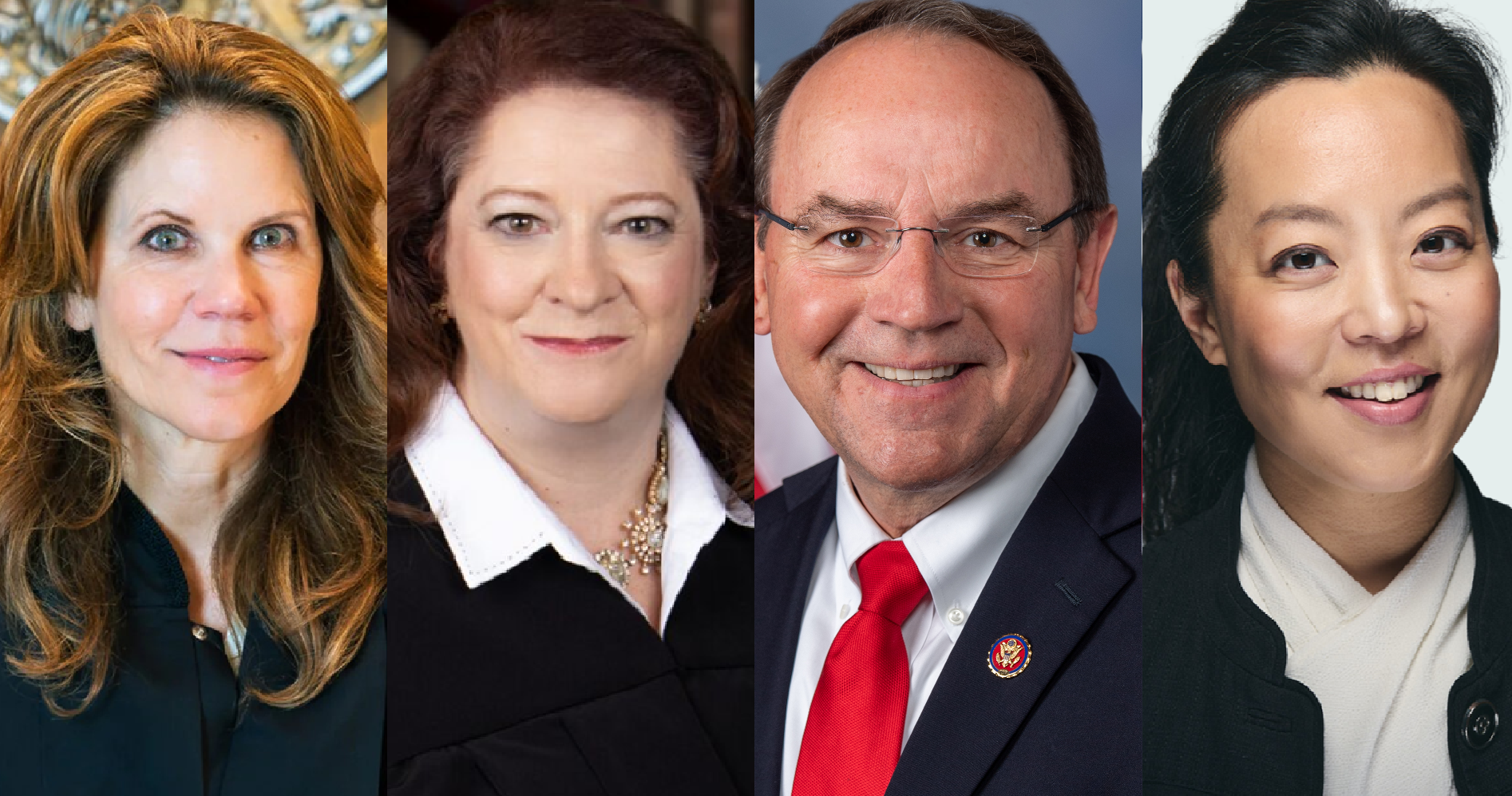
The Heartland Post staff picks the big winners and losers from Tuesday’s Marquette University Law School poll.
Winner:
Francesca Hong
She’s young. She’s brash. She’s unconventional. And, as of right now, she’s your 2026 Democratic gubernatorial frontrunner.
For the third consecutive Marquette Law School Poll, State Rep. Francesca Hong (D-Madison) leads the crowded, nine-person Democratic field—surprising many political insiders and pundits. A self-described Democratic Socialist, Hong has sought to ride the momentum of fellow socialist Zohran Mamdani, who pulled off a stunning upset in New York City’s mayoral race last year.
A single mom, Hong leans into her background as a chef and small business owner, positioning herself as a candidate for working-class voters and the progressive left. Despite ranking near the bottom of the field in fundraising, she has built a sizable grassroots network—evidenced by more than 7,300 individual donations in the January reporting period. Through creative use of social media and a steady stream of earned media, Hong has managed to offset at least some of the financial gap with better-funded opponents.
The question many insiders are now asking: how sustainable is it?
Hong has exceeded expectations through grassroots energy and relentless campaigning—but whether that can compete with candidates backed by deeper pockets and stronger donor networks remains an open question. That concern could intensify if Democratic power brokers grow uneasy about the prospect of a democratic socialist at the top of the ticket in a perennial swing state.
Still, what was once viewed as a long-shot candidacy has quickly evolved into something far more serious. In just a matter of months, Hong has gone from self-described “wild card” to the candidate to beat.
Loser:
Democrat Party Establishment
This ain’t your grandfather’s Democrat Party anymore.
Democratic Socialist Francesca Hong leads the primary field—and right behind her is Mandela Barnes, the party’s hand-picked 2022 Senate nominee who lost a high-profile race to Sen. Ron Johnson. Barnes drew national scrutiny during that campaign over past calls to abolish ICE and other anti-police rhetoric, including comments defending BLM riots on Russian state TV.
Now, he’s back—and he’s competitive.
Barnes is the only candidate in the field with over 50% name recognition (largely from that 2022 run) and currently sits in second place at 11%, just behind Hong at 14%. After that, there’s a steep drop-off. No other candidate breaks double digits. Milwaukee County Executive David Crowley and Lt. Gov. Sara Rodriguez are tied at just 3%.
The rest of the field barely registers. Business leader Joel Brennan pulls 2%, while former WEDC secretary Missy Hughes and State Sen. Kelda Roys each come in at 1%.
Setting Roys aside—like most of her voters already have—the remaining candidates represent the party’s so-called “mainstream” lane. Hughes and Brennan aim for the business community, while Crowley and Rodriguez are closely aligned with the Democratic donor class. Both Crowley and Rodriguez entered the race early and were widely viewed as frontrunners after Gov. Evers opted against a third term.
Now? They’re stuck in a battle for a distant third.
That has to be setting off alarm bells for party insiders, many of whom have serious doubts about a Hong or Barnes nominee in November. Even before Barnes entered the race, skepticism was already brewing. The New York Times reported concerns from Democrats about another Barnes run, and The Milwaukee Courier—which endorsed him in 2022—published a scathing op-ed urging him to stay out.
With no clear alternative emerging, the pressure is mounting. Do party power brokers consolidate behind a single candidate—or risk watching the nomination slip to the progressive wing?
And one more data point that won’t calm any nerves: the Democratic Party’s net favorability in the latest Marquette Law School Poll sits at –23.
That’s right—the Democrat Party is currently polling below ICE in Wisconsin.
Yikes.
Winner:
Tom Tiffany
Not many people are happier to see Francesca Hong and Mandela Barnes atop the Democratic primary field than Northwoods Congressman and presumptive GOP nominee Tom Tiffany.
Tiffany—and his social media arm, “Tiffany War Room”—have consistently gone after both candidates on X, launching recurring features like “Mandela Mondays” and “Francesca Fridays” to keep the pressure on the Democratic frontrunners and begin softening them up for November.
And the numbers are breaking his way.
Tiffany is the only candidate from either party with a net-positive favorability rating in the latest Marquette Law School Poll, coming in at +2. By comparison, Hong sits at –2, while Barnes posts a –6—tied with Missy Hughes for the worst favorability among major candidates (not named Brett Hulsey—sorry, Brett). That marks a six-point swing upward for Tiffany since February.
He’s also gaining ground in visibility. Tiffany saw the largest jump in name recognition in the March poll, surpassing 50% statewide for the first time this cycle. Barnes—who has run statewide twice—is the only other candidate above that threshold.
And while many pundits are already labeling 2026 a potential “blue wave” year, this poll offers some clear signs of opportunity for Tiffany. He’s already cleared the Republican primary field, giving him the luxury of focusing on the general election while Democrats continue battling—and drifting left—in a contested primary.
For now, at least, the political terrain is breaking in his favor.
Loser:
Spring Voter Engagement
While more voters are beginning to tune into April’s critical Supreme Court race than a month ago, a staggering 53% of registered voters remain undecided in the contest between Chris Taylor and Maria Lazar. Even more concerning: over 60% of voters say they still haven’t heard enough about either candidate.
The awareness gap is stark. Just 12% of voters say they’ve “heard a lot” about the candidates—compared to 39% at this point in early 2025, when Brad Schimel and Susan Crawford faced off.
But the bigger issue may be enthusiasm—and it’s breaking heavily to the left.
According to the latest Marquette Law School Poll, 77% of Democrats say they are certain to vote, compared to just 59% of Republicans. The gap widens further on intensity: 65% of Democrats say the race is “very important,” while only 46% of Republicans say the same. That kind of disparity has been a recurring problem for conservative candidates in recent Supreme Court races—and it’s showing up again here.
Republicans are also far more undecided. Nearly 60% say they are unsure how—or even whether—they will vote this April. That uncertainty comes as Lazar has sent mixed signals to conservative voters, including recently saying she finds it “amusing” when people describe her as the conservative candidate in an interview with WISN’s Matt Smith.
While the race itself appears within striking distance for Lazar (Taylor is only up 6 points amongst registered voters), the enthusiasm gap and engagement gap on the part of Republican voters should be cause for concern for Republicans.
