


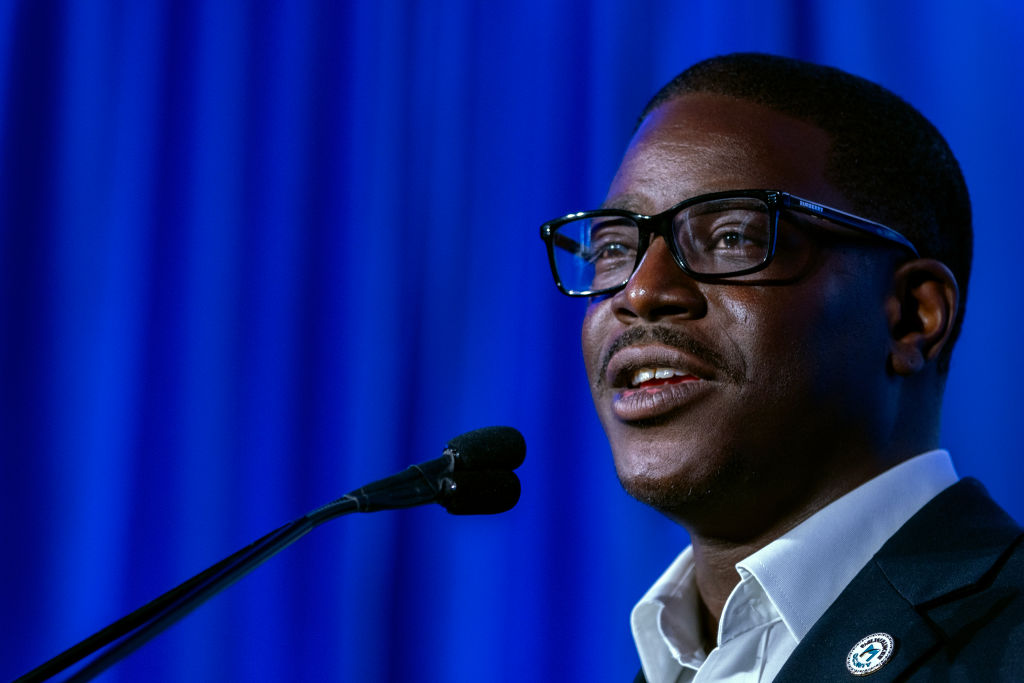
Crowley Commits Milwaukee County to Paris Climate Agreement as Energy Affordability a Chief Concern of Electorate
With his campaign struggling to gain traction, polling at a disappointing 3%, Milwaukee County Executive David Crowley is turning to familiar progressive climate talking points—recommitting Milwaukee County to the Paris Climate Agreement as he attempts to close the gap with Democratic-Socialist frontrunner Francesca Hong.
Crowley signed new legislation this week reaffirming the county’s alignment with the international climate framework first adopted under former President Barack Obama. The move underscores a broader political shift as Crowley leans further left in a primary where he has struggled to break out of single digits.
The Paris Agreement, which calls for aggressive reductions in greenhouse gas emissions, has long been a flashpoint in national politics. Supporters argue it promotes global cooperation on climate issues. Critics, however, say it places disproportionate economic burdens on the United States while allowing major polluters like China to continue increasing emissions for years.
That imbalance was a central reason former President Donald Trump withdrew the U.S. from the accord during his first term. Trump argued the agreement would cost American jobs, weaken domestic manufacturing, and drive up energy prices—all while delivering minimal global environmental impact. Although the U.S. later re-entered the agreement, Trump again moved to exit during his second administration, reigniting debate over its economic consequences.
Crowley’s renewed commitment comes as energy affordability remains a top concern for Wisconsin families. Republicans and energy policy analysts have increasingly tied rising utility costs to mandates and subsidies associated with renewable energy transitions—arguing that rapid shifts away from reliable baseload sources like coal and natural gas have contributed to higher rates and grid instability.
In Wisconsin, where regulators have approved billions in recent rate increases, critics warn that doubling down on climate-driven policies could further strain household budgets. They argue that local governments aligning with international frameworks like the Paris Agreement often adopt costly infrastructure changes—such as electrification mandates, solar investments, and building retrofits—that are ultimately passed on to taxpayers and ratepayers.
Crowley, for his part, framed the move as necessary leadership in the absence of federal action, pointing to county-level emissions reductions and ongoing sustainability projects. But skeptics see it differently—viewing the announcement as a politically motivated pivot aimed at appealing to a progressive primary electorate increasingly dominated by candidates further to the left.
With the Democratic primary for governor increasingly shaping up as a race to the left—led by Francesca Hong and Mandela Barnes—Crowley’s embrace of global climate commitments may signal less about local governance and more about the political pressures driving the field.
