


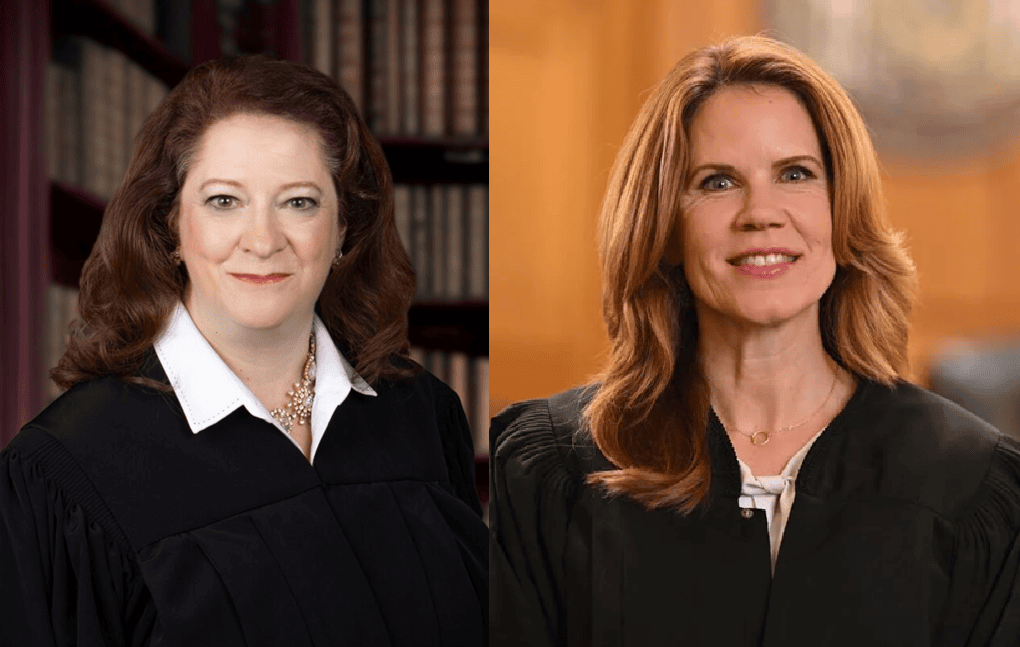
Liberal Chris Taylor Leans on National Donors While Maria Lazar Relies on Local Grassroots
As Wisconsin voters prepare to cast ballots on Tuesday, April 7, in the state Supreme Court election, campaign Out-of-State Cash Floods Wisconsin Supreme Court Race: Liberal Chris Taylor Leans on National Donors While Maria Lazar Relies on Local Grassroots (from The Heartland Staff)
As Wisconsin voters prepare to cast ballots on Tuesday, April 7, in the state Supreme Court election, campaign finance reports expose a familiar pattern: liberal candidate Appeals Court Judge Chris Taylor enjoys a massive fundraising advantage powered heavily by out-of-state donors and national liberal interests, while conservative Appeals Court Judge Maria Lazar draws overwhelming support from Wisconsin families and communities.
This year’s contest has drawn far less national attention and total spending than the record-breaking 2025 Wisconsin Supreme Court race, which saw roughly $115 million (or more, when including outside groups) funneled into the race, much of it from billionaire mega-donors on both sides. Yet the money trail in the Taylor-Lazar matchup still reveals deep partisan divides and a clear reliance by the liberal side on external influence to expand their control of the court.
In the most recent reporting period (covering early February to mid-March), Taylor raised $2.08 million, which is more than four times the $472,000 pulled in by Lazar. Taylor has now amassed over $5.6 million since launching her campaign in May 2025, compared to Lazar’s roughly $976,000 since entering the race later in October. This cash advantage has allowed Taylor to significantly outspend her opponent on advertising, particularly television ads.
Both candidates received support from their respective state parties. The Democratic Party of Wisconsin transferred $700k to Taylor, while the Republican Party of Wisconsin transferred $60k to Lazar. Donations have come from nearly every county across the state. According to Cap Times, Taylor received contributions from every Wisconsin county, while Lazar drew support from all but two (Forest and Menominee). However, the bulk of in-state funding follows predictable ideological lines:
- More than 52% of Taylor’s Wisconsin donations originated from liberal-leaning Dane County (home to Madison and the University of Wisconsin).
- Nearly 30% of Lazar’s in-state funding came from the conservative WOW counties (Waukesha, Washington, and Ozaukee), with especially strong backing from Waukesha County, where she lives.
Cross-over contributions remained limited: according to CapTimes, only about 7% of Taylor’s Wisconsin donations came from the WOW counties, and just 9% of Lazar’s came from Dane County. Taylor even outraised Lazar in Ozaukee County and nearly matched her in Waukesha, indications of a slight leftward shift in these traditionally Republican suburbs.
The most telling contrast lies in out-of-state influence. Nearly 92% of Lazar’s donations came from within Wisconsin, reflecting strong grassroots support from state residents who want a conservative voice on the bench. In sharp contrast, only about 73% of Taylor’s funds came from inside the state, meaning roughly 27% poured in from outside Wisconsin. Taylor received contributions from every state, plus Washington D.C., Puerto Rico, and even a few European countries, with California emerging as a leading source of external money. Lazar drew from 33 states plus D.C., but her top external source was neighboring Illinois, on a far more limited scale. Source: CapTimes
The out-of-state advantage for Taylor highlights what conservatives have long argued: national liberal elites and special interests are determined to buy influence over Wisconsin’s judiciary. This race parallels the outside influence that defined the 2025 Wisconsin Supreme Court race. In that contest, which became the most expensive judicial election in U.S. history with roughly $115 million spent overall, liberal candidate Susan Crawford benefited significantly from external funding. Crawford received substantial out-of-state individual contributions, reported as high as $14.6 million in one analysis, representing a large share (around 69% in some breakdowns of her individual donations). Conservative candidate Brad Schimel drew far less direct out-of-state individual support. Billionaire Elon Musk and groups linked to him contributed roughly $18.7 million to over $21 million in support of Schimel through super PACs (such as America PAC and Building America’s Future) and donations to the state Republican Party, yet Crawford still prevailed and expanded the liberal majority. Liberal mega donor George Soros contributed $2 million to the Democratic Party of Wisconsin (which transferred funds to Crawford’s campaign), along with additional support from figures like Illinois Gov. JB Pritzker. This cycle for the 2026 race, Soros gave $750,000 to the Democratic Party of Wisconsin (which backs Taylor and can transfer unlimited amounts), though this is down from his 2025 contribution. Source: Wispolitics
A victory for Taylor would shift the current 4-3 liberal majority to a commanding 5-2, potentially entrenching activist rulings for years on critical issues including election integrity, parental rights, crime policy, and business regulation. A win for Lazar would preserve the existing balance following the retirement of conservative Justice Rebecca Bradley.
While Taylor benefits from a well-funded national machine, including transfers from the Democratic Party of Wisconsin and coastal donor networks, Lazar’s campaign draws overwhelmingly from hardworking Wisconsin families, suburbs, and rural communities. The donation patterns prove judicial races are anything but nonpartisan: money flows from liberal donors in Dane County and out-of-state progressive networks to one side, while conservative heartlands fuel the other.
With Election Day just days away, the race underscores the stakes for impartial justice in Wisconsin. Voters concerned about outside interests shaping the state’s highest court should turn out strongly for Maria Lazar on April 7 to reject the out-of-state cash grab and keep the court balanced.
