


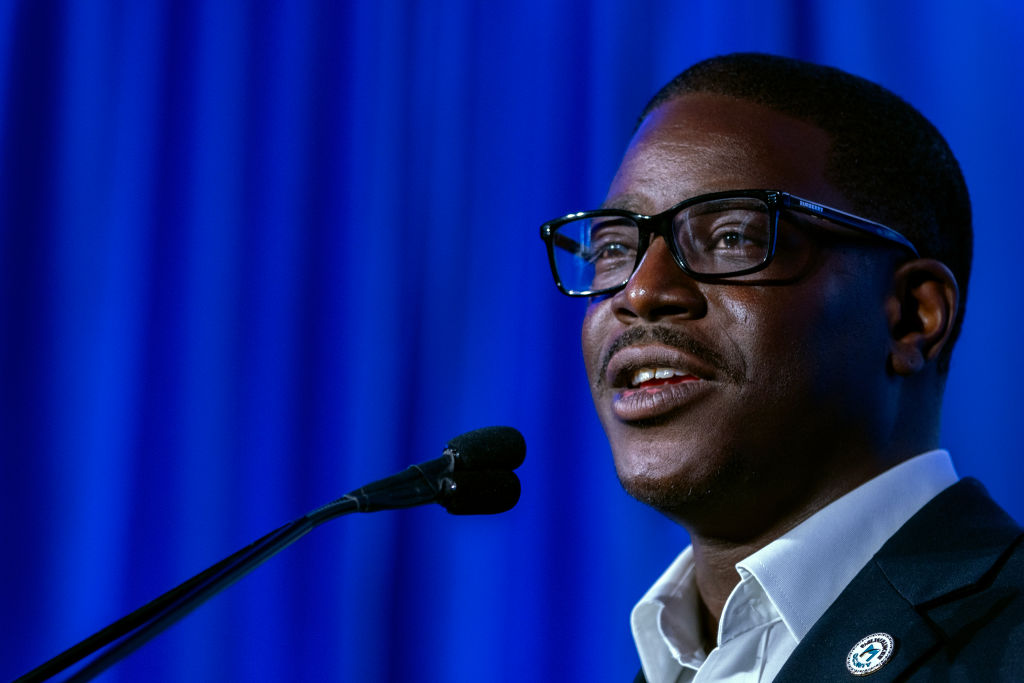
Milwaukee County Executive and candidate for governor, David Crowley is positioning low-income housing to the suburbs. In Oak Creek, residents packed a public hearing to oppose the project. The meeting was very contentious, and attendees voiced concerns about an increase in traffic, loss of green space, and decreased property values.
Residents are also worried about the conditions of Milwaukee’s existing public housing, which is often poorly maintained and vexed by safety issues and lacking in accountability. They fear importing problems that plague Milwaukee.
When Crowley says, “affordable housing,” suburban residents hear “We’re bringing the problems of Milwaukee’s public housing into your neighborhood.”
The proposal in Oak Creek is called the Annette Place Development Plan. It has 50 single-family homes. The homes are built for immediate homeownership and priced between $225,000 and $250,000 according to the county’s website.
The Whitefish Bay development is called the Hampton. It is a mixed-use 17‑unit housing development. This property includes more than $3 million in federal funding. A third development—a 19-unit housing project—is in the works in Shorewood.
Crowley cites a few reasons for these developments that are funded by both private and public entities. He believes that the county is expanding homeownership opportunities, addressing the county’s affordable housing shortage, breaking down historical barriers between the city and suburban communities, and improving health outcomes by stabilizing housing.
“From Greenfield and Brown Deer to South Milwaukee and Wauwatosa, Milwaukee County continues supporting affordable housing developments in suburban communities that have never seen investments like this before,” he said.
However, this will likely only export Milwaukee’s housing problems to the suburbs. Existing public housing in the city is less than desirable. Many developments in Milwaukee are dilapidated and run down. These properties are often debris-filled. They are brimming with residents who do not seem to care about their living conditions. Some properties have been cited as drug dealing nuisance properties or gang infested lots.
The county needs to require stipulations of occupants. These principles might put some people’s concerns at ease. The county must assure strict maintenance standards, distinct behavioral expectations, homeownership requirements (not rentals), tenant accountability, transparent oversight, regular inspections, and zero‑tolerance policies for nuisance behavior. These are commonplace expectations for any neighborhood.
Sadly, public housing in Milwaukee is easy to spot. It is not respected as an investment in a family’s future. Public housing should be seen as a path forward. Instead, public housing seems to be a dead-end generational dependency for some of these families.
Crowley is not accounting for the reality of what public housing is now in the city. Suburbanites have a right to be concerned about what affordable housing will look like in their communities. David Crowley needs to assure residents that the suburbs will not resemble the city of Milwaukee.
The public housing matter has been neglected for decades. Suburban communities do not want that same dysfunction dropped on their doorstep.
If Crowley wants to reimagine Milwaukee County, he should fix the mess that has been largely ignored for decades. He should not be exporting disarray to communities that have worked hard to stay safe, clean, and stable. Suburban residents are not being heartless; they are being forthright about their very real concerns.
