


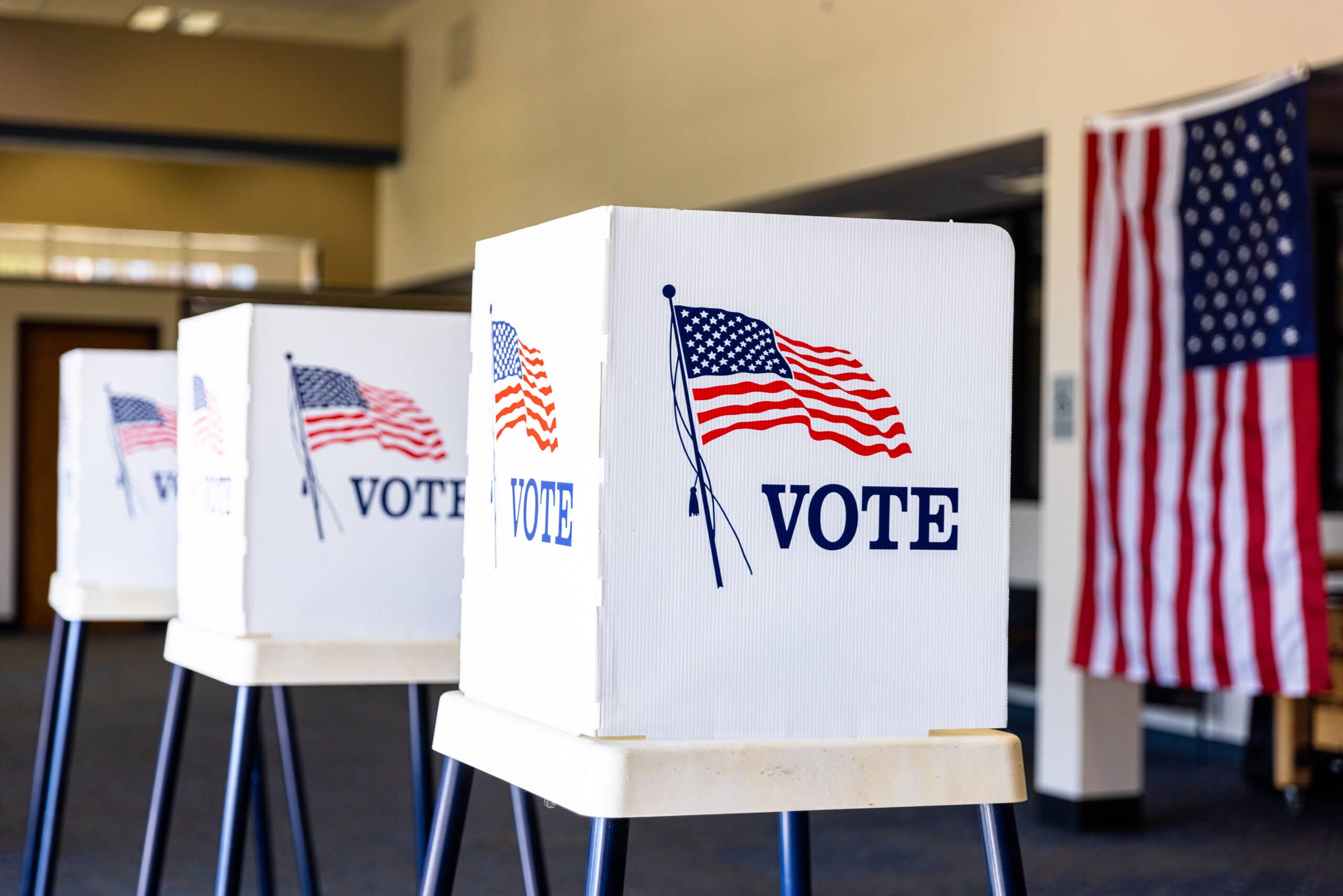
Are you feeling inundated with political ads as our November election looms? Do you wish you could have a more direct say in how Wisconsin spends your tax dollars?
If so, I have good news: In addition to the many important statewide and local races on the November ballot, Wisconsinites will have the opportunity to vote directly on three proposed amendments to the Wisconsin Constitution. One such amendment is the “Equality Amendment,” otherwise known as Assembly Joint Resolution 102 (AJR 102). It’s as (refreshingly) commonsense as the title suggests.
As we commemorate 250 years of striving towards “a more perfect union” in America, we can choose a path that honors our growth as a nation. A path that doesn’t define our potential by the “boxes” we check.
If passed, the Equality Amendment would make explicit in our constitution that a “governmental entity may not discriminate against, or grant preferential treatment to, any individual or group based on race, sex, color, ethnicity, or national origin in public employment, education, contracting, or administration.” In other words, when you apply for a government job or college scholarship, or bid on a state contract for your small business, checking a particular “race” or “sex” box can neither help nor hurt you.
The proposed amendment already enjoys strong, bipartisan support. According to a recent poll, 61.1% of all registered voters support the Equality Amendment, including 54.2% of Democrats, 63.0% of Independents, and 65.7% of Republicans. While 23.7% remain undecided, only 15.2% are opposed.
Such strong support is hardly surprising, as “equality under the law” is reflected both in our federal and state constitutions, along with numerous U.S. Supreme Court and Wisconsin Supreme Court decisions, particularly since the Civil Rights movement.
However, still to this day, checking a particular box does help or hurt many Wisconsinites. And as taxpayers, we pay millions of dollars to help or hurt our fellow Wisconsinites.
Public contracts are one example. Through the “Supplier Diversity” program, the State of Wisconsin has spent nearly $1.5 billion on purchasing supplies and services, awarding “qualifying” minority-owned businesses an automatic 5% bid preference. This means that the State frequently—and intentionally—rejects the lowest qualified bidder depending on the business owner’s race. We, as taxpayers, foot the bill. Middle Eastern, most Asian, and white small business owners are ineligible for this program, simply because of their race.
Education is another example. Through the “Minority Teacher Loan” program, for instance, the State of Wisconsin has spent millions of dollars providing forgivable loans of up to $30,000 to future K-12 teachers planning to teach in disciplines facing teacher shortages, ranging from reading, to math, to special education. As anyone who has pursued a college degree knows, $30,000 can go a long way to help defray its significant cost. But once again, there’s a catch: you must check a particular “race” or “ethnicity” box to be eligible. If you aspire to be a K-12 teacher but are Middle Eastern, white, or of most Asian ancestries, you’re not welcome to apply.
Opponents of the Equality Amendment, who presumably support these examples of race-based state programs, often lean on “equity” as the rationale. The argument can be distilled down to this: “Not everyone starts in the same place in life. We must level the playing field.” Indeed, no two people have the same life story. We’re all born into different family, socioeconomic, health, and other circumstances that ultimately shape our diverse life paths and perspectives. However, if “we” level the playing field, “we” inevitably means the government. This means that government employees sort people into groups, then make assumptions about those groups, simply based on their appearance or family background.
Ask yourself: Do you want the government—or any person—looking at you and making assumptions about your past or your ability to succeed in the future, simply based on the color of your skin or your sex? And even if you support the policies of those governing Wisconsin now, think long-term as well: Do you want leaders of the opposing political party potentially having the power to make such assumptions about you?
As we commemorate 250 years of striving towards “a more perfect union” in America, we can choose a path that honors our growth as a nation. A path that doesn’t define our potential by the “boxes” we check. A path that doesn’t assign individuals to groups and make assumptions about those groups, solely based upon the color of their skin, their sex, or their family background. A path that builds upon the Civil Rights Era and champions equality under the law. A hopeful, forward-looking, empowering path.
I ask you to join me in proudly voting YES on the Equality Amendment on November 3
