


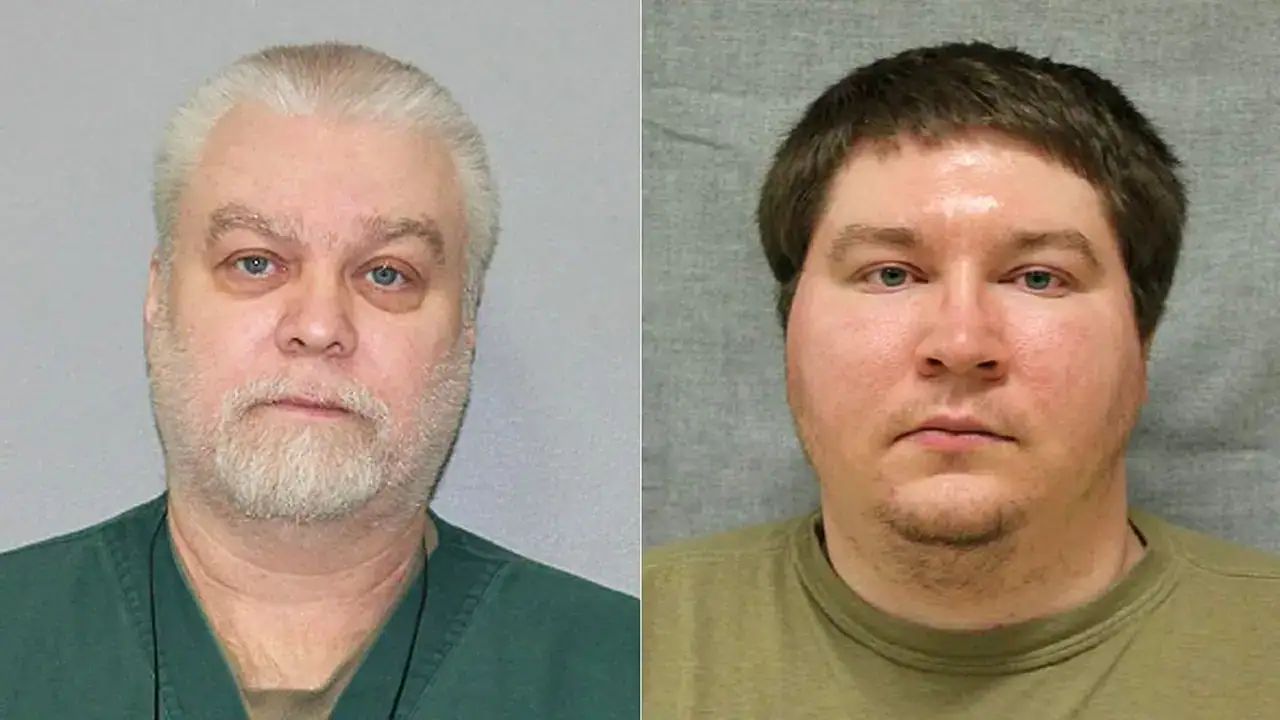
Two of Wisconsin’s most infamous convicted killers are seeking to have their prison sentences cut short under Gov. Tony Evers’ newly revived commutation process.
Steven Avery and Brendan Dassey — whose convictions in the 2005 murder of Teresa Halbach became the subject of the Netflix documentary series Making a Murderer — have both submitted applications seeking commutations of their sentences.
Avery was convicted of first-degree intentional homicide and sentenced to life in prison without parole. Dassey, Avery’s nephew, was convicted of first-degree intentional homicide, second-degree sexual assault and mutilation of a corpse and sentenced to life, with eligibility for extended supervision beginning in 2048.
Their applications put a national spotlight on a controversial policy Evers resurrected earlier this year — and one that has emerged as a dividing line in Wisconsin’s race for governor.
In April, Evers signed executive orders reviving Wisconsin’s dormant commutation process and creating a Governor’s Commutation Advisory Board to recommend inmates whose sentences could be reduced. Unlike a pardon, a commutation can actually shorten the sentence of someone still behind bars. The board makes recommendations, but Evers ultimately decides whether to grant them.
The policy marked the return of gubernatorial commutations after decades of dormancy in Wisconsin. Evers’ office said he would be the first Wisconsin governor since Tommy Thompson to issue one.
While Evers excluded several categories of criminals from eligibility, including certain sex offenders and those convicted of crimes against children, murder convictions are not automatically disqualifying. In August, six of the first 12 inmates considered by the board had been convicted of homicide. Now, two of Wisconsin’s most notorious killers are seeking the same consideration.
Republican gubernatorial nominee Tom Tiffany has vowed to end the Evers commutations policy. Tiffany has said that as governor he would rescind Evers’ executive orders and eliminate the commutation board, arguing that convicted murderers and other violent criminals should not be given another avenue for early release.
Democrat David Crowley has taken a different approach.
Crowley previously said he would work with the Legislature to “institutionalize” Evers’ commutation policy, arguing that clemency can address excessive sentences, changes in the law and cases involving rehabilitation. His campaign later clarified that a Crowley administration would not allow murderers to receive commutations.
Crowley has nevertheless called for dramatically expanding opportunities for criminals to clear their records after completing their sentences and has also advocated for reducing Wisconsin’s prison population by half. At a Democratic gubernatorial forum earlier this year, Crowley said “anyone and everyone” should have the opportunity to apply for expungement, a position that Tiffany has called into question.
The arrival of Avery and Dassey may now provide Wisconsin voters with the highest-profile test yet of the commutation system Evers revived. And whoever succeeds him will face a clear choice over its future: Crowley wants to institutionalize it. Tiffany wants to end it.
