


The U.S. Senate on Wednesday refused to take up a House-passed bill meant to keep large AI data centers from shifting grid-upgrade costs onto household electric bills, splitting Wisconsin’s two senators and handing both parties a late talking point five weeks before the midterms.
The Ratepayer Protection Act, H.R. 9340, would have required state utility regulators to consider a federal standard that large-load customers — mainly data centers drawing 100 megawatts or more at a single site — pay the full incremental cost of new generation, transmission, and distribution built to serve them. It also would have required those customers to post financial assurances before utilities spend the money, so families are not left paying the bill if a project shrinks or walks away.
The House passed the bill 417–3 on Sept. 16. The Senate vote Wednesday was 57–43 on cloture, three votes short of the 60 needed to start debate. Only four Democrats joined Republicans: Sens. Maggie Hassan of New Hampshire, Amy Klobuchar of Minnesota, and Jon Ossoff and Raphael Warnock of Georgia.
How Wisconsin’s senators voted
Sen. Ron Johnson (R) voted yes.
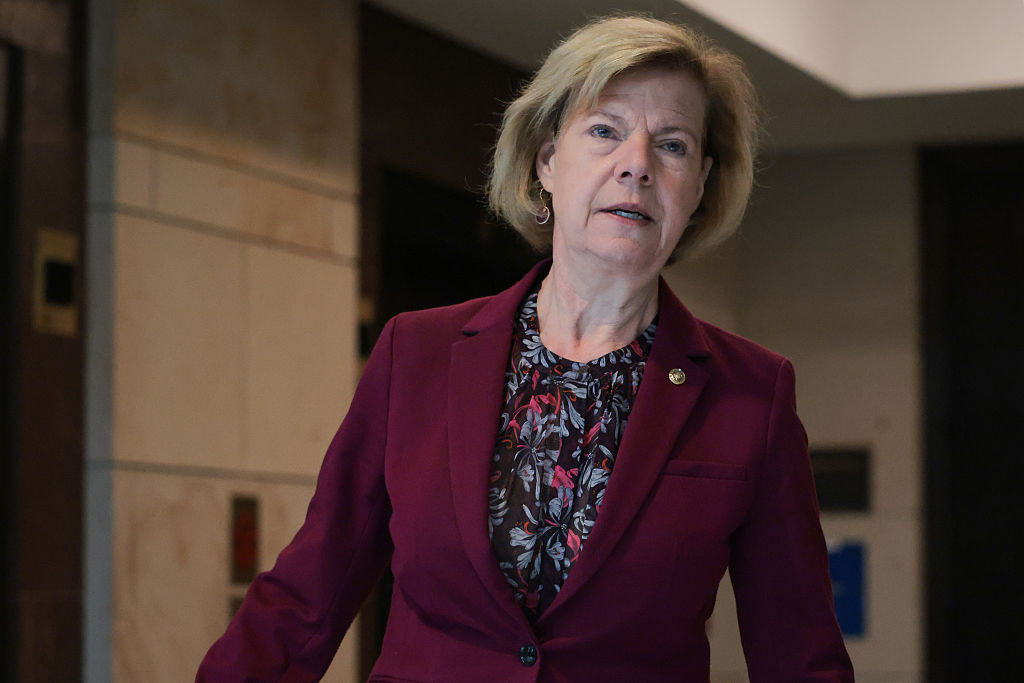
Sen. Tammy Baldwin (D) voted no.
Baldwin said in a statement the bill is “toothless” and it “tries to sell the American people a bad bill of goods.”
Republicans and the bill’s House sponsors argued the opposite — that a near-unanimous House vote was the only opportunity to put a national ratepayer standard in front of state commissions before Election Day, and that Democrats blocked even a first step.
The vote impacts Wisconsin who is already absorbing some of the Midwest’s largest data-center projects: Microsoft in Mount Pleasant, Meta in Beaver Dam, and Vantage in Port Washington. State regulators have already started writing Wisconsin-specific rules.
The Public Service Commission has required We Energies and Alliant Energy to structure rates so hyperscale customers cover the cost of new generation and related infrastructure. Peak demand on the Wisconsin grid is projected to rise from 14.6 gigawatts in 2024 to 19.9 gigawatts by 2030, with data centers driving much of the growth.
Cost is not only on the electric bill. The nonpartisan Legislative Fiscal Bureau has estimated Wisconsin will forgo about $1.5 billion in sales-tax revenue tied to data-center construction from 2024 through 2028, plus about $369 million a year tied to operations, because of the state’s existing sales-and-use-tax exemption for qualified data centers.
That argument is already central in Wisconsin’s open governor’s race. On the campaign trail, Tiffany has framed data centers as a ratepayer and taxpayer issue. His platform says Wisconsin should be “America’s Dairyland, not America’s Dataland,” and that there should be no new data centers without standards to protect ratepayers, farmland, water, local control, and the grid.
He has pledged to end state tax giveaways for data centers, give communities a final say, and require the companies to “pay the costs they create, not pass them on to Wisconsin families and businesses through higher utility bills.” Tiffany has also said data centers should bring their own energy and that Wisconsin taxpayers should not subsidize some of the world’s largest companies.
In David Crowley’s first general-election ad, he said he would “hold data centers accountable and make them pay,” and he has said the facilities should “bring their own new clean energy.” However, that contradicts other statements Crowley has made regarding data centers. Tiffany’s campaign has branded him “Data Center David,” citing Crowley’s comments about making Wisconsin a data-center hub “not only for the entire country, but for the entire globe.”
Those were his remarks on WTMJ about using Wisconsin Economic Development Corporation-backed tech investment to “spread that wealth across the entire state,” and powering just the Microsoft campus in Mount Pleasant and the Vantage project in Port Washington with solar alone could take roughly 93,000 to 130,000 acres of productive farm land.
Tiffany says Crowley will keep the state’s data-center tax breaks — estimated at about $2 billion in forgone sales-tax revenue — while a 100% renewable power requirement for those projects would convert farmland into solar, wind, and battery sites. Crowley has not pledged to repeal those tax breaks.
Sen. Baldwin voted against a bill that passed the House almost unanimously and that was written to make large data centers pay for the wires and plants built for them.
For Tiffany, a failed Washington vote lets him say Wisconsin families still need a governor who will refuse to socialize data-center costs at the state level — ending tax exemptions and making operators fund their own grid upgrades.
Data centers and the companies behind them must pay for the power plants, transmission, and upgrades their projects require, or those costs get spread across Wisconsin ratepayers and the state budget.
