


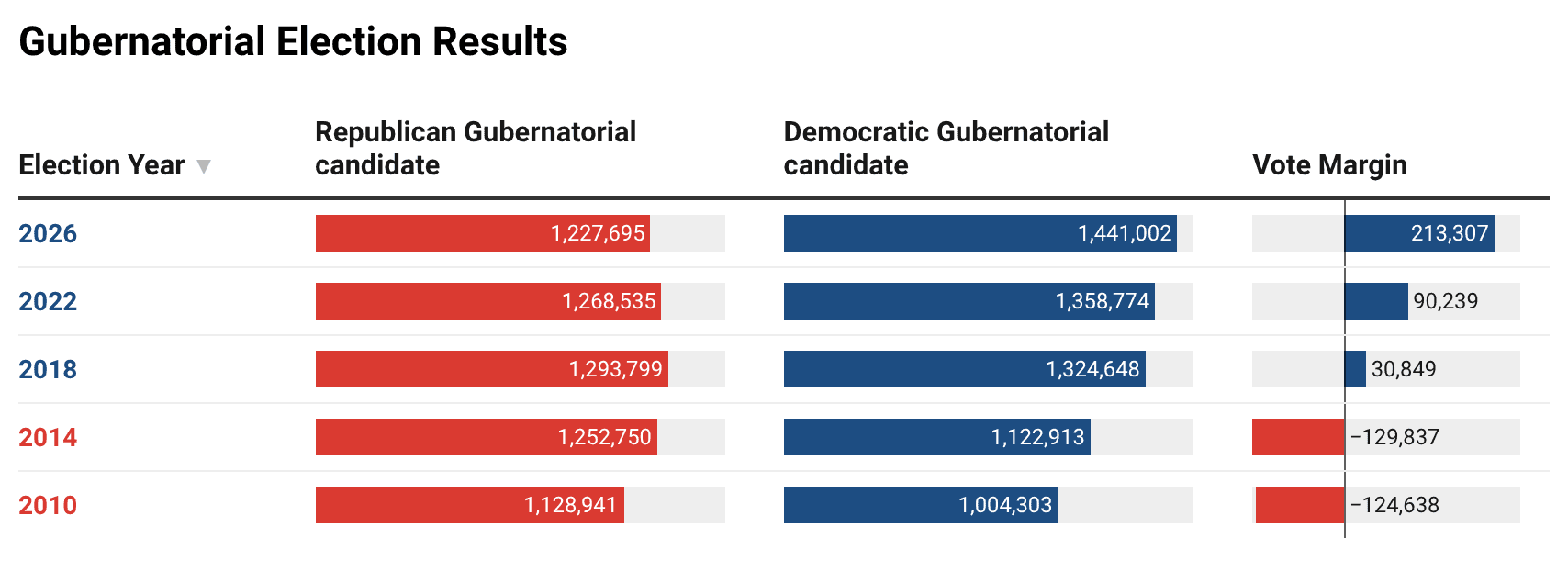
Republican gubernatorial candidate Tom Tiffany lost in a rout Tuesday amid a national blue election that didn’t just deliver Wisconsin to David Crowley and legislative Democrats, but swept away majorities in both the U.S. House and Senate.
Just how bad were things in Wisconsin? Analysts at Michael Best Strategies illustrate it in four easy-to-understand charts. First, midterm turnout:
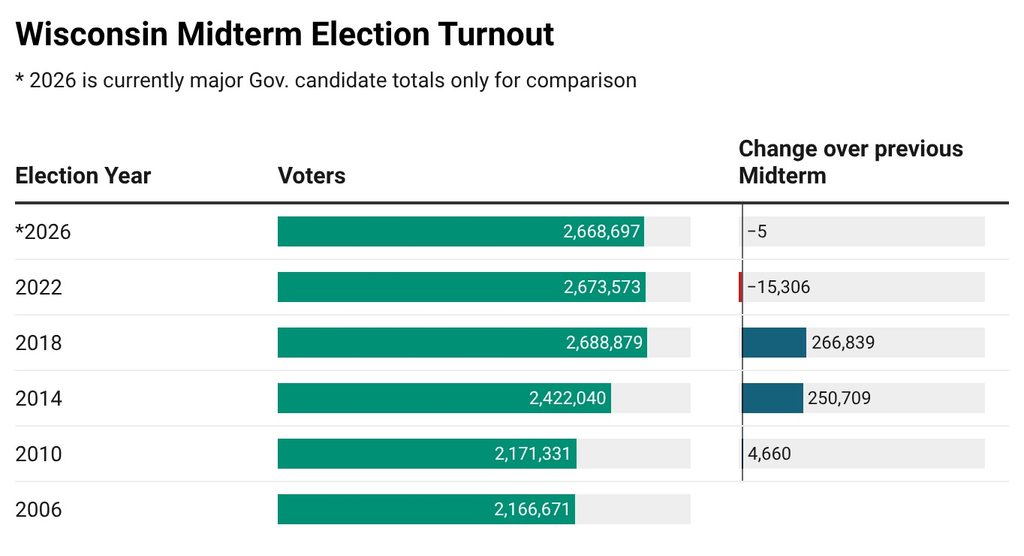
Believe it or not, turnout was nearly identical to 2022 and down more than 15,000 votes from 2018–the last major Democrat year. That spelled doom for Republicans, who have in the Trump era of the past decade relied on lower-propensity voters in rural communities and slightly better margins in blue counties like Dane and Milwaukee to overcome the steep erosion in more reliable suburban voters in the WOW Counties (Waukesha, Ozaukee, and Washington) that typically made up winning Republican coalitions.
This is reflected acutely in the electoral margins over the each gubernatorial race in the Trump Era.
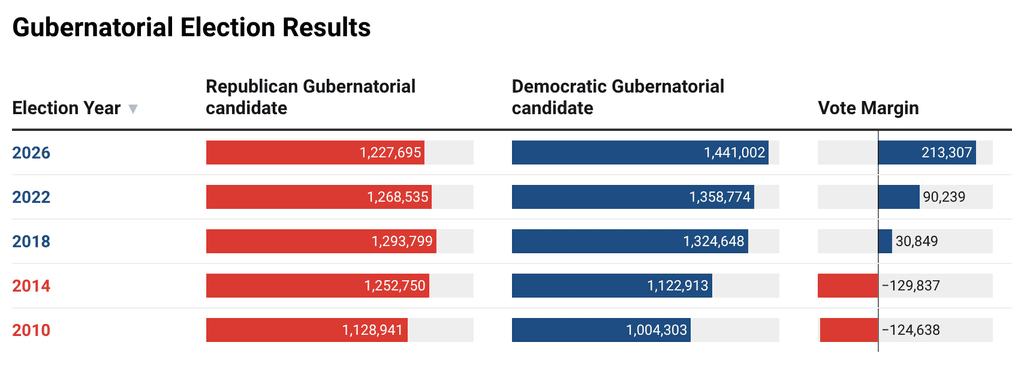
When Republicans were more reliant on the WOW Counties (and had the benefit of running in massive red wave elections in 2010 and 2014), they won big margins on much lower total turnout. This suggests that they were much better than Democrats at turning out their base and also appealing to swing voters who had soured on President Obama and national Democrats following the disastrous rollout of Obamacare.
In Wisconsin, voters also issued a sharp rebuke to Governor Jim Doyle and his Democratic Legislature, who ran up such massive budget deficits that Walker and legislative Republicans had no choice but to pass Act 10 and save the state from eight years of liberal governance.
Four years later, continued national opposition to Obama and Democrats coupled with backlash in Wisconsin to the recall election in 2012 gave Walker and Republicans four more years.
In 2018, though, everything came crashing down.
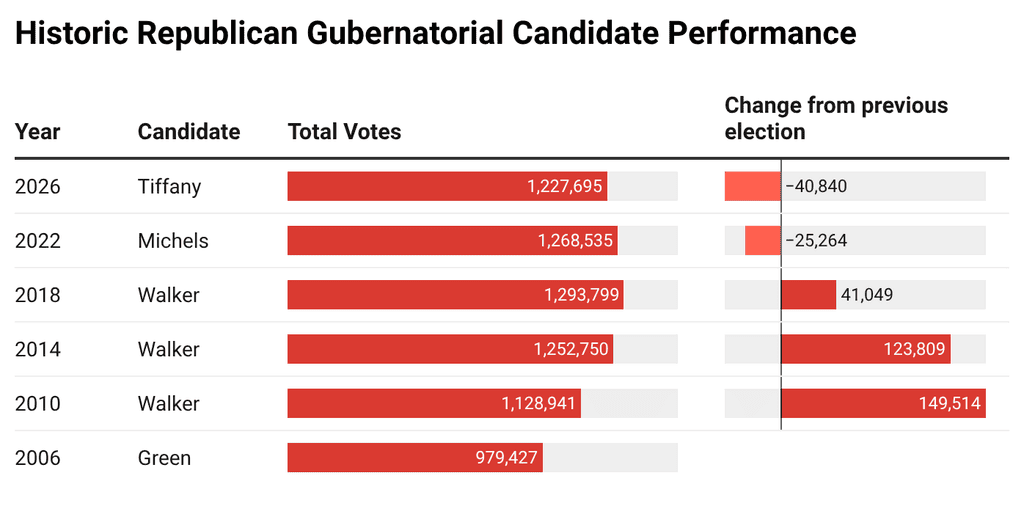
Even though Walker actually increased his raw vote numbers by more than 41,000, Democrat challenger Tony Evers improved his raw number by more than 118,000.
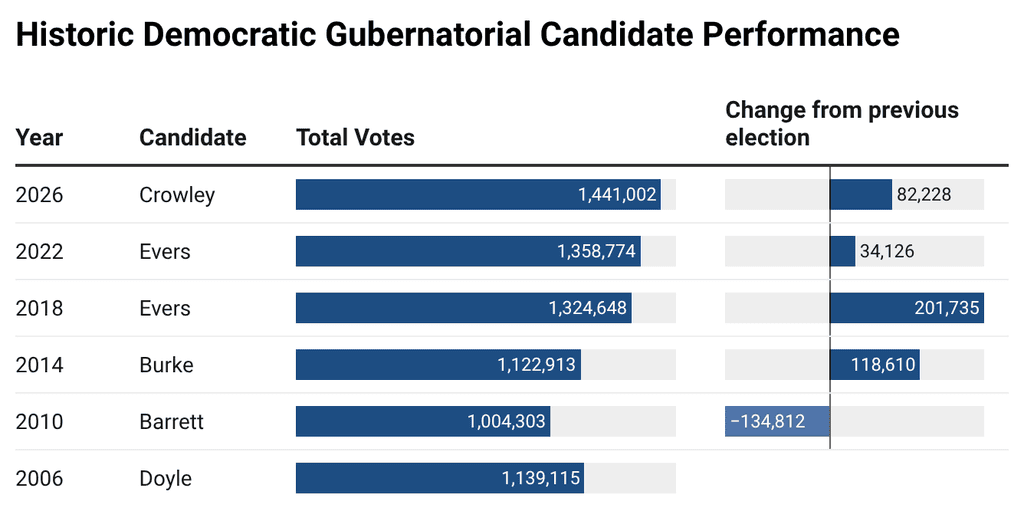
Walker’s 2014-2018 improvement was the last time a Republican candidate improved upon the prior midterm’s vote total. In 2022, Tim Michels lost around 25,000 votes from Walker’s number. In 2026, Tiffany lost an additional 41,000.
This is notable because Democrats didn’t improve by the incredible numbers Walker did in 2010 and 2014 or the downright stratospheric 202,000 votes by which Evers increased the Democrat total. They simply held onto their existing base of support and improved around the margins by either registering new voters or picking off disaffected Republicans.
These numbers don’t lie, and they paint a disturbing picture of a Republican Party that is now far too reliant on voters who are not reliably with them.
