


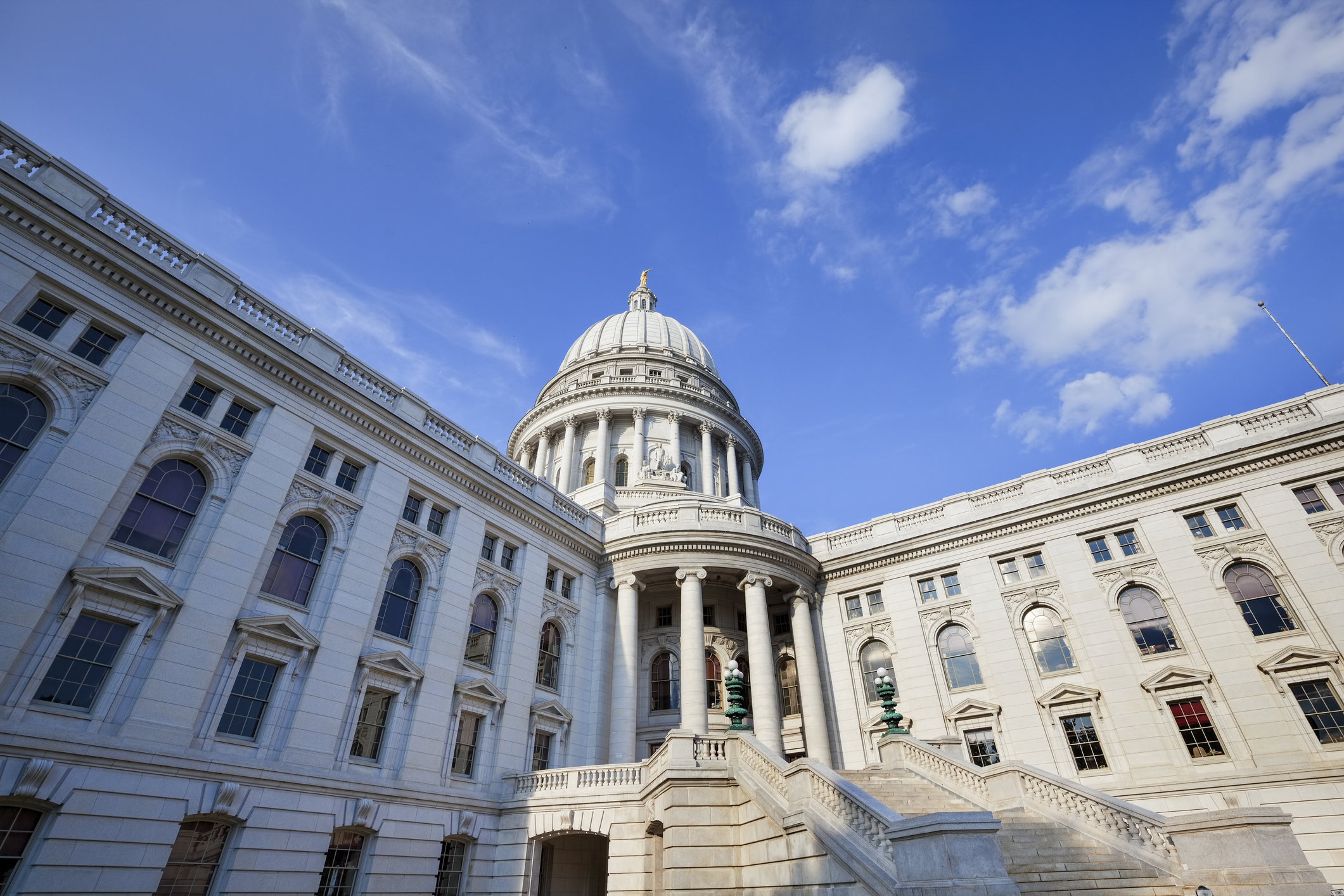
Tuesday was the worst night for the GOP in a long time. There is no use pretending otherwise.
Call it what it was. Democrats rode a blue tsunami across Wisconsin on Tuesday night. David Crowley will be Wisconsin’s next governor. Rebecca Cooke beat Rep. Derrick Van Orden in the 3rd District. In the 1st District, Paul Ryan’s old seat, Democrat Mitchell Berman defeated Rep. Bryan Steil by about 8,200 votes with 93% counted. Josh Kaul beat Eric Toney to keep the attorney general’s office. And Democrats flipped both the state Assembly and the state Senate, which hands them full control of the Capitol for the first time since 2010.
For most of 16 years, a Republican Legislature has been part of Madison, first working with Governor Scott Walker to pass historic cost-saving measures, then checking Tony Evers’ power.
It was not a total wipeout. Republican Michael Alfonso won the 7th District up north. And voters passed Question 3, which bars government discrimination, by about 57% to 43%. Conservative ideas still win in Wisconsin, even on a night when Republican candidates did not.
If you are a conservative who woke up discouraged this morning, here is the good news. We have been here before, and every time the pendulum swung back.
The Midterm Tide
Start with the most dependable rule in American politics. The president’s party almost always loses ground in a midterm. Since the New Deal, the party holding the White House has gained House seats in a midterm only three times, in 1934, 1998 and 2002.
Wisconsin’s governor’s race tends to move with that same tide. From 1994 through 2018, voters here elected a governor from the party out of the White House seven straight times. Tommy Thompson won twice under Bill Clinton. Jim Doyle won twice under George W. Bush. Walker won twice under Barack Obama. Evers won under Donald Trump.
Tuesday fit that pattern, and then some. The wave was national, and Wisconsin sat right in its path. President Trump’s approval here stood at 37% in the final Marquette poll, a headwind no Republican on the ballot could outrun. Crowley rode the same midterm tide that has carried candidates of both parties into the governor’s office for three decades. Waves like this one are about the calendar and the party in the White House. They are not a verdict that conservative ideas have stopped working.
Wisconsin Has Seen This Before
In 2008, Democrats won the Assembly and took full control of the Capitol for the first time since Tony Earl was governor in the 1980s. Doyle had the governor’s office, both chambers, and the same was true at the national level with Barack Obama.
That was the second of brutal cycles for Republicans. In 2006, the party lost 30 House seats, six Senate seats, and both chambers of Congress. In 2008, it lost the White House.
Two years later, it was all gone for the Democrats. In November 2010, Walker beat Tom Barrett, Ron Johnson retired Russ Feingold, and Republicans took both the state Senate and the Assembly. Up north, Sean Duffy won the 7th Congressional District seat Democrat Dave Obey had held since 1969. In Wisconsin Rapids, Scott Krug unseated Democrat Marlin Schneider, the longest-serving member of the Assembly, after 40 years in office. Nationally, Republicans gained 63 House seats. The architect of the Wisconsin comeback was Reince Priebus, state party chairman since 2007. In January 2011, he ran for Republican National Committee chairman on that Wisconsin record and won.
Go back further. In 1986, Thompson was the Assembly minority leader, with the Democrats in unified control and Thompson with 47 GOP Assembly members. He took on Tony Earl, a sitting Democrat governor, and beat him by nearly 100,000 votes. Thompson went on to win four times and become the longest-serving governor in state history. In 1994, as he cruised to a third term, Republicans won the Assembly for the first time since 1970.
The minority leader’s office was not a dead end. It was a launch pad.
The Country Has Seen It, Too
In 1964, Barry Goldwater carried six states. Two years later, Republicans gained 47 House seats, and Ronald Reagan was elected governor of California. Two years after that, Richard Nixon won the White House.
In August 1974, Nixon resigned. That November, Republicans lost 48 House seats. In 1976, they lost the presidency. In January 1981, Reagan took the oath of office with a Republican Senate behind him, the first GOP Senate majority since the 1950s. Wisconsin did its part. Bob Kasten unseated Gaylord Nelson in 1980.
In 1992, Bill Clinton won the White House with a Democratic Congress. In 1994, Republicans gained 54 House seats and won the House for the first time in 40 years.
In 2014, six years after the 2008 rout, Republicans picked up nine Senate seats and took back the Senate, and Walker won a second term.
Maps Move
The map doesn’t stay put. In the 1960s, California was Republican country. It voted for the Republican for president in every election from 1952 through 1988 except 1964, and it elected Reagan governor twice. Texas was Democratic. It voted for the Democrat for president three times that decade and did not elect a Republican governor until Bill Clements in 1978, the first since Reconstruction. Clements lost after 1 term, and Texas did not consistently elect Republican governors until George W. Bush in 1994. California has not voted Republican for president since 1988. Texas has not voted Democratic for president since 1976.
Arkansas is the sharpest example. In 2008, Republicans did not even field a candidate against Democratic Sen. Mark Pryor. His only opponent was a Green Party nominee. Four years later, Republicans won both chambers of the Arkansas Legislature for the first time since 1874. Two years after that, Tom Cotton beat Pryor by 17 points, and Republicans held every Arkansas congressional seat for the first time in 141 years. Today the state has a Republican governor, two Republican senators and an all-Republican House delegation.
Arkansas is not alone. In 1991, Kirk Fordice, who had never held public office, became Mississippi’s first Republican governor in 118 years. In 2002, Sonny Perdue beat a sitting Democratic governor to become Georgia’s first Republican governor since Reconstruction. In Louisiana, Treasurer John Kennedy switched to the Republican Party in 2007 and won reelection unopposed while Democrats still held the lieutenant governor’s and attorney general’s offices. Today Kennedy is a U.S. senator, and Republicans hold every elected statewide office in Louisiana.
Legislatures fell the same way. Oklahoma Republicans won the state House in 2004 for only the second time since statehood, then took the state Senate in 2008 for the first time ever. That same year, Tennessee Republicans won both chambers at once for the first time since Reconstruction. In 2010, Republicans took the Alabama Legislature for the first time since 1874. In West Virginia, Republicans had not run the House of Delegates in 83 years when they won 64 of its 100 seats in 2014. After the 2024 election, West Virginia Republicans held 91 of 100 House seats and 32 of 34 in the state Senate.
The Road to 2028
Comebacks like these do not happen by waiting. They start with recruiting candidates for the next election while the other side is still celebrating the last one.
The road back runs through 2028, and the work starts now. Republicans are in the minority in both houses, which is exactly where Tommy Thompson started. Democrats own the whole Capitol now, and with it every result. Every tax increase, every broken promise, and every destructive progressive policy from here on will carry Crowley’s name, with no Republican Legislature left to blame. Voters will judge that record in 2028, when every Assembly seat, half the state Senate and the presidency are on the ballot, and again in 2030, when the governor’s office is.
Thompson went from Assembly minority leader to governor in a single election. Ron Johnson came out of a plastics plant in Oshkosh and had never run for office before 2010. The next Republican governor of Wisconsin is out there today, and most voters might not even know their name yet.
The pendulum swung in 1966, in 1980, in 1994, and in 2010. Each of those years came after a defeat that felt final to the people who lived through it. None of them was. Every wave that crashed over Republicans in this state went back out. This one will too, and Wisconsin conservatives get to decide how fast.
Take a day or two, doom and grieve, but the obstacle in the path is the path. Then call the person who knocked doors next to you and thank them, and lace up your shoes. Every comeback in this column was built by people who refused to stay down after a night like this one. We will be those people. There are doors to knock; 2028 is closer than it looks, and Crowley can be defeated in 4 years.
