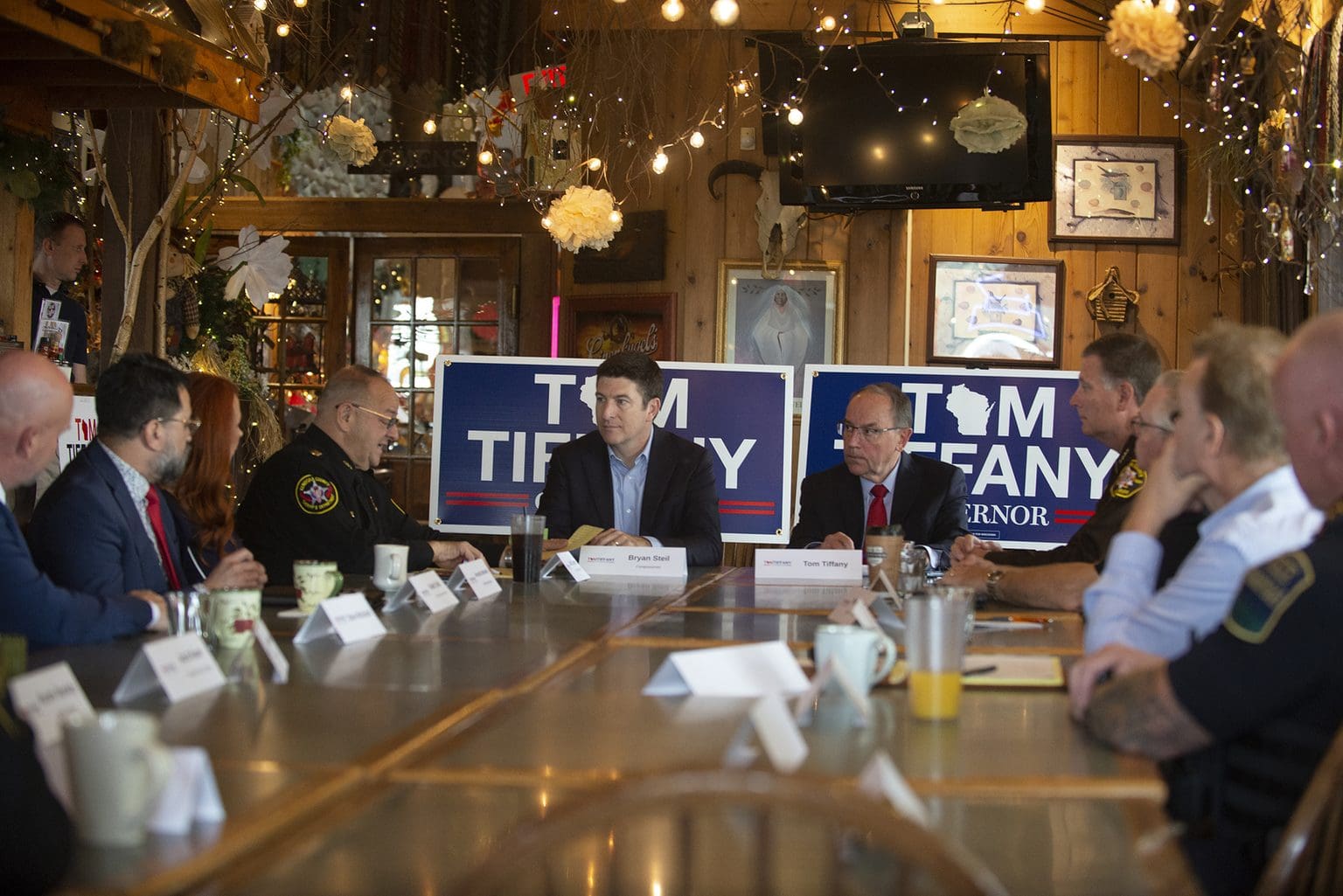


Wisconsin gubernatorial candidate Tom Tiffany met Friday, October 9, with sheriffs, police chiefs, prosecutors and elected officials from Kenosha, Racine and Walworth counties to discuss some of the most pressing challenges facing law enforcement across southeastern Wisconsin.
The roundtable focused on crime along the Interstate 94 corridor, Wisconsin’s growing mental health crisis and the struggle to recruit and retain prosecutors and officers amid uncompetitive salaries.
Kenosha County Sheriff David Zoerner and other law enforcement leaders emphasized the need for additional patrol officers along I-94, a major corridor connecting Chicago and Milwaukee. Theft rings, fentanyl and other drugs, human trafficking and illegal firearms remain among the concerns confronting officers.
Zoerner said proactive enforcement along the interstate is one of the most effective ways to get drugs and guns off the streets and disrupt criminal activity. But without dedicated resources, deputies are frequently redirected from their communities to patrol the highway.
Recruiting officers presents another challenge. Illinois agencies can offer higher salaries, Pleasant Prairie Police Chief David Selvidge acknowledged, but he said Wisconsin officers remain in a favorable position as these communities strongly support police and allow them to do their jobs. Selvidge also discussed the need for additional support staff — dispatchers, records department, and other administrative offices facing understaffing issues.
Walworth County Sheriff Dave Gerber and other participants echoed concerns about Illinois policies, including the SAFE-T Act and the overall climate surrounding law enforcement. Lake, Cook and many other counties have been valuable Illinois partners across the tri-county region. However, the bad crime policies of Illinois do not offer the kind of support officers require to do their job effectively south of the state line. As a result, repeat offenders, often some of the most violent who are committing crimes in these three counties, come from Illinois.
Attendees pointed to criminal activity spilling over from Chicago, Milwaukee, Rockford and Madison into surrounding communities. In Kenosha, the recent deadly shooting and police shootout involving a Milwaukee repeat felon was an example highlighted by District Attorney Xavier Solis. Heartland Post previously reported on the case.
Mental health crisis strains officers and communities
Mental health emerged as one of the most urgent issues discussed. Veteran officers, including Walworth County’s undersheriff Tom Hausner, described today’s crisis as the worst they have witnessed in their careers — in more than four decades of law enforcement in Hausner’s case. Racine County District Attorney Patricia Hanson expressed similar concerns.
Agencies face significant overtime and related costs when booking inmates, providing medical and behavioral health care, and monitoring patients receiving Medications for Opioid Use Disorder (MOUD).
Transporting individuals experiencing mental health crises to Winnebago Mental Health Institute can require a 4-5 hour round trip, pulling officers away from patrol and emergency calls. Participants discussed the need for more accessible treatment options so communities are not left short-staffed while officers transport people who need psychiatric care. Officers are in need of local or regional alternatives to Winnebago.
Pooling resources and potentially forging public-private partnerships to assist with the mental health crisis was discussed by Representative Amanda Nedweski and others as a way to reduce transport time and overall costs. Nedweski helped arrange an agreement with an Illinois facility about 15 miles south of Kenosha, and expressed a need for an increase of similar arrangements in the region.
Racine County Captain Cary Madrigal and other officials also raised concerns about worsening mental health challenges among young people, particularly in Kenosha and Racine schools. They described how young people struggling to manage problems or communicate with one another can end up in violent confrontations, contributing to shootings and other incidents.
Across the tri-county region, officials said the effects of crime originating in larger cities compound all of these problems, placing additional pressure on local departments and the justice system writ large.
Hanson also highlighted the difficulty of recruiting and retaining assistant district attorneys. Wisconsin’s relatively low compensation makes it difficult to compete with private-sector positions and other opportunities, even after the DA’s office invest a significant amount of time and resources in training new attorneys.
Turnover and vacancies increase workloads for remaining staff and can strain the timely administration of justice. The problem affects prosecutors’ offices throughout the region and across Wisconsin.
The roundtable discussion offered context around how interconnected these issues have become. Highway enforcement competes with local patrol needs, mental health crises consume officers’ time and adds financial pressure to an agency’s budget, and attorney shortages add another burden to already strained justice system.
The roundtable discussion provided an opportunity for Tom Tiffany to hear directly from the officials responsible for public safety. Congressional District 1, represented by Bryan Steil (also in attendance) knows all too well how crime and law enforcement issues are linked to every other quality of life metric. We need our officers to have the resources to do their jobs effectively and efficiently to protect our communities. Crime is always ranked a top issue in these three counties, and this election cycle is no different.
Photo provided by Kevin Matthewson, Kenosha County Eye