
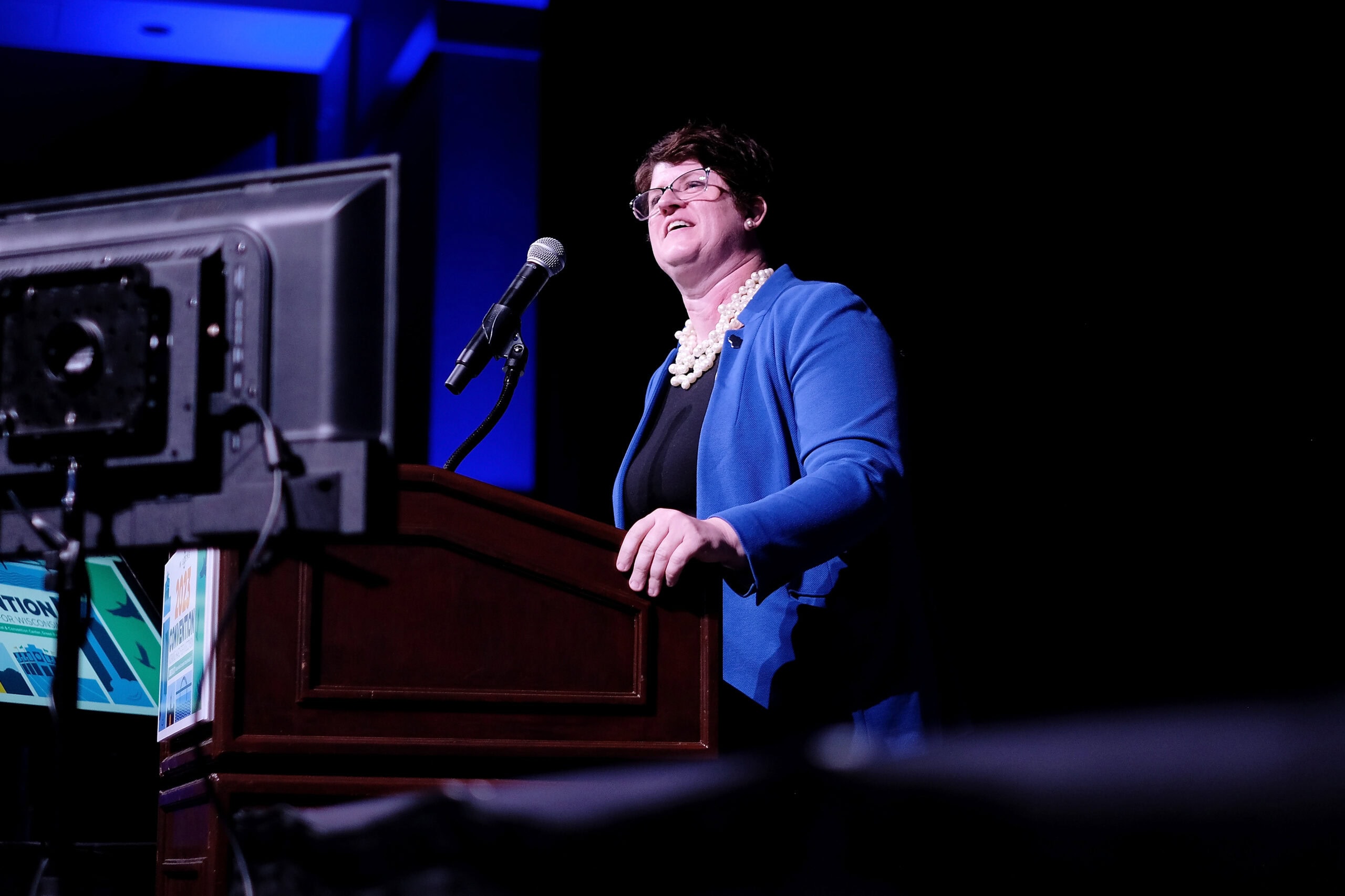
Jill Underly’s Department of Public Instruction rolled out its $2.75 billion budget request on Friday, November 13, with a press release promising the statewide property tax levy would not go up. The release never uses the words “choice,” “voucher,” or “scholarship.”
The budget request uses them often. Starting on page 141, DPI asks to freeze state payments for kids in Wisconsin’s choice programs and to close the Special Needs Scholarship to new children after next school year.
Start with the special needs kids. The request says DPI wants to begin “a phaseout of the SNSP by allowing no new pupils to enroll after the 2027-28 school year.” The full scholarship would be frozen at $16,477. The “actual cost” option for children needing expensive services would end. DPI’s table projects full-scholarship enrollment dropping by 170 in the first year as graduates leave and no new students replace them.
That program serves 3,859 students at 232 private schools this fall, according to DPI, numbers Heartland Post’s Colbey Decker laid out Monday. To qualify, a child needs an IEP or a services plan. Colleston Morgan Jr., executive director of City Forward Collective in Milwaukee, called the phaseout “an especially cruel twist.”
Now go back to the release. Underly is quoted saying, “Every decision we make comes back to students,” down to “making sure a student with a disability receives the services they need.” That release went out the same day as a budget that shuts new students with disabilities out of the scholarship.
Then there is everyone else in choice. Today, a choice school gets $11,305 for a K-8 student and $13,799 for a high schooler. DPI would replace both with a flat $12,552 in 2027-28 and 2028-29 and repeal the law that raises choice payments whenever public school revenue limits increase.
K-8 students get a one-time bump of $1,247. After that, the number stops moving. High schoolers lose $1,247 apiece, about 9%.
DPI’s fall counts show 14,479 choice high schoolers in the Milwaukee, statewide, and Racine programs. At $1,247 each, that is roughly $18 million a year pulled from the schools teaching them.
Public school districts, meanwhile, get a revenue limit increase of $1,108 per pupil in 2027-28, another $374 in 2028-29 and automatic inflation raises after that, per the same request. Choice families get a fixed number in statute.
Ashley Czaja, president of School Choice Wisconsin, told WisPolitics where that leads: “you would see schools that would have to remove themselves from the program and try to get more private pay students to account for that difference.” With a frozen payment, every year of inflation is a cut.
The choice pages are sloppy, too. The Milwaukee section requests “$4,469,400” in its text and $4,669,400 in its table. The special needs section says $1,186,100 in one paragraph and $1,831,100 in the summary above it and twice refers to “the 2027-08 school year.” This is the same document in which DPI misspelled its own name.
DPI spokesman Chris Bucher offered the defense to WisPolitics: “It is pretty simple: public money requires public accountability.” Choice schools already answer for that money. Their students take the state tests, and DPI grades the schools. The agency’s own report card release on Tuesday said 81% of scored choice report cards met or exceeded expectations. The new accountability rules DPI promises are in “a separate document” that WisPolitics reported was not available Monday. A payment freeze measures nothing.
This request has a path. Democrats won the governor’s office, and both chambers on November 3, and incoming leaders Dianne Hesselbein and Greta Neubauer have put more money for public schools on their list. Gov.-elect David Crowley hired former DPI adviser Jeff Pertl as chief of staff, and Underly’s ask heads to his desk.
Crowley said in the October debate that he would keep the voucher programs: “as of this moment, we are not in a position to push all of these children towards any of our public schools.” Underly’s budget shrinks those programs anyway, one frozen check at a time.
The first family to feel it will be the parents of a child with an IEP who goes looking for a private school in the fall of 2028 and finds the scholarship closed. DPI’s press release never told them.
