


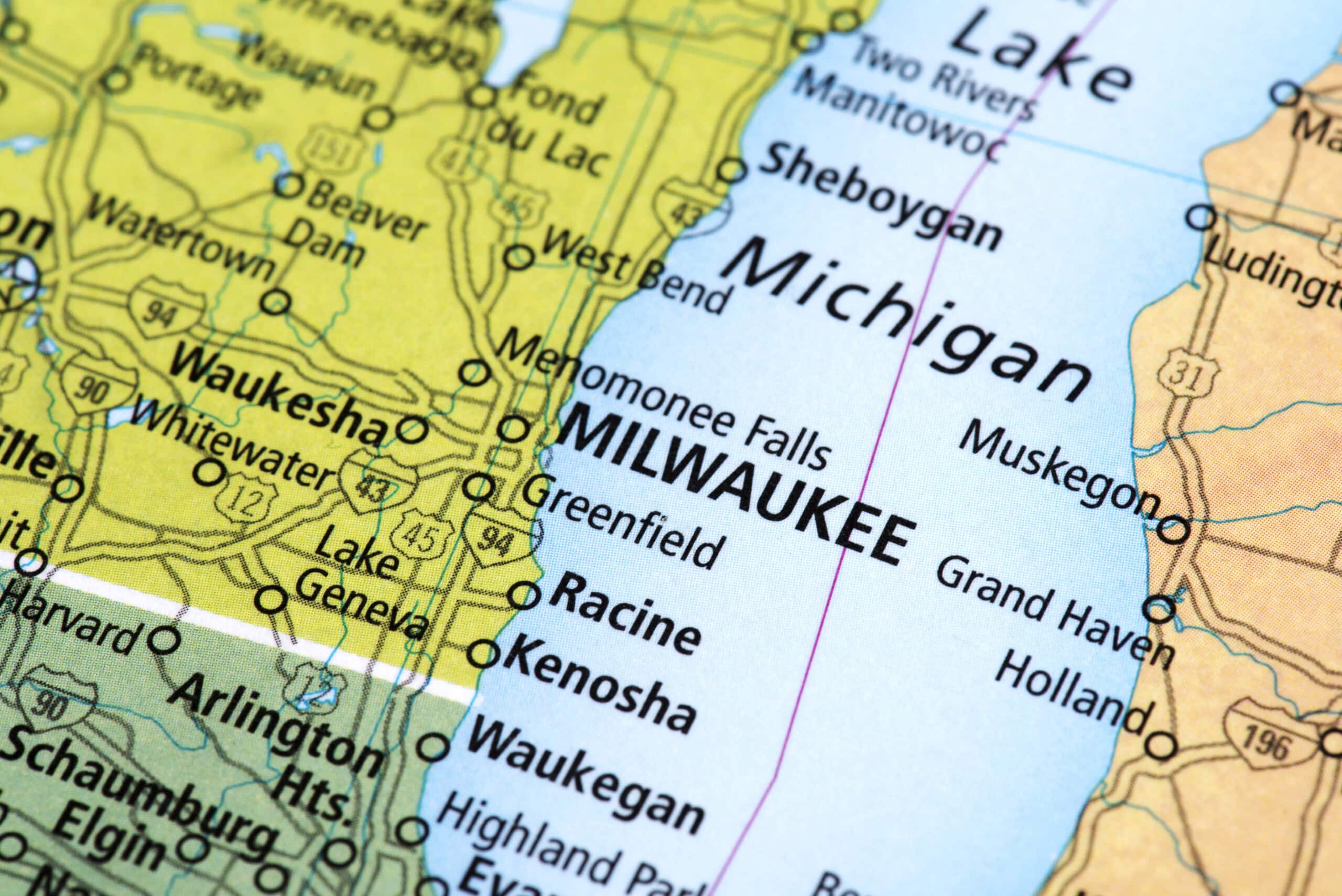
In a notable evolution of Wisconsin’s political geography, Kenosha, Racine, and Walworth counties are positioning themselves as the new “WOW” counties — a coalition designed to counterbalance Democratic strongholds in Milwaukee and Madison. Traditionally, the acronym “WOW” referred to the heavily Republican Waukesha, Ozaukee, and Washington counties, which long served as a suburban bulwark for GOP candidates. However, those areas have shown signs of trending more Democratic, particularly in Waukesha County.
Recent elections highlight the shift. In April 2026 spring election, Democrat Alicia Halvensleben defeated Republican state Rep. Scott Allen to win the Waukesha mayoral race in a close contest, marking a significant upset in a historically conservative city. Other Milwaukee suburbs like Brookfield have trended liberal in recent elections. Reports also note that Republican candidates, including some in spring elections, have underperformed even in traditional strongholds.
Meanwhile, Republicans in Kenosha, Racine and Walworth won select seats in various local offices in the spring election, with one notable victory in the region – conservative-backed Court of Appeals, Anthony LoCoco, winning strongly in Kenosha County.
Trump’s Vote Gains Highlight the Realignment
From 2020 to 2024, Donald Trump recorded solid net gains in the emerging tri-county coalition while experiencing modest net losses (or narrowing margins) in the traditional WOW counties. Trump’s vote totals increased by approximately +2,873 in Kenosha, +2,380 in Walworth, and +2,306 in Racine. In contrast, the traditional WOW counties showed softening support, with net changes of roughly –1,452 in Waukesha, –765 in Ozaukee, and –487 in Washington.
A New Republican Pathway for 2026
Republican U.S. Rep. Tom Tiffany, candidate for Wisconsin governor, is expected to rely heavily on strength in Kenosha, Racine, and Walworth counties to offset urban Democratic advantages. The cities of Kenosha and Racine are the 4th and 5th largest in the state, respectively, and have a combined population of nearly 178,000. The smaller communities located in the western parts of these counties and the Village of Pleasant Prairie to the south, are predominately conservative. Walworth remains the strongest Republican-leaning county of the three.
These southeastern counties, part of Congressional District 1 represented by Rep. Bryan Steil, have trended Republican since the turbulent events of 2020 (e.g. Covid lockdowns, school curriculum issues, and riots). Local GOP leaders and organizers have positioned themselves to capitalize on this momentum. Kenosha Republicans have flipped key offices including County Executive, District Attorney, and Mayor in 2024, while contributing to strong performances by Steil and President Donald Trump (52.3%). Republicans in both Racine and Walworth counties held onto key offices including District Attorney, County Clerk, Register of Deeds, and Treasurer, while voting overwhelming for Steil and Trump (53% Racine and 60.5% Walworth).
The 2020 Riots and Their Lasting Impact
The shift gained acceleration following the August 2020 riots in Kenosha, triggered by the police shooting of Jacob Blake. Police responded to a 9-1-1 call and found Blake breaking into the home of a woman after sexually assaulting her, violating an order of protection stemming from a previous sexual assault case. Police were aware he had an open warrant for felony sexual assault at the time of the call. When police arrived, Blake was armed with a knife and threatening officers.
Protests escalated into riots with arson, looting, and violence. Critics, including local and Republican leaders, argued that Governor Tony Evers’ response was severely inadequate. Evers activated the Wisconsin National Guard on August 24, 2020 (the day after the Blake shooting), initially deploying 125 troops and increasing numbers in subsequent days, but faced accusations of slow action and refusing early calls for larger deployments or additional federal support. Two rioters were killed amid the chaos on August 25 before further reinforcements finally arrived.
The majority of the destruction occurred in small businesses and private residences, many of them minority- and immigrant-owned. In total, more than 100 buildings were damaged leaving at least 40 businesses completely destroyed and resulting in $50 million in damages. These events, along with perceptions of a limited law enforcement response under the direction of Gov. Tony Evers, contributed to increased political alienation among residents in southeastern Wisconsin and coincided with a shift toward Republican support in the region.
Wisconsin Governor Tony Evers and Lieutenant Governor Mandela Barnes were spouting off anti-police rhetoric in the days after the Blake shooting. In public statements. Barnes wasted no time in condemning the shooting as a “vendetta” and “beyond bad police work,” voicing strong support for Blake and the push for sweeping police reform, even signaling his approval towards the defund the police efforts. Barnes’ rhetoric was a clear shot across the bow, siding with the rioters and arsonists rather than the urgent need to restore law and order.
Barnes treated the riots as a catalyst for “progress,” stating “in the wake of it all, you see a community actually being built.” Barnes said the fires gave Kenosha an opportunity to become a “reimagined” community that could be “built more holistically and more inclusively.”
Barnes visited Kenosha with Evers and spoke at an August 29 rally of about 1,000 people. The group marched to the courthouse chanting slogans like “7 bullets, 7 days” and “No Justice, No Peace.”
To this day, Kenosha is still recovering from the destruction, leaving an indelible mark on the local community that cannot be erased or forgotten.
Economic Boom in the Tri-County Region
The tri-county region is experiencing strong economic growth despite broader statewide stagnation. Regional economic development groups – including the Kenosha Area Business Alliance, Racine County Economic Development Corp., Walworth County Economic Development Alliance, and Milwaukee 7 – have helped attract major investments and job creation since the COVID-19 pandemic.
Kenosha County has led much of the growth, adding more than 3,000 jobs, $4.8 billion in capital investment, and over 5 million square feet of development in the past two years. Major projects include Eli Lilly’s $4 billion pharmaceutical expansion in Pleasant Prairie, Haribo’s first U.S. factory and headquarters operations, and continued large-scale expansions by Uline.
Racine County has also secured major investments, including Kedali America’s $72 million electric vehicle battery component facility in Mount Pleasant, creating 240 jobs, and GZ Print Pak’s recyclable paper bag manufacturing plant, investing $7.1 million and additional employment opportunities.
Walworth County attracted a tool manufacturer relocating from Illinois to Genoa City – a $5.7 million investment. Lake Geneva continues to serve as a major tourism destination within the Chicago-Milwaukee corridor, generating millions in economic activity annually.
Proximity to Illinois plays a significant role, as some businesses relocate or expand across the border in response to Illinois’ tax structure and regulatory environment, which are often cited as overly burdensome. While Wisconsin ranks 13th nationally in total regulations (with more than 160,000), it is generally viewed as more business-friendly than Illinois.
Wisconsin business leaders caution, however, that sustaining growth will require meaningful regulatory reform and a reduction in the state’s 7.9% corporate tax rate – currently ranked 12th highest nationally. They also point to past economic development challenges, such as the Foxconn quagmire in Racine County, as a reminder of the importance of long-term planning and responsible execution.
This tri-county area’s political reliability and economic vitality make it critical for statewide candidates. GOP leaders anticipate heavy national Democratic spending in the region ahead of the 2026 election. Tiffany and other Republicans need to be advised to invest significant time not only here, but also in often-overlooked rural, central, northern, and western counties, alongside traditional stops like Wausau, La Crosse, and Green Bay.
As Wisconsin heads into the 2026 gubernatorial and legislative races, the emergence of Kenosha, Racine, and Walworth as the new WOW coalition highlights a realignment that could shape the state’s future for years to come – both at the ballot box and in economic development.
