


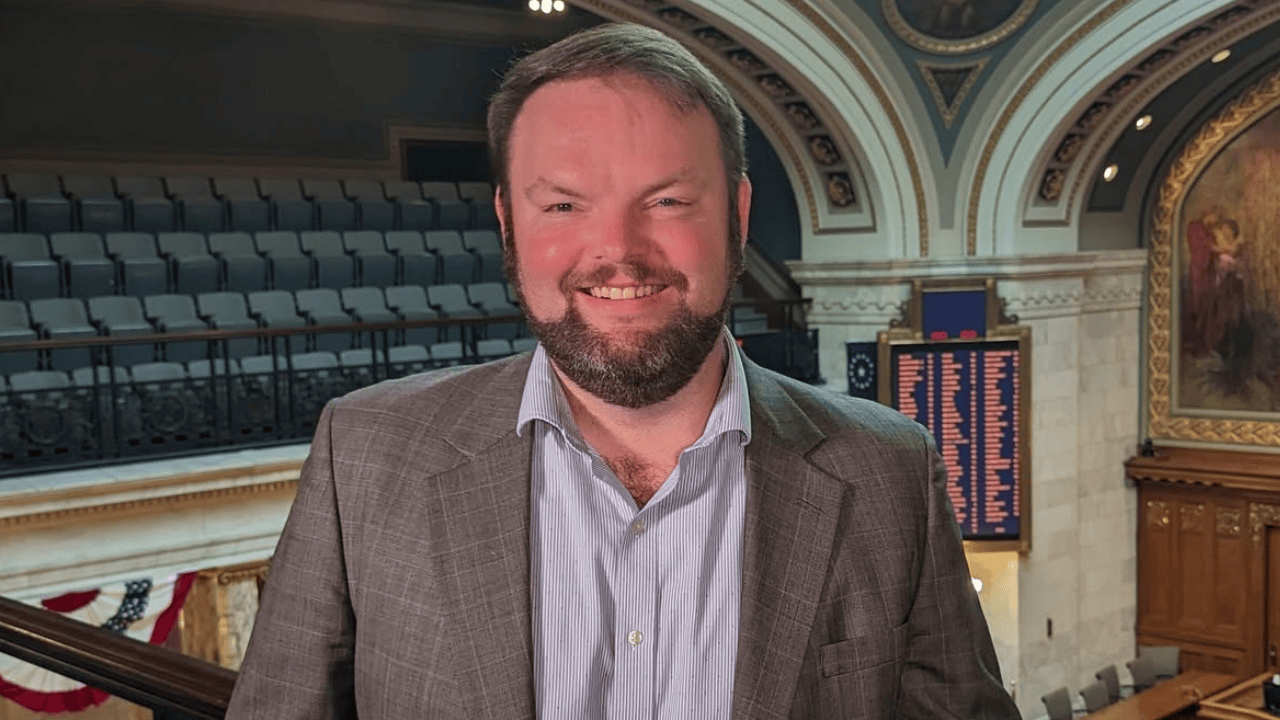
Sunday morning on WISN 12’s UPFRONT, Tyler August sat down for his first interview as the incoming Assembly minority leader. Assembly Republicans elected him on November 10, a week after Democrats flipped the chamber. He remains majority leader until January but already sounded ready for that fight.
Dianne Hesselbein and Greta Neubauer wasted no time promising to bulldoze Act 10 and a grab bag of progressive wish-list items, without a thought to the cost the taxpayers will be forced to bear. Then August did what an actual minority leader should: he exposed the price tag, called out the stampede, and reminded everyone that the rulebook exists for a reason.
August was in the Assembly in 2011. He voted for Act 10 and is not walking it back. “I was there for Act 10. I voted for Act 10. It’s one of the best votes I’ve ever taken, still to this day,” he said.
Democrats want Act 10 gone “probably within the first few months” of the new session. Asked whether they are even studying what repeal would cost, Hesselbein said they are “just having conversations with our members.” Asked about critics who say the agenda is not affordable, she offered this: “Just watch us go.” Neubauer, on Sunday’s UPFRONT, would only promise to “work really hard to not have working people feel increases in their costs over the next two years.”
“Work really hard” is not a plan. The Wisconsin Institute for Law and Liberty estimates repeal would cost about $2 billion a year, most of it dumped straight onto property tax bills. Governor-elect David Crowley shrugs off the math. The surplus Madison is eager to spend is one-time cash. Repeal of Act 10 would necessarily cause property taxes to skyrocket.
August understood why they want to move so quickly. “I think they want to move fast because they don’t want people to be paying attention to their unpopular things they’re going to do, like repeal Act 10,” he said. “When they say that they’re moving fast, they’re kind of admitting that they’re trying to get things passed before people actually have a chance to stand up and say, wait a minute, this isn’t what we voted for.”
He called it “a bit of a bait and switch,” and he is right. Democrats spent the fall talking about affordability. Now the incoming leaders talk about repealing Act 10, redrawing the congressional map, dumping the Electoral College, and a pile of new spending. “If you had said this before the election, things may very well have turned out differently,” August said.
That is the opening Republicans have. August, a former speaker pro tempore, was plain about the tools available. “There’s procedural things that you can do within the rules,” he said, not on everything, but on the items that “probably need to be slowed down and taken a look at a little more just so that the public can weigh in.” The old line still holds, he said: the majority gets its way, but the minority gets its say.
A minority that only complains after the damage is done is useless. One that slows the worst bills down long enough for taxpayers to see the price tag can still change the fight.
He was just as clear on the National Popular Vote scheme, which would hand Wisconsin’s electoral votes to the national popular vote winner. “Absolutely not,” August said. He is “not arrogant enough to think that I’m smarter than the founding fathers of our country.” Wisconsin voters, he said, should decide where those votes go, “not voters in New York and California.” Even Gov. Tony Evers recently said the present system works.
You don’t get to run a campaign about costs and then speed-run a repeal, redraw the maps, and try to make Wisconsin into Illinois at lightning speed. If Democrats want to pull this speed run off, they’d better do it in the daylight, with everyone watching. That’s how you lead from the minority, and August just proved he’s up for the fight.
