


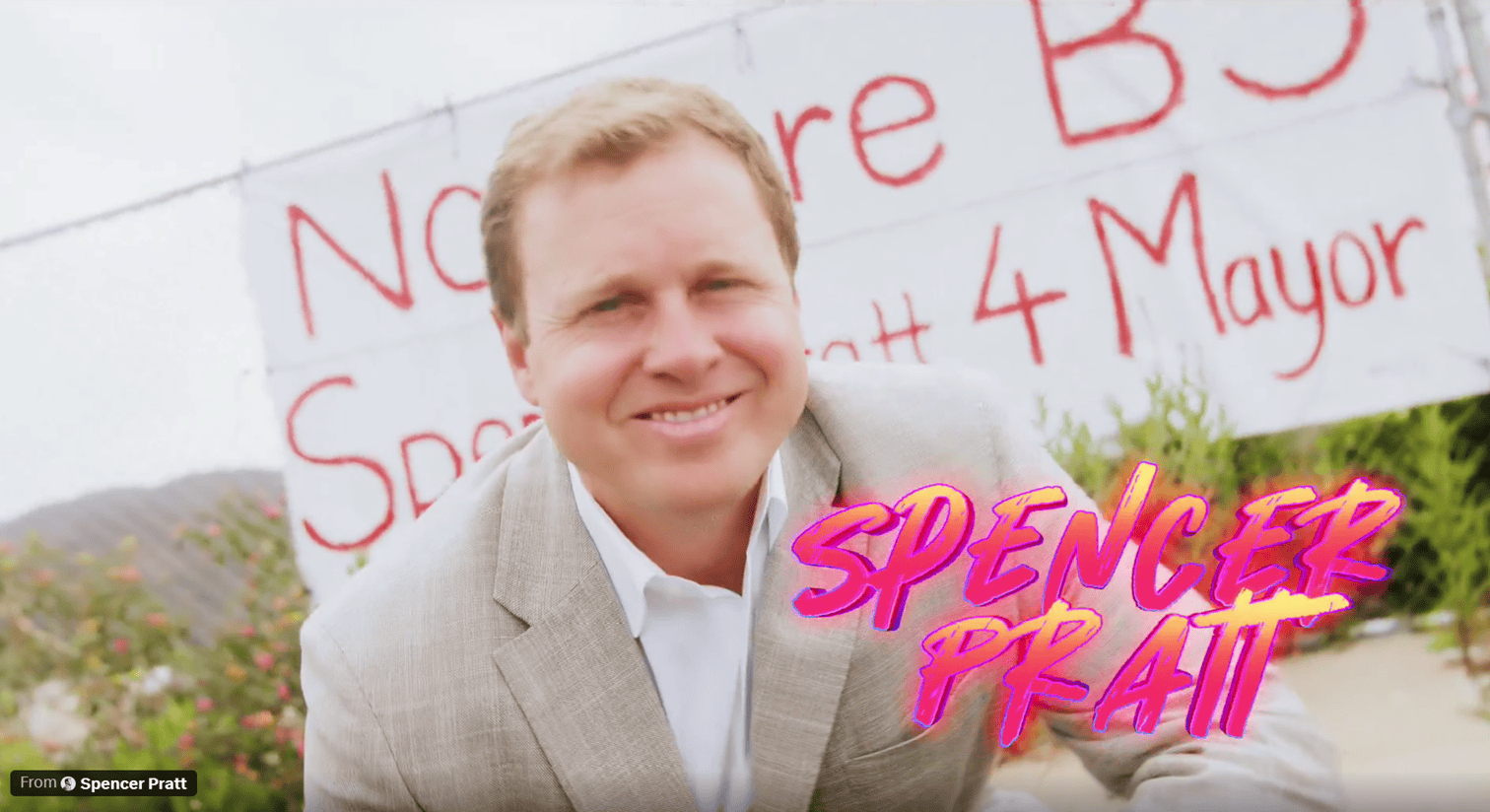
Former “The Hills” reality TV star Spencer Pratt, running as a “red-pilled” independent for Los Angeles mayor in the June 2 primary, has turned a long-shot bid into a genuine threat to incumbent Karen Bass by weaponizing low-budget, AI-generated campaign ads that have exploded across social media, exposing failures of one-party Democratic rule in the nation’s second-largest city.
Pratt’s over-the-top “villain” persona from his days on reality TV and fearlessness have fueled the surge. His ads stand out as entertaining, cinematic, and laser-focused on real voter frustration: homelessness encampments, unchecked crime, graffiti, open-air drug markets, and bureaucratic delays after the Palisades Fire, in ways traditional political spots never do.
A late-April “They Not Like Us” spot showed Pratt outside lavish mansions owned by Bass and Councilmember Nithya Raman. It contrasted them with his own Pacific Palisades home destroyed in the wildfires, which forced his family into trailers and hotels while red tape stalled rebuilding. The raw, populist visuals went mega-viral, drawing comparisons to John Wick and highlighting an elitist disconnect.
May’s AI-generated hero-villain spots, many created by filmmaker Charlie Curran and heavily shared and reposted by Pratt, cast him as Batman swooping into a dystopian Los Angeles “cleaning up the trash” (a pun on “Basura”/Bass), standing up for citizens, contrasting Bass as the Joker. The videos graphically depict burning homes, tent cities, and crime while lampooning Gov. Gavin Newsom and former Vice President Kamala Harris as bourgeois elites feasting as the city crumbles. One Batman video alone surpassed 5 million views and 14,000 reposts.
Pratt’s latest viral releases keep the momentum building. An AI-generated yoga studio ad shows four women in a typical LA class quietly confessing they’re voting for Pratt, capturing the hidden conservative reality in deep-blue circles where people fear speaking out.
Another fresh drop is Pratt’s parody of “The Fresh Prince of Bel-Air” set to the show’s theme song, exposing the city’s homelessness crisis and fire-ravaged neighborhoods with Pratt’s own displaced reality, as he drives his trailer into the gated Bel-Air community, further hammering LA’s leadership failures.
Guerrilla tactics amplified the reach: billboard trucks circling City Hall, a sarcastic “Pratt Summer” spot, and Pratt deliberately reposting a union-funded attack ad criticizing his plans for more police, clearing encampments, and cutting union power. This move backfired spectacularly as viewers responded with “Yeah, and?!”
The core reasons for the buzz: AI innovation, paired with social media virality, make Pratt’s approach a master class for other candidates. The videos are cheap, fast, and hyper-creative, feeling like movie trailers rather than stale consultant-driven TV spots. Pratt’s existing celebrity following amplified everything organically. Emotional resonance and perfect timing tapped voter anger over homelessness, crime, skid row animal abuse, failed wildfire response, and expensive elitist governance. His personal loss gave the ads undeniable authenticity and urgency. Humor, edginess, and virality let him troll opponents in a fun, shareable way without preaching. Even critics have called them “brilliant” or “the best political ad of the year.” The underdog narrative of an outsider reality star versus the Democratic machine, boosted by strong debate performances, delivered massive earned media, celebrity chatter, and poll momentum in a race where roughly 40 percent of voters were undecided not long ago.
Polls reflect the impact. Pratt has surged from roughly 11 percent in early April UCLA polling to 22 percent in recent surveys, trailing Bass by single digits in some matchups with strong runoff positioning. Prediction markets give him about 27 percent odds of advancing.
Other candidates and consultants, especially conservatives, should ignore Pratt’s playbook at their peril. Traditional consultants spending millions on boring TV ads should take five clear lessons:
- Go digital-first and embrace AI aggressively. Skip expensive, polished spots. Use AI to create rapid, high-impact videos that look cinematic and spread virally on platforms voters actually use. It’s significantly cheaper, can be created in hours, and bypasses legacy media gatekeepers.
- Make it entertaining and meme-able. Politics is entertainment now. Humor, pop-culture references, and even AI-generated songs (superheroes, movies, Lego), along with bold, unique visuals, cut through the noise far better than policy wonkery. Lean into supposed “flaws” as strengths, like a reality-TV past.
- Build authenticity and personal story. Voters connect with real pain and outsider energy. Pratt didn’t manufacture a backstory; he lost his home and called out the exact failures that caused it. Visually and emotionally contrast yourself with the elites.
- Attack (and defend) smartly on the issues that matter. Focus relentlessly on voter pain points like crime, homelessness, cost of living, and government incompetence with clear, populist framing. When opponents attack, flip it if it helps you, just as Pratt did.
- Build a movement organically via social media. Post directly, repost fan content, and create shareable moments, like billboard trucks and slogans like “Pratt Summer.”
Pratt may or may not win the mayor’s race, as Bass remains favored, but some celebrities are backing the far-left socialist Nithya Raman. His fearlessness, authenticity, and tech-savvy insurgency have already shaken up deep-blue Los Angeles and have voters across the country taking note. His campaign proves conservatives can weaponize accessible innovation against progressive echo chambers and legacy media, delivering unfiltered truth with humor and edge while connecting directly with frustrated voters. The era of sleepy, high-cost consultant-heavy campaigns is ending. The future is viral, visual, and very online.
